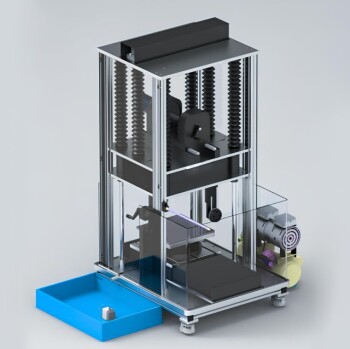
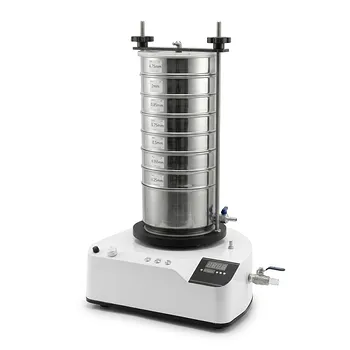
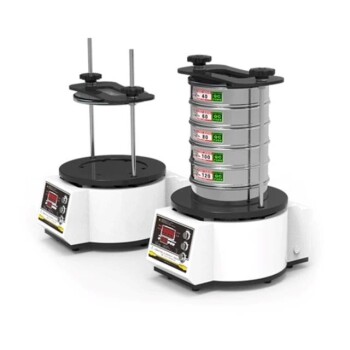
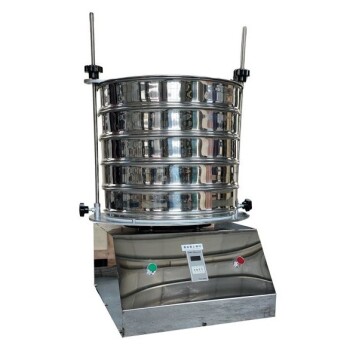
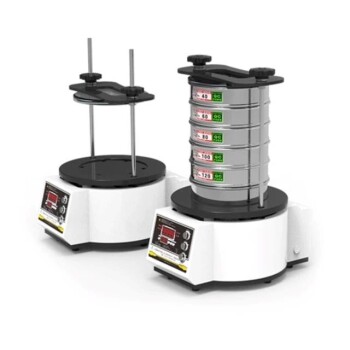
Strict control over particle size is the prerequisite for material performance. In the preparation of Al2O3/Cu-Cr composites, a high-precision sieving system is essential to enforce exact mesh specifications (typically 270 and 400 mesh) for Cu-Al alloy and Cu2O powders. This mechanical separation directly dictates the uniformity of the final material's microstructure.
Core Takeaway The primary function of high-precision sieving is to ensure the uniform dispersion of fine oxidant particles within the matrix. This uniformity is critical for regulating the kinetics of subsequent internal oxidation reactions, ultimately enabling the formation of precise, nano-scale dispersed phases.
The Role of Particle Size in Microstructure
Establishing Uniformity
The physical dimensions of the raw powders act as the foundational variable for the entire manufacturing process.
If the raw powder sizes vary significantly, the final microstructure will inevitably exhibit inconsistencies.
Targeting Specific Components
For Al2O3/Cu-Cr composites, the process specifically targets Cu-Al alloy powder and Cu2O powder.
High-precision sieving segregates these materials into strict mesh categories, such as 270 mesh and 400 mesh, to ensure compatibility during mixing.
Optimizing Oxidant Dispersion
The system is designed to handle fine oxidant particles, ensuring they are not clumped or irregularly sized.
By controlling the size of these particles, the system allows them to be dispersed evenly throughout the composite matrix.
Controlling Reaction Kinetics
Regulating Internal Oxidation
The sieving process is not merely about physical packing; it is a chemical control mechanism.
By standardizing particle size, engineers can predict and control the kinetics of the internal oxidation reactions that occur later in the process.
Facilitating Nano-Scale Phases
The ultimate goal of this strict control is the creation of nano-scale dispersed phases.
Uniform particle distribution ensures that these phases form consistently across the material, rather than clustering in specific regions.
The Risks of Inadequate Size Control
Kinetic Instability
Without precise sieving, reaction rates would vary locally across the material.
Larger, uncontrolled particles reacts more slowly than fine particles, leading to unpredictable material properties.
Compromised Dispersion
In the absence of a high-precision system, oxidant particles may aggregate.
This leads to a non-homogeneous matrix where the beneficial nano-scale phases fail to develop uniformly, compromising the composite's structural integrity.
Making the Right Choice for Your Goal
To maximize the performance of Al2O3/Cu-Cr composites, focus your process control on the following objectives:
- If your primary focus is Microstructural Uniformity: Strictly enforce specific mesh sizes (e.g., 400 mesh) to eliminate outliers that cause defects.
- If your primary focus is Reaction Control: Prioritize the sieving of oxidant powders (Cu2O) to ensure predictable kinetics during the internal oxidation phase.
Precision in the raw stage is the only way to guarantee performance in the final phase.
Summary Table:
| Key Requirement | Target Mesh Size | Role in Process |
|---|---|---|
| Powder Uniformity | 270 - 400 Mesh | Ensures consistent microstructure and prevents defects |
| Oxidant Dispersion | High Precision | Prevents Cu2O clumping for even distribution in the matrix |
| Reaction Kinetics | Standardized Size | Regulates the internal oxidation rates for nano-phase formation |
| Material Integrity | Strict Segregation | Minimizes kinetic instability and structural compromises |
Elevate Your Materials Research with KINTEK Precision Solutions
Achieving perfect nano-scale dispersion in Al2O3/Cu-Cr composites starts with the right equipment. KINTEK specializes in high-performance laboratory solutions, offering advanced sieving equipment and crushing systems designed to meet the strictest mesh requirements for alloy and oxidant powders.
Beyond particle size control, our comprehensive portfolio supports your entire workflow—from high-temperature furnaces for internal oxidation to hydraulic presses for composite forming and battery research tools for advanced material testing.
Ready to optimize your powder processing and ensure superior material performance? Contact our experts today to find the ideal system for your lab.
Related Products
- Three-dimensional electromagnetic sieving instrument
- 12 Inch 24 Inch High Precision Automatic Diamond Wire Cutting Machine Laboratory Saw Precision Wire EDM Cutting Machine
- Laboratory Vibratory Sieve Shaker Machine for Dry and Wet Three-Dimensional Sieving
- Laboratory Wet Three-Dimensional Vibratory Sieve Shaker Machine
- Laboratory Test Sieves and Sieving Machines
People Also Ask
- Why is sieving equipment essential for the classification of processed bio-activated carbon? Optimize Performance
- What are the limitations of sieving? Understanding the Constraints of Particle Size Analysis
- What are advantages and disadvantages of sieving method? A Guide to Reliable & Cost-Effective Particle Sizing
- How is sieving important? The Critical Role of Particle Size Analysis in Quality Control
- What is sieving and how does it work? A Guide to Accurate Particle Size Analysis