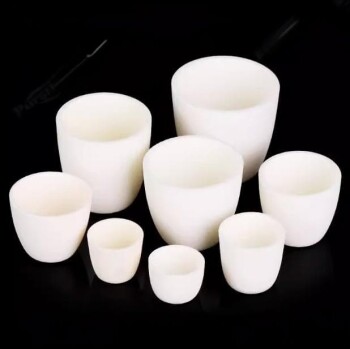
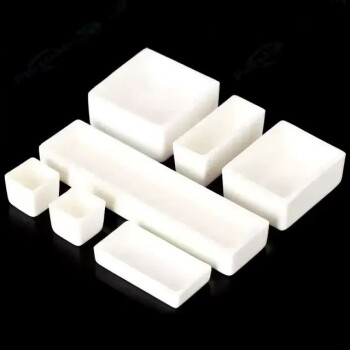
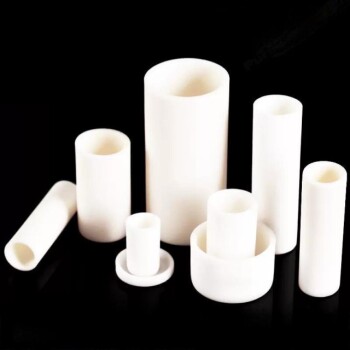
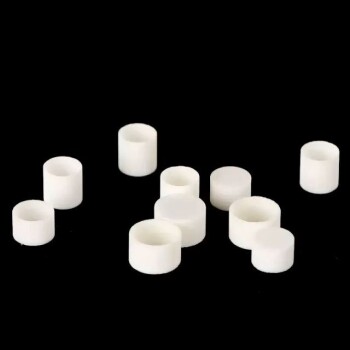
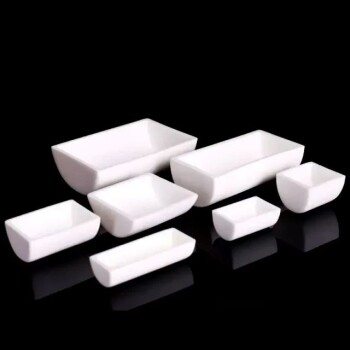
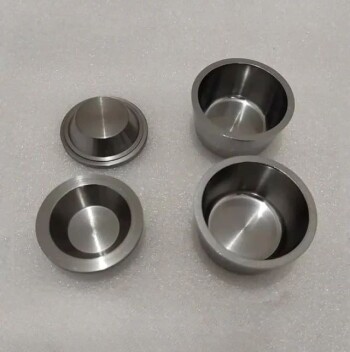
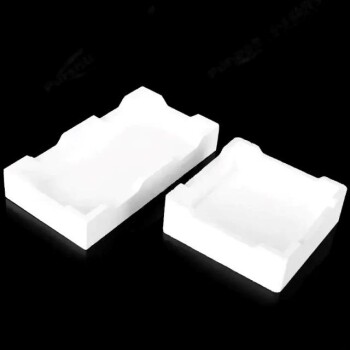
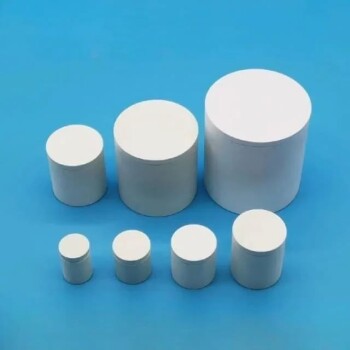
High-purity alumina (aluminum oxide) crucibles are the industry standard for $Co_3O_4/C$ composite synthesis because they offer a unique combination of chemical inertness and thermal precision. At the temperatures required for calcination—typically around 500 °C—high-purity alumina remains completely non-reactive with both cobalt salts and carbon materials. This prevents the introduction of impurities and ensures that the final composite maintains its intended chemical stoichiometry and phase purity.
Core Takeaway: Alumina crucibles act as a "passive" vessel that survives high temperatures without leaching contaminants or reacting with precursors. This reliability ensures that the resulting $Co_3O_4/C$ composites are high-quality, phase-pure, and analytically accurate.
Superior Chemical Stability and Contamination Control
Preventing Reactions with Cobalt and Carbon
High-purity alumina is selected primarily for its exceptional chemical inertness. During the heat treatment of $Co_3O_4/C$, the vessel must withstand contact with reactive cobalt salts and carbon precursors without causing a chemical exchange.
Because alumina does not react with these materials at high temperatures, the purity of the composite is preserved. This is critical for applications like electromagnetic protection or battery materials, where even trace impurities can degrade performance.
Maintaining Carbon Stoichiometry
In composites involving carbon, maintaining the exact carbon-to-metal ratio is vital. Supplementary research indicates that alumina does not react with graphite samples or oxygen even at temperatures as high as 1273 K.
By ensuring the crucible does not "consume" any of the carbon through side reactions, researchers can be confident that the final material matches their theoretical design. This makes alumina far superior to metallic or lower-grade ceramic containers.
Thermal Performance and Phase Uniformity
Facilitating Uniform Heat Distribution
High-purity alumina possesses high thermal conductivity, which is essential for uniform sample heating. When the environment inside the crucible is thermally consistent, the entire sample undergoes the phase transformation simultaneously.
This uniformity is the key to producing phase-pure $Co_3O_4$. Without it, temperature gradients within the powder could lead to incomplete reactions or the formation of unwanted secondary phases.
Resistance to Thermal Shock
The heat treatment phase often involves rapid heating and cooling cycles. Alumina exhibits excellent anti-thermal shock performance, allowing it to maintain structural integrity throughout these cycles.
This durability ensures that the crucible does not crack or flake, which would otherwise introduce ceramic particles into the $Co_3O_4/C$ composite. Its long-term stability makes it a cost-effective choice for repeated laboratory or industrial use.
Accuracy in Analytical and Kinetic Data
Ensuring Reliable Mass Loss Readings
If the heat treatment is part of a Thermogravimetric Analysis (TGA), the crucible's stability is paramount. High-purity alumina undergoes no mass change of its own at temperatures reaching 600 °C and beyond.
This ensures that any mass loss recorded during the process originates solely from the sample (such as the decomposition of precursors or oxidation of carbon). This level of precision is necessary for calculating accurate kinetic data and thermal stability profiles.
Withstanding Corrosive Byproducts
Some heat treatment processes involve the release of corrosive vapors or decomposition products. High-purity alumina is resistant to molten salt corrosion and aggressive chemical environments.
This resistance protects the vessel from pitting or degradation, ensuring that the container remains a "closed system" that does not interfere with the delicate chemistry of the $Co_3O_4/C$ nanoplate formation.
Understanding the Trade-offs
The Cost of High Purity
While high-purity alumina (typically 99% or higher) is ideal, it is significantly more expensive than standard ceramic or clay-graphite crucibles. For low-stakes applications or very low temperatures, the extreme purity may exceed the project's budget requirements.
Mechanical Brittleness
Like all ceramics, alumina is intrinsically brittle. While it handles heat well, it is susceptible to fracturing if handled roughly or dropped. Furthermore, while it resists most chemicals, it can be attacked by certain strong alkalis or hydrofluoric acid at elevated temperatures.
Making the Right Choice for Your Goal
How to Apply This to Your Project
Depending on your specific goals for $Co_3O_4/C$ production, your focus on crucible quality may shift:
- If your primary focus is Phase Purity: Use 99.9% high-purity alumina to ensure zero chemical interference and maximum thermal uniformity.
- If your primary focus is Analytical Precision (TGA): Prioritize alumina for its stable mass profile, ensuring all recorded data reflects only the sample’s behavior.
- If your primary focus is High-Volume Production: Balance the cost by choosing high-grade alumina that offers a high number of re-use cycles due to its thermal shock resistance.
- If your primary focus is Preventing Metallic Contamination: Alumina is the definitive choice over stainless steel or nickel crucibles, which can leach metal ions into the composite at 500 °C.
Selecting a high-purity alumina crucible is not just a preference, but a technical necessity for ensuring the integrity, purity, and performance of $Co_3O_4/C$ composites.
Summary Table:
| Feature | Advantage for Co3O4/C Synthesis | Key Impact |
|---|---|---|
| Chemical Inertness | Prevents reactions with cobalt salts & carbon | High phase purity |
| Thermal Stability | No mass change at high temperatures | Accurate TGA data |
| High Conductivity | Uniform heat distribution across samples | Consistent results |
| Shock Resistance | Withstands rapid heating/cooling cycles | Crucible longevity |
Elevate Your Material Synthesis with KINTEK Precision
Achieving perfect Co3O4/C composites requires equipment that guarantees zero contamination and absolute thermal control. KINTEK provides the high-performance tools researchers need to ensure analytical accuracy and material integrity.
Our specialized laboratory range includes:
- High-Purity Consumables: Alumina, ceramic, and PTFE crucibles designed for extreme chemical resistance.
- Precision Furnaces: Muffle, tube, vacuum, and CVD furnaces for flawless calcination and heat treatment.
- Sample Preparation: Advanced crushing, milling, and hydraulic presses (pellet, hot, isostatic) for superior sample uniformity.
- Advanced Research Tools: High-pressure reactors, electrolytic cells, and battery research consumables.
Don't let vessel impurities compromise your research. Partner with KINTEK for reliable, industry-leading laboratory solutions.
Contact Our Specialists Today to Find Your Perfect Crucible
References
- Yi-Xuan Guo, Wei‐Ren Liu. Synthesis and Electrochemical Properties of Co3O4@Reduced Graphene Oxides Derived from MOF as Anodes for Lithium-Ion Battery Applications. DOI: 10.3390/su15064988
This article is also based on technical information from Kintek Solution Knowledge Base .
Related Products
- Arc-Shaped Alumina Ceramic Crucible High Temperature Resistant for Engineering Advanced Fine Ceramics
- High Purity Alumina Granulated Powder for Engineering Advanced Fine Ceramics
- High Purity Pure Graphite Crucible for Evaporation
- Engineering Advanced Fine Alumina Al2O3 Ceramic Crucible for Laboratory Muffle Furnace
- High Purity Pure Graphite Crucible for Electron Beam Evaporation
People Also Ask
- Why Use Alumina Crucibles & Powder Burial for NaSICON? Ensure Phase Purity and Prevent Elemental Volatilization
- What is the primary purpose of using alumina crucibles for LLTO ceramics? Optimize Your High-Temperature Sintering
- Why are alumina crucibles and mother powder essential for LATP sintering? Optimize Your Solid Electrolyte Performance
- Why are high-purity alumina crucibles used for liquid lead corrosion experiments? Ensure Data Accuracy at 550°C
- Primary considerations for choosing alumina crucibles and quartz tubes in indium intercalation: Ensure Material Purity