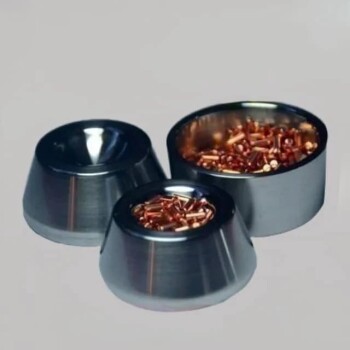
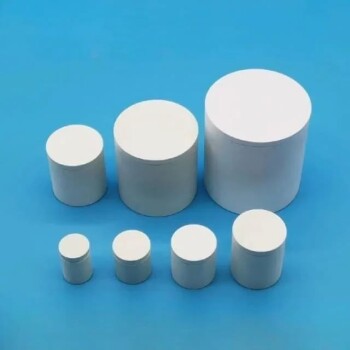
The selection of a high-purity alumina crucible is mandatory for pack cementation chromizing at 1050°C because it provides the dual benefits of extreme thermal stability and absolute chemical inertness. It withstands prolonged exposure to high temperatures without deforming and prevents the reaction vessel from contaminating the chromium powder and ammonium chloride activators, thereby ensuring the purity of the resulting diffusion coating.
High-purity alumina acts as a neutral physical boundary rather than a chemical participant. Its primary function is to isolate the reaction environment, ensuring that the chromizing process proceeds without interference from the vessel material itself.
The Necessity of Thermal Stability
Withstanding Prolonged Heat Exposure
At 1050°C, many standard materials soften or warp. High-purity alumina maintains rigid structural stability at this temperature. This allows it to hold the metal substrate and the heavy pack mixture securely throughout the entire duration of the treatment.
Preventing Structural Failure
The pack cementation process involves a reducing atmosphere and long dwell times. A lesser material might degrade or collapse under these conditions. Alumina ensures the vessel does not suffer physical deformation or failure, which could ruin the sample or damage the furnace.
Chemical Inertness in Reactive Environments
Resisting Attack from Activators
The "pack" mixture typically contains aggressive components, such as chromium powder and halide activators like ammonium chloride. These chemicals are highly reactive at elevated temperatures. High-purity alumina is chemically inert, meaning it will not corrode or react with these specific agents.
Ensuring Diffusion Layer Purity
The goal of chromizing is to create a specific surface chemistry, often including magnesium-doped layers. If the crucible were to react with the pack, it would introduce foreign elements into the mixture. Alumina eliminates this variable, guaranteeing that the composition of the final chromized layer remains pure and uncontaminated.
Understanding the Trade-offs
Sensitivity to Thermal Shock
While alumina is excellent at steady-state high temperatures, it is brittle. Rapid heating or cooling can cause the crucible to crack or shatter due to thermal shock. It requires controlled temperature ramp rates to maintain integrity.
Cost vs. Performance
High-purity alumina is significantly more expensive than standard ceramics or lower-grade alumina. However, attempting to cut costs here creates a high risk of sample contamination or vessel failure, making the investment necessary for critical applications.
Ensuring Process Success
To achieve reliable chromizing results, align your equipment choice with your specific technical goals:
- If your primary focus is chemical purity: Prioritize high-purity alumina (>99%) to strictly prevent the vessel from reacting with the ammonium chloride or chromium sources.
- If your primary focus is data accuracy: Use alumina to ensure any mass gain measurements reflect only the sample's reaction, not the degradation of the container.
The crucible must serve as a silent partner in the reaction—present to support the process, but invisible to the chemistry.
Summary Table:
| Feature | High-Purity Alumina (Crucible) | Impact on Chromizing Process |
|---|---|---|
| Thermal Stability | Maintains rigidity at 1050°C+ | Prevents vessel deformation or structural failure |
| Chemical Inertness | Non-reactive with halide activators | Ensures high-purity, uncontaminated diffusion layers |
| Physical Properties | Neutral physical boundary | Isolates reaction environment for accurate data |
| Material Purity | Typically >99% Al2O3 | Prevents introduction of foreign elements into pack |
Maximize Your Research Precision with KINTEK
Don't let vessel contamination compromise your chromizing results. KINTEK specializes in high-performance laboratory solutions, providing premium high-purity alumina crucibles and ceramics designed to withstand the most demanding thermal environments. Whether you are performing pack cementation, sintering, or vacuum heat treatments, our portfolio ensures your samples remain pure and your processes repeatable.
From high-temperature furnaces and vacuum systems to specialized crushing and milling equipment, KINTEK offers the tools you need for advanced material science. Our expert team is ready to help you select the ideal consumables and equipment for your specific application.
Ready to elevate your lab's performance? Contact us today for a consultation and quote!
References
- Sarra DJEMMAH, Amine Rezzoug. Effect of Mg Addition on Morphology, Roughness and Adhesion of Cr Chromized Layer Produced by Pack Cementation. DOI: 10.5829/ije.2023.36.10a.05
This article is also based on technical information from Kintek Solution Knowledge Base .
Related Products
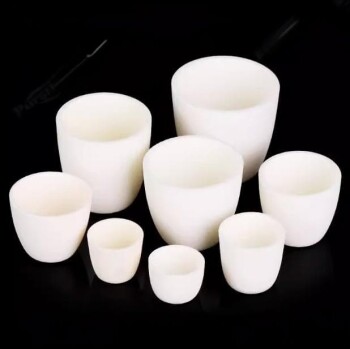
- Arc-Shaped Alumina Ceramic Crucible High Temperature Resistant for Engineering Advanced Fine Ceramics
- High Purity Alumina Granulated Powder for Engineering Advanced Fine Ceramics
- High Purity Pure Graphite Crucible for Evaporation
- Engineering Advanced Fine Alumina Al2O3 Ceramic Crucible for Laboratory Muffle Furnace
- High Purity Pure Graphite Crucible for Electron Beam Evaporation
People Also Ask
- Why Use Alumina Crucibles & Powder Burial for NaSICON? Ensure Phase Purity and Prevent Elemental Volatilization
- What is the primary purpose of using alumina crucibles for LLTO ceramics? Optimize Your High-Temperature Sintering
- Why are alumina crucibles and mother powder essential for LATP sintering? Optimize Your Solid Electrolyte Performance
- Why are high-purity alumina crucibles used for liquid lead corrosion experiments? Ensure Data Accuracy at 550°C
- Primary considerations for choosing alumina crucibles and quartz tubes in indium intercalation: Ensure Material Purity