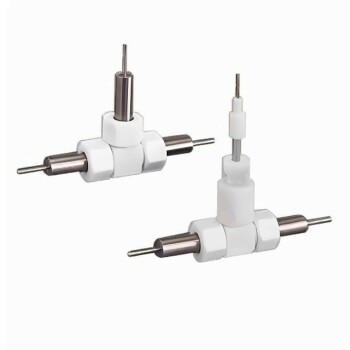
To analyze molten carbonate fuel cell (MCFC) electrolytes effectively, a high-temperature catalytic reaction cell is strictly necessary because it is the only apparatus capable of accurately simulating the harsh operating environment of a working fuel cell. By maintaining temperatures around 923 K and managing precise gas mixtures, this device allows researchers to observe the electrolyte as it reaches true chemical equilibrium. This ensures the collection of valid data required to build accurate electrolytic chemistry models.
Standard laboratory conditions cannot replicate the dynamic chemical interactions that occur within a molten carbonate fuel cell. The high-temperature catalytic reaction cell provides the necessary thermal and atmospheric stability to generate the foundational data required for reliable performance modeling.
Replicating Real-World Conditions
To understand how an electrolyte component will behave in the field, you must replicate the specific stresses it will encounter.
Achieving Operational Temperatures
The primary function of this cell is to reach and sustain 923 K.
This specific temperature threshold is critical because it mimics the actual thermal state of a molten carbonate fuel cell. Analyzing components at lower temperatures would yield data irrelevant to their phase and reactivity during actual operation.
Precise Atmospheric Control
Heat alone is insufficient for accurate analysis; the chemical environment is equally vital.
The reaction cell allows for the rigorous control of the gas atmosphere surrounding the electrolyte. This includes regulating specific mixtures of carbon dioxide, water vapor, and nitrogen to match the anode and cathode environments found in a functional stack.
Ensuring Data Accuracy
The ultimate goal of using this specialized cell is to move beyond theoretical estimates and capture empirical data that reflects stable chemistry.
Reaching Chemical Equilibrium
Chemical reactions in molten salts are not instantaneous.
The controlled environment allows the electrolyte components to interact over several hours. This duration is essential for the system to reach chemical equilibrium, ensuring that measurements reflect the stable state of the material rather than transient, unstable reactions.
Building Reliable Models
Predictive software is only as accurate as the data fed into it.
By observing the electrolyte at equilibrium under realistic conditions, researchers obtain accurate foundational data. This data becomes the bedrock for electrolytic chemistry models, allowing engineers to predict fuel cell performance and degradation with high confidence.
Understanding the Trade-offs
While this method provides the highest fidelity data, it introduces specific challenges that must be managed.
Complexity of Setup
Simulating these conditions requires sophisticated instrumentation.
Maintaining a precise 923 K while simultaneously balancing hazardous gas flows (like high-temperature $CO_2$ mixtures) demands rigorous safety protocols and specialized calibration. This is not a rapid-test environment; it is a high-precision, time-intensive analytical process.
Making the Right Choice for Your Goal
Whether you need this specific apparatus depends on the stage of your research and the fidelity of data required.
- If your primary focus is developing predictive chemistry models: You must use a high-temperature catalytic reaction cell to ensure your inputs reflect true chemical equilibrium.
- If your primary focus is basic component compatibility: You may be able to use standard thermal analysis for preliminary screening, but final validation will still require the specific atmosphere control of this cell.
Accurate simulation today prevents costly engineering failures in future commercial deployment.
Summary Table:
| Feature | Requirement for MCFC Analysis | Benefit for Researcher |
|---|---|---|
| Operating Temperature | Precise maintenance of 923 K | Mimics real-world fuel cell thermal state |
| Atmospheric Control | Regulated $CO_2$, $H_2O$, and $N_2$ mixtures | Simulates anode/cathode chemical environments |
| Process Duration | Several hours for chemical equilibrium | Ensures stable, non-transient empirical data |
| Analytical Goal | Foundational data for chemistry models | Accurate prediction of performance and degradation |
Elevate Your Fuel Cell Research with KINTEK Precision
At KINTEK, we understand that reliable electrolytic chemistry models depend on data captured under exact operating conditions. Our specialized laboratory equipment is designed to meet the rigorous demands of high-temperature research, ensuring your components reach chemical equilibrium safely and accurately.
Whether you are developing molten carbonate fuel cells, advancing battery research, or requiring specialized high-temperature reactors and autoclaves, KINTEK provides the high-performance tools you need. Our portfolio includes:
- Advanced High-Temperature Furnaces (Muffle, Tube, Vacuum, and CVD)
- High-Temperature High-Pressure Reactors & Autoclaves
- Precision Electrolytic Cells and Electrodes
- Essential Consumables (Crucibles, Ceramics, and PTFE products)
Don't let inaccurate simulations stall your commercial deployment. Contact KINTEK today to discuss your laboratory requirements and discover how our comprehensive solutions can enhance your research fidelity.
References
- Timothy A. Barckholtz, Bárbara Bosio. Experimental and Modeling Investigation of CO3=/OH– Equilibrium Effects on Molten Carbonate Fuel Cell Performance in Carbon Capture Applications. DOI: 10.3389/fenrg.2021.669761
This article is also based on technical information from Kintek Solution Knowledge Base .
Related Products
- Quartz Electrolytic Electrochemical Cell for Electrochemical Experiments
- Electrolytic Electrochemical Cell for Coating Evaluation
- Electrolytic Electrochemical Cell Gas Diffusion Liquid Flow Reaction Cell
- Super Sealed Electrolytic Electrochemical Cell
- Electrolytic Electrochemical Cell with Five-Port
People Also Ask
- Why is a quartz electrolytic cell used for acrylic acid wastewater? Ensure Chemical Stability & Data Integrity
- How does the design of an electrochemical electrolytic cell influence the coating uniformity? Optimize Your Catalysts
- What are the key features of quartz that make it suitable for electrolytic cells? Discover the 4 Pillars of Superior Performance
- What is the correct shutdown and disassembly procedure after an experiment? Ensure Safety and Protect Your Equipment
- How do the electrochemical cell and three-electrode testing system collaborate? Optimize Zinc Anode Deposition Control