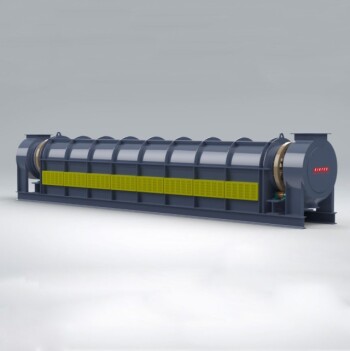
A high-temperature stability electric furnace is essential for the normalization of Inconel 625/P355NH composites because it delivers the precise, uniform thermal environment required to reach and maintain exactly 910°C. This high-precision heating is the only way to effectively reverse the severe plastic deformation and structural damage induced during the explosive welding process.
The furnace’s primary function is to induce complete recrystallization and eliminate work hardening. By maintaining a stable 910°C, it facilitates the formation of controlled diffusion layers at the interface, ensuring the structural integrity of the joint between these dissimilar metals.
Restoring Microstructural Integrity
Repairing Explosive Damage
Explosive welding is a violent process that creates a metallurgical bond but leaves the material with a severely deformed plastic structure.
Without treatment, this structure is stressed and unreliable. The electric furnace provides the energy needed to reorganize this chaotic structure into a stable state.
Inducing Complete Recrystallization
The target temperature of 910°C is not arbitrary; it is the specific threshold required to trigger complete recrystallization for this composite.
The furnace's ability to hold this temperature continually ensures that new, strain-free grains replace the deformed ones throughout the entire material volume.
Eliminating Work Hardening
The deformation from welding causes significant work hardening, which makes the material brittle and prone to failure under stress.
The normalization process releases the internal energy stored during deformation. This restores the material's ductility and toughness, making it suitable for industrial service.
Optimizing the Material Interface
Regulating Joint Properties
The bond between Inconel 625 (a superalloy) and P355NH (pressure vessel steel) is complex due to their differing chemical compositions.
The electric furnace ensures the heat is applied uniformly across the entire plate. This uniformity is critical for consistent mechanical properties across the joint, preventing weak spots.
Forming Controlled Diffusion Layers
At the interface where the two metals meet, atoms migrate to form a bond known as a diffusion layer.
The high-temperature stability allows this layer to form under controlled conditions. If the temperature fluctuates, the diffusion layer may become irregular, leading to poor adhesion or separation.
Understanding the Trade-offs
The Risk of Temperature Instability
While high-temperature normalization is necessary, precision is non-negotiable. If the furnace fails to maintain stability at 910°C, the consequences are severe.
If the temperature drops too low, recrystallization remains incomplete, leaving residual stresses in the material.
Managing Diffusion thickness
Conversely, if the temperature spikes or is held too long, the diffusion layer can grow uncontrollably.
An excessively thick diffusion layer often leads to the formation of brittle intermetallic phases. These brittle zones compromise the joint, making the composite susceptible to cracking under thermal or mechanical shock.
Making the Right Choice for Your Goal
To ensure the success of your normalization process, align your furnace parameters with your specific material requirements.
- If your primary focus is mechanical ductility: Prioritize a furnace with verified thermal uniformity to ensure complete elimination of work hardening across the entire plate.
- If your primary focus is interface bonding: Ensure strict temperature control at 910°C to promote a diffusion layer that is thick enough to bond but thin enough to avoid brittleness.
Precision in your heat treatment directly dictates the reliability of your composite material.
Summary Table:
| Parameter | Influence on Inconel 625/P355NH Composite |
|---|---|
| Target Temperature | 910°C (Critical for complete recrystallization) |
| Process Goal | Reverses plastic deformation & eliminates work hardening |
| Interface Impact | Facilitates controlled diffusion layers for joint integrity |
| Risk of Low Temp | Incomplete recrystallization and residual internal stress |
| Risk of Overheating | Excessive diffusion layer thickness leading to brittleness |
Elevate Your Heat Treatment Precision with KINTEK
Achieving the perfect 910°C normalization requires unwavering thermal stability. KINTEK specializes in advanced laboratory equipment designed for the most demanding material science applications. Whether you are working on the normalization of dissimilar metal composites or complex alloy research, our comprehensive range of high-temperature muffle, tube, and vacuum furnaces provides the precise temperature control and uniformity you need to eliminate work hardening and optimize microstructural integrity.
From crushing and milling systems to high-pressure reactors and specialized ceramics, KINTEK delivers the tools that drive reliability in industrial and research settings. Don't compromise on your material's structural integrity—partner with the experts in thermal processing.
Contact KINTEK today for a customized equipment solution!
References
- Robert Kosturek, Michał Gloc. The Influence of the Post-Weld Heat Treatment on the Microstructure of Inconel 625/Carbon Steel Bimetal Joint Obtained by Explosive Welding. DOI: 10.3390/met9020246
This article is also based on technical information from Kintek Solution Knowledge Base .
Related Products
- 1700℃ Laboratory High Temperature Tube Furnace with Alumina Tube
- High Temperature Muffle Oven Furnace for Laboratory Debinding and Pre Sintering
- Vertical High Temperature Graphite Vacuum Graphitization Furnace
- 1400℃ Controlled Atmosphere Furnace with Nitrogen and Inert Atmosphere
- 1700℃ Controlled Atmosphere Furnace Nitrogen Inert Atmosphere Furnace
People Also Ask
- What functions does a laboratory high-temperature tube furnace perform? Master Catalyst Synthesis & Carbonization
- What roles does a high-temperature tube furnace play in the synthesis of N/O co-doped carbon? Master Precise Doping
- How does a laboratory tube furnace facilitate methane catalyst evaluation & regeneration? Optimize Thermal Performance
- What are the primary applications of muffle and tube furnaces in photocatalysts? Optimize Metal Loading & Support Synthesis
- How does a high-temperature tube furnace influence 253MA steel? Master Microstructure & High-Temp Creep Resistance