A laboratory hydraulic pellet press is the critical link between a raw lignite sample and a readable infrared spectrum. It transforms opaque, light-scattering powders into transparent optical windows. Without this high-pressure molding, the infrared beam cannot effectively penetrate the dense molecular structure of coal or semi-coke, resulting in uninterpretable data.
Core Takeaway: The pellet press is essential because it eliminates light scattering and ensures sample transparency. By compressing a mixture of lignite and potassium bromide (KBr) into a uniform disc, it allows for high-signal-to-noise ratio (SNR) spectra necessary to identify complex organic functional groups.
Overcoming the Optical Challenges of Lignite
Eliminating Light Scattering
In their natural state, lignite and its pyrolysis products (semi-coke) are powders that scatter infrared light in every direction. This scattering creates "noise" that obscures the actual chemical signals of the sample.
A hydraulic press applies extreme, consistent pressure to force these particles into a dense, solid matrix. This process eliminates the internal voids and particle boundaries that cause scattering, resulting in a stable baseline for the spectrum.
Achieving Infrared Transparency
Potassium Bromide (KBr) is used as a carrier because it is transparent in the infrared region. When subjected to high pressure in a pellet press, KBr undergoes plastic flow, effectively "wetting" the lignite particles and embedding them in a clear disc.
This high-precision pressing ensures the infrared beam can pass through the sample rather than being reflected or absorbed by air gaps. The resulting transparency is a prerequisite for detecting subtle vibrational shifts in the coal's molecular structure.
Precision in Characterizing Pyrolysis Products
Identifying Complex Functional Groups
Lignite and semi-coke have intricate structures involving aromatic C=C vibrations and aliphatic chain branching. To see these clearly, the sample must be thin and uniform.
The pellet press allows researchers to create pellets of uniform thickness (often 13 mm in diameter). This uniformity ensures a consistent optical path, which is vital for obtaining the clear characteristic peaks needed to analyze how pyrolysis has altered the coal’s chemistry.
Enabling Quantitative Analysis
For research to be valid, it must be reproducible. A hydraulic press provides stable pressure control, which ensures that every pellet created has the same density and transparency.
This consistency allows for the creation of quantitative absorbance curves. Researchers can then accurately measure the intensity of signals, such as the carboxyl and aromatic structures, to compare different stages of the pyrolysis process.
Common Pitfalls and Trade-offs
The Risk of Moisture Absorption
KBr is highly hygroscopic, meaning it absorbs moisture from the air rapidly. If the pressing process is too slow or performed in a humid environment, water peaks will appear in the FTIR spectrum, potentially masking important hydroxyl groups in the lignite.
Pressure Calibration Issues
Using too little pressure results in an opaque, "cloudy" pellet that yields a noisy spectrum with a tilted baseline. Conversely, excessive pressure or uneven distribution within the die can cause the pellet to crack upon release, making it unusable for spectroscopic analysis.
Sample-to-KBr Ratios
The concentration of the sample within the KBr matrix is delicate; a common ratio is 1:100. If the lignite concentration is too high, the pellet will be too dark for the IR beam to penetrate; if too low, the characteristic peaks will be too weak to identify.
How to Apply This to Your Characterization Project
Recommendations for Sample Preparation
- If your primary focus is quantitative structural analysis: Ensure you use a precision hydraulic press with a digital gauge to maintain exact pressure consistency across all samples.
- If your primary focus is identifying trace functional groups: Use a vacuum-capable pellet die during the pressing process to remove air bubbles and minimize moisture interference.
- If your primary focus is high-throughput screening: Standardize your sample-to-KBr ratio (e.g., 1mg sample to 100mg KBr) and use a manual press with a fixed-load limit to ensure speed without sacrificing pellet quality.
Mastering the hydraulic pressing process is the single most effective way to ensure the accuracy and clarity of your lignite FTIR data.
Summary Table:
| Challenge | Impact on FTIR Analysis | Role of Hydraulic Press |
|---|---|---|
| Light Scattering | High noise and obscured signals | Eliminates voids to create a stable baseline |
| Opacity | IR beam cannot penetrate sample | Induces KBr plastic flow for an optical window |
| Non-uniformity | Inconsistent optical path lengths | Ensures precise thickness and sample density |
| Data Variability | Non-reproducible quantitative data | Provides calibrated pressure for consistency |
Maximize Your Research Precision with KINTEK
High-quality FTIR spectra begin with flawless sample preparation. KINTEK specializes in precision laboratory equipment, providing the hydraulic presses (pellet, hot, and isostatic) you need to transform complex samples into clear analytical data.
Beyond sample preparation, we offer a comprehensive suite of tools for material science, including high-temperature furnaces (muffle, tube, vacuum, CVD), crushing and milling systems, and high-pressure reactors. Whether you are characterizing lignite or developing advanced battery materials, KINTEK delivers the reliability and technical support your lab demands.
Contact KINTEK Today to Enhance Your Lab’s Efficiency
References
- Ying Yue Teng, Xue Bai. Effect of Iron Component on the Structural Evolution of Carbon Bonds in Hydrochloric Acid-Demineralized Lignite During Pyrolysis. DOI: 10.1021/acsomega.3c00018
This article is also based on technical information from Kintek Solution Knowledge Base .
Related Products
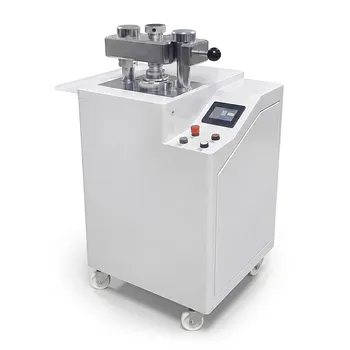
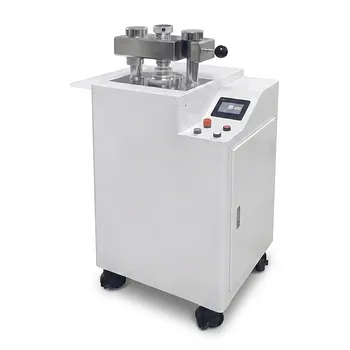
- Laboratory Hydraulic Pellet Press for XRF KBR FTIR Lab Applications
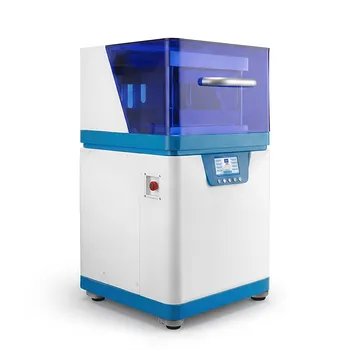
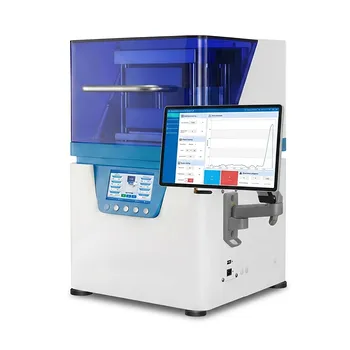
- Automatic XRF Pellet Press 40 Ton Hydraulic Sample Preparation Press for Fluorescent Spectroscopy Analysis
- Automatic Laboratory Hydraulic Pellet Press Machine for Lab Use
- Automatic Laboratory Hydraulic Press for XRF & KBR Pellet Press
- Laboratory Manual Hydraulic Pellet Press for Lab Use
People Also Ask
- What is the role of a laboratory hydraulic pellet press and stainless steel molds in the fabrication of RuO2/NbC anodes?
- What is the necessity of using a laboratory hydraulic pellet press in the preparation of biomass fuel pellets? Guide
- What is the significance of applying 200 MPa of pressure with a laboratory hydraulic pellet press for composite ceramics?
- How does a laboratory hydraulic pellet press contribute to SiCw/2024 aluminum composite preforms? Optimize Densification
- What function does a laboratory pellet press or rolling mill serve? Enhance Electrode Density and Performance