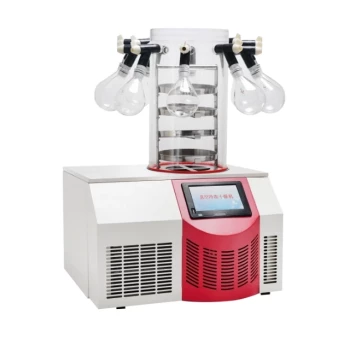
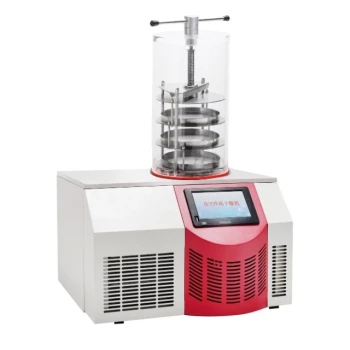
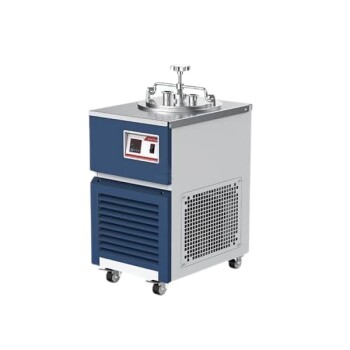
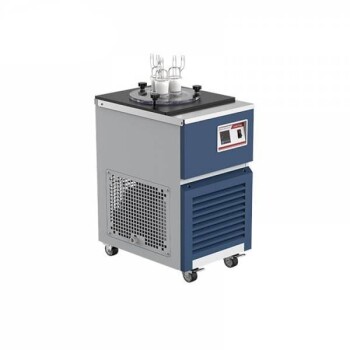
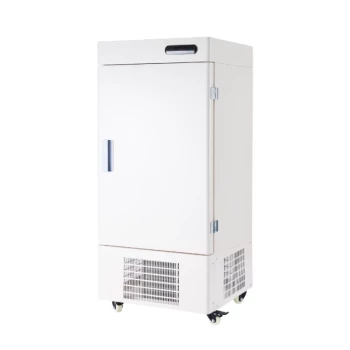
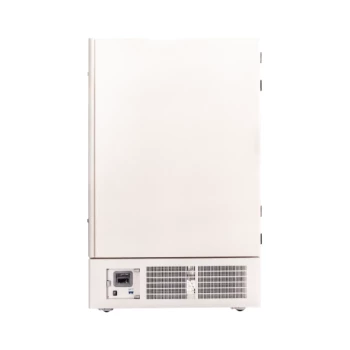
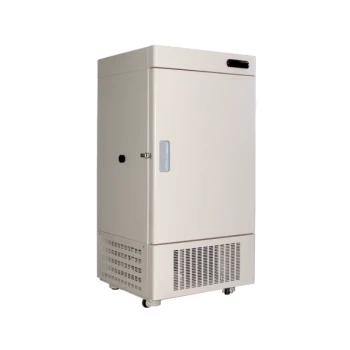
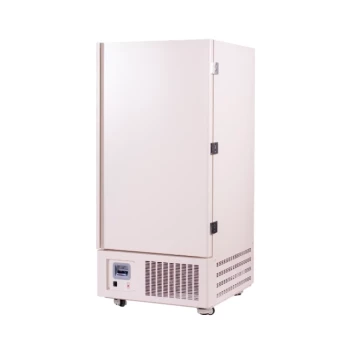
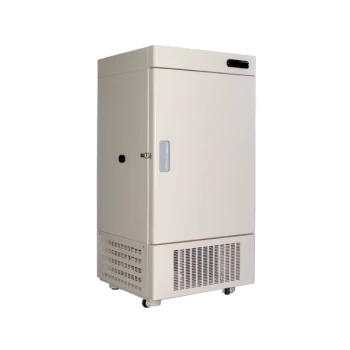
A laboratory vacuum freeze dryer is essential for biomass preservation because it avoids the structural damage inherent to traditional thermal drying methods. By removing moisture through sublimation in a low-temperature vacuum, it prevents hornification, a phenomenon where microporous structures collapse and surfaces harden due to heat and evaporation.
The core value of freeze drying lies in its ability to maintain the loose, porous architecture of pretreated biomass. This structural preservation guarantees that cellulose remains accessible, allowing for accurate assessments of saccharification efficiency during enzymatic hydrolysis.
The Mechanism of Preservation
Preventing Hornification
Traditional thermal drying relies on evaporation, which generates significant surface tension within the sample's microstructure.
This tension pulls pore walls together, causing the hornification phenomenon. The result is a hardened surface and a collapsed internal structure that is often irreversible.
The Power of Sublimation
Freeze drying operates in a low-temperature vacuum environment, converting ice directly into vapor without passing through the liquid phase.
This process eliminates the surface tension forces responsible for structural collapse. It effectively prevents the agglomeration and restacking of delicate structures, preserving the sample's original volume and shape.
Impact on Chemical and Biological Reactivity
Maximizing Enzyme Accessibility
For biomass applications, the physical structure is directly linked to chemical reactivity.
If the substrate hardens or pores collapse, enzyme molecules cannot bond effectively with the biomass during subsequent enzymatic hydrolysis. Freeze drying ensures the structure remains loose, maximizing the surface area available for these critical biochemical reactions.
Preserving Surface Functionality
Beyond simple pore structure, freeze drying preserves the chemical integrity of the sample surface.
As seen in similar applications with carbon materials, this method prevents the inactivation of surface functional groups. It produces a loose, fragile powder that retains its original biological activity and reactive potential upon reconstitution.
Understanding the Trade-offs
Process Efficiency vs. Sample Integrity
While thermal drying is generally faster and requires less complex equipment, the "cost" is paid in data accuracy.
The structural changes caused by thermal drying (hornification) introduce variables that distort experimental results, specifically regarding saccharification efficiency.
Long-Term Stability
Samples dried thermally may suffer from irreversible aggregation, limiting their shelf life and utility.
Freeze-dried samples, conversely, resist this degradation. They maintain their loose structure and fluorescence characteristics (in relevant materials), making them significantly better suited for long-term storage and future analysis.
Making the Right Choice for Your Goal
To determine whether a vacuum freeze dryer is required for your specific application, consider your analytical needs:
- If your primary focus is Accurate Enzymatic Hydrolysis: You must use freeze drying to prevent hornification and ensure enzymes can access the cellulose structure.
- If your primary focus is Surface Area Analysis: You should prioritize freeze drying to prevent the agglomeration of nanosheets and preserve microporous architecture.
- If your primary focus is Long-Term Storage: You should utilize freeze drying to maintain biological activity and prevent irreversible structural collapse over time.
Freeze drying is not merely a method of water removal; it is a structural preservation technique that ensures your laboratory analysis reflects the true potential of the biomass.
Summary Table:
| Feature | Vacuum Freeze Drying | Traditional Thermal Drying |
|---|---|---|
| Mechanism | Sublimation (Ice to Vapor) | Evaporation (Liquid to Vapor) |
| Structural Integrity | Preserves porous architecture | Causes collapse and hornification |
| Surface Tension | Eliminated (Low-temperature vacuum) | High (Leads to hardening) |
| Reactivity | Maximizes enzyme accessibility | Reduces chemical/biological activity |
| Best For | Accurate hydrolysis & long-term storage | Basic moisture removal |
Elevate Your Research with Precision Drying Solutions
Preserving the integrity of your biomass samples is critical for accurate enzymatic hydrolysis and surface analysis. KINTEK specializes in high-performance laboratory equipment designed to meet the rigorous demands of modern science. From advanced vacuum freeze dryers and freeze dryers (cold traps) to our precision crushing and milling systems, we provide the tools necessary to ensure your samples remain structurally sound and chemically active.
Whether you are focusing on battery research, material science, or biological preservation, KINTEK offers a comprehensive range of solutions including:
- High-temperature furnaces and vacuum systems
- Hydraulic presses (pellet, isostatic)
- High-pressure reactors and autoclaves
- Specialized ceramics and consumables
Don't compromise your data with inferior drying methods. Contact KINTEK today to discover how our expert solutions can enhance your laboratory's efficiency and results.
References
- Goutami Banerjee, Jonathan D. Walton. Alkaline peroxide pretreatment of corn stover: effects of biomass, peroxide, and enzyme loading and composition on yields of glucose and xylose. DOI: 10.1186/1754-6834-4-16
This article is also based on technical information from Kintek Solution Knowledge Base .
Related Products
- Benchtop Laboratory Vacuum Freeze Dryer
- High Performance Laboratory Freeze Dryer
- Benchtop Laboratory Freeze Dryer for Lab Use
- High Performance Laboratory Freeze Dryer for Research and Development
- 56L Vertical Laboratory Vacuum Drying Oven
People Also Ask
- What are the technical advantages of using a laboratory freeze dryer for porous carbon precursors? Preserve 3D Networks
- How do laboratory freeze dryers support scientific research? Preserve Sample Integrity for Reproducible Results
- Why is a laboratory freeze dryer preferred over traditional heating? Preserve Biochar Structure & Maximize Porosity
- What types of liquid samples can be processed using a laboratory freeze dryer? Preserve Your Sensitive Materials
- What role do laboratory freeze dryers play in the food industry? Unlock Superior Food Preservation