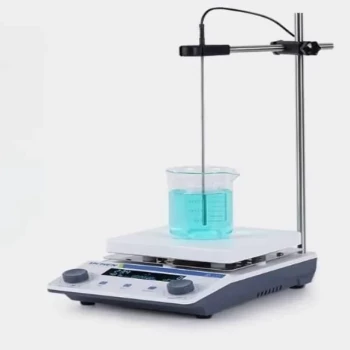
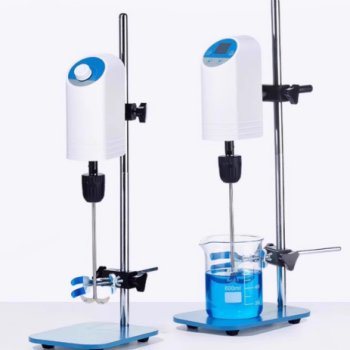
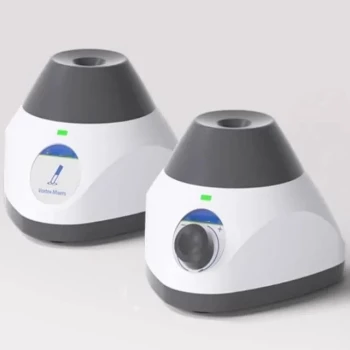
A multi-position magnetic stirrer is essential for maintaining uniform hydrodynamic conditions and ensuring continuous convective contact between the dye solution and the photocatalytic membrane.
This mechanical action is critical because it eliminates concentration gradients and minimizes mass transfer resistance within the solution. By doing so, it guarantees that the measured degradation rates reflect the true chemical efficiency of the membrane, rather than the physical speed at which dye molecules naturally diffuse to the surface.
Core Insight: In static solutions, the reaction rate is often bottled-necked by how slowly dye molecules drift toward the membrane. A multi-position stirrer removes this physical limitation across all samples simultaneously, ensuring that your kinetic data represents the inherent catalytic activity of the material itself.
Overcoming Physical Barriers
The primary challenge in solid-liquid photocatalysis is ensuring the pollutant actually reaches the catalyst.
Eliminating Mass Transfer Resistance
For a reaction to occur, dye molecules must physically contact the active sites on the membrane surface.
Without external force, a "stagnant boundary layer" forms around the membrane, slowing down the movement of molecules. Magnetic stirring creates forced convection, driving fresh solution to the membrane interface and removing treated solution.
Breaking Concentration Gradients
As the dye is degraded near the membrane, the local concentration drops.
If the solution is not mixed, this creates a gradient where the solution near the membrane is clean, but the bulk solution remains dirty. Continuous stirring homogenizes the solution, ensuring the concentration remains uniform throughout the vessel during the entire experiment.
Ensuring Data Integrity
The "multi-position" aspect of the equipment is just as critical as the stirring itself, particularly for comparative studies.
Isolating True Kinetics
To accurately calculate reaction kinetics, you must eliminate external variables.
If mass transfer is the limiting factor, your data will reflect the diffusion speed of the liquid, not the catalytic performance of your membrane. High-frequency rotation ensures the reaction is "reaction-limited" rather than "diffusion-limited," providing accurate data on the material's efficiency.
Standardization Across Samples
Experimental reliability relies on reproducibility.
A multi-position stirrer ensures that every sample in a batch experiences the exact same hydrodynamic forces. This rules out mixing variations as a cause for data discrepancies between different membrane formulations or dye concentrations.
Common Pitfalls to Avoid
While stirring is necessary, improper application can compromise your experiment.
Physical Damage to the Membrane
The mechanical force of the stir bar must be controlled.
If the stir bar directly impacts the membrane surface, it can cause abrasion or structural damage. This physical degradation can alter the active surface area, leading to skewed results that appear to be chemical changes but are actually mechanical failures.
Thermal Interference
Magnetic stirrers often generate heat during long-term operation.
Photocatalytic reactions are temperature-sensitive. If the multi-position plate heats up unevenly or excessively, it can artificially accelerate the reaction kinetics, introducing thermal artifacts into your degradation data.
Making the Right Choice for Your Experiment
To maximize the validity of your dye degradation research, tailor your stirring strategy to your specific metric.
- If your primary focus is Intrinsic Activity: Ensure the stirring speed is high enough that increasing it further does not change the reaction rate, confirming you have eliminated mass transfer limitations.
- If your primary focus is Comparative Screening: Use the multi-position feature to run all variants simultaneously, guaranteeing that any difference in performance is due to material properties, not mixing variations.
Ultimately, the stirrer is not just a mixer; it is a control mechanism that standardizes the physical environment so the chemical chemistry can be measured accurately.
Summary Table:
| Feature | Role in Dye Degradation Experiments | Impact on Research Data |
|---|---|---|
| Forced Convection | Eliminates stagnant boundary layers near membranes | Ensures reaction-limited (not diffusion-limited) kinetics |
| Homogenization | Breaks concentration gradients within the bulk solution | Guarantees measured rates reflect true chemical efficiency |
| Multi-Position Array | Provides identical hydrodynamic forces across all samples | Eliminates mixing variables for accurate comparative studies |
| Speed Control | Maintains constant mechanical action without surface damage | Prevents physical membrane abrasion and structural failure |
| Thermal Stability | Minimizes heat transfer to sensitive catalytic solutions | Prevents thermal artifacts from skewing reaction kinetics |
Precision mixing is the foundation of reliable photocatalytic research. KINTEK provides high-performance multi-position magnetic stirrers designed to standardize your experimental environment and eliminate mass transfer limitations. Beyond stirring solutions, we offer a comprehensive suite of laboratory equipment, including electrolytic cells, electrodes, and high-temperature reactors to support your material science breakthroughs. Our portfolio also features specialized crushing and milling systems, hydraulic presses, and advanced cooling solutions like freeze dryers and ULT freezers. Contact KINTEK today to equip your lab with the tools needed for reproducible, high-impact results.
References
- Lin Peng, Rui Zhang. A New Strategy of Chemical Photo Grafting Metal Organic Framework to Construct NH2-UiO-66/BiOBr/PVDF Photocatalytic Membrane for Synergistic Separation and Self-Cleaning Dyes. DOI: 10.3390/molecules28227667
This article is also based on technical information from Kintek Solution Knowledge Base .
Related Products
- Laboratory Small Constant Temperature Heated Magnetic Stirrer Heater and Stirrer
- Custom PTFE Teflon Parts Manufacturer for Magnetic Stirring Bar
- High Performance Laboratory Stirrers for Diverse Applications
- Three-dimensional electromagnetic sieving instrument
- Custom PTFE Teflon Parts Manufacturer for PTFE Stirring Bar Recovery Rod
People Also Ask
- What role does a magnetic stirrer with heating play in ZnO nanoparticle synthesis? Precision Control for Quality Results
- What role does a constant temperature heating magnetic stirrer play in MFC-HAp synthesis? Achieve Material Homogeneity
- What is the function of a laboratory magnetic stirrer in Ni–Cr–P electrodeposition? Optimize Ion Transport & Coating
- Why is a laboratory magnetic stirrer required for benzoic acid esters? Boost Reaction Speed & Yield with High RPM
- What role does a laboratory magnetic stirrer play in TiO2 and TiO2-Ag sol preparation? Master Chemical Kinetics