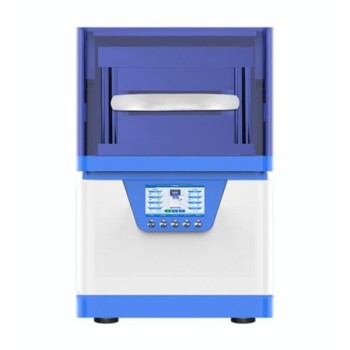
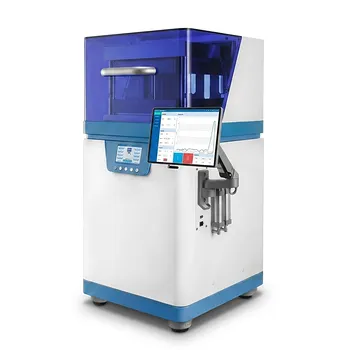
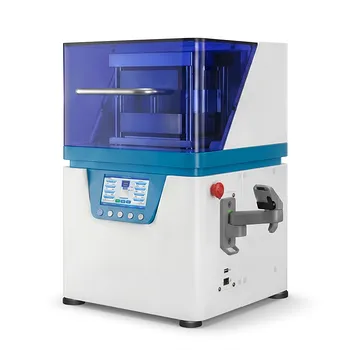
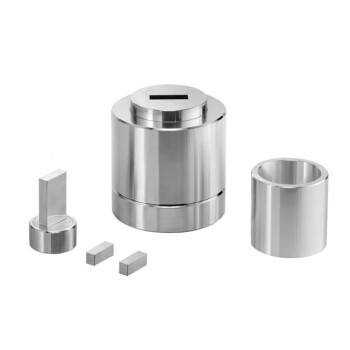
Applying 10 MPa of pressure via a precision laboratory press is a critical densification step used to minimize internal resistance and ensure mechanical adhesion in electrode films. This specific pressure level compresses the electrode mixture—typically reducing film thickness from 200 µm to 100 µm—to create intimate physical contact between active material particles and the current collector, which is essential for efficient electron and ion transport.
The core objective of applying 10 MPa is to transform a loose composite of active materials and binders into a densified, high-performance electrode. This compaction reduces interfacial resistance and prevents material delamination, directly leading to superior rate performance and longer cycle life in energy storage devices.
Enhancing Electrochemical Performance
Reducing Internal and Interfacial Resistance
The primary function of the 10 MPa pressure is to significantly increase the tightness of contact between individual particles within the film. By forcing the active material, conductive carbon black, and binder together, the press eliminates microscopic gaps that act as barriers to electron flow. This compaction also ensures the mixture is firmly pressed into the current collector (such as nickel foam), which dramatically lowers the interfacial resistance.
Optimizing Transport Kinetics for High Rate Performance
High-precision compression shortens the transport distance that ions and electrons must travel during charge and discharge cycles. By reducing the film thickness by approximately 50%, the laboratory press enables the electrode to handle high current densities. This optimization is what allows a supercapacitor or battery to maintain high efficiency even during rapid energy release.
Ensuring Mechanical Robustness
Preventing Material Shedding and Delamination
A precision press applies constant, vertical pressure to ensure the PTFE binder or other polymer agents effectively lock the active materials to the current collector. Without this 10 MPa force, the electrode material is prone to peeling or shedding when it comes into contact with the liquid electrolyte. This physical compaction is vital for maintaining the structural integrity of the electrode throughout its lifespan.
Improving Stability During Electrochemical Cycling
Energy storage components undergo physical stress during repeated cycling. The density achieved at 10 MPa ensures that the particles do not shift or lose contact as ions move in and out of the structure. This mechanical stability is a prerequisite for achieving an extended cycle life, preventing the "fading" of capacity over thousands of cycles.
Understanding the Trade-offs
The Risk of Over-Compaction
While 10 MPa is often the "sweet spot," applying excessive pressure can be counterproductive. If the pressure is too high, it may crush the active material particles or collapse the pore structure of the electrode. This reduces the surface area available to the electrolyte, which can actually hinder ion diffusion and decrease overall capacity.
Consistency and Precision Requirements
Using a manual or low-precision method instead of a precision laboratory press can lead to uneven thickness across the electrode. Non-uniformity creates "hot spots" where current density is higher in some areas than others, leading to premature failure of the cell. Maintaining a constant, repeatable pressure is just as important as the specific 10 MPa value itself.
How to Apply This to Your Project
Making the Right Choice for Your Goal
To achieve the best results with your electrode films, consider your primary performance metric when calibrating your laboratory press:
- If your primary focus is High Rate Capability: Use the precision press to achieve maximum density and minimum thickness, ensuring the shortest possible electron path.
- If your primary focus is Long-Term Cycle Stability: Prioritize the 10 MPa setting to ensure a robust mechanical bond between the active material and the current collector to prevent delamination.
- If your primary focus is Maximizing Energy Density: Carefully monitor the final film thickness to ensure the highest mass of active material is packed into the smallest possible volume without sacrificing porosity.
Precision compaction is the bridge between a theoretical material mixture and a functional, high-performance energy storage electrode.
Summary Table:
| Key Metric | Impact of 10 MPa Pressure | Primary Benefit |
|---|---|---|
| Film Thickness | Reduction from ~200 µm to 100 µm | Enhanced energy density & rate performance |
| Interfacial Resistance | Minimizes gaps between particles and collector | Faster electron/ion transport kinetics |
| Mechanical Adhesion | Secures PTFE binder to current collector | Prevents material shedding and delamination |
| Cycling Stability | Maintains structural integrity under stress | Ensures long-term capacity retention |
Achieve Unmatched Precision in Battery Research with KINTEK
Ready to optimize your electrode fabrication process? KINTEK specializes in high-performance laboratory equipment designed for the rigorous demands of energy storage research. Our precision hydraulic presses (pellet, hot, and isostatic) ensure the repeatable 10 MPa pressure necessary to eliminate internal resistance and prevent material delamination.
Beyond compaction, KINTEK offers a comprehensive ecosystem for material science, including:
- High-Temperature Furnaces: Muffle, vacuum, and CVD systems for advanced material synthesis.
- Battery Research Tools: Specialized tools, electrolytic cells, and high-quality consumables like PTFE and ceramics.
- Sample Preparation: Crushing, milling, and sieving systems for uniform material composition.
Don't settle for inconsistent results. Partner with KINTEK to enhance your lab's efficiency and achieve superior electrochemical performance.
Contact our experts today to find the perfect press for your project!
References
- Azamat Taurbekov, Tolganay Atamanova. Investigations of Activated Carbon from Different Natural Sources for Preparation of Binder-Free Few-Walled CNTs/Activated Carbon Electrodes. DOI: 10.3390/jcs7110452
This article is also based on technical information from Kintek Solution Knowledge Base .
Related Products
- Automatic Laboratory Heat Press Machine
- Large Format Automatic Laboratory Hot Press 400x400 Plate for Industrial Material Sintering and Polymer Lamination
- Automatic Laboratory Hot Press Machine with Heated Platens 200x200mm Program Control Dual Heating Plates
- Laboratory Hydraulic Press Lab Pellet Press Machine for Glove Box
- Laboratory Hydraulic Press Split Electric Lab Pellet Press
People Also Ask
- What are the core advantages of using a laboratory hot press to produce Bi2Se3? Achieve 93% Density & High Conductivity
- Why is a laboratory hot press necessary for all-solid-state battery assembly? Reduce Impedance and Enhance Performance
- How does a three-stage pressure program affect rice husk particleboards? Optimize Bond Strength & Stability
- What is the primary function of a laboratory hot press in MEA assembly? Optimize Fuel Cell Bonding & Performance
- How does a laboratory hot press improve alloy performance? Optimize Liquid Phase Sintering for High-Strength Materials