600 MPa is the specific pressure threshold required to maximize the density and mechanical interlocking of powder particles. This high-intensity force drives the plastic deformation and displacement rearrangement necessary to eliminate internal voids and ensure tight particle contact. In master-alloyed processes, this contact is vital because it establishes the precise pathways for capillary flow and solid-state diffusion required during the sintering phase.
The core purpose of applying 600 MPa is to transform loose powder into a high-density green compact with sufficient structural integrity. By achieving this pressure, manufacturers ensure that the master alloy can effectively distribute itself through liquid-phase or solid-state mechanisms during subsequent heat treatment.
Driving Density Through Plastic Deformation
Overcoming Particle Resistance
At 600 MPa, the hydraulic press exerts enough force to overcome the inherent yield strength of the metallic powder particles. This causes plastic deformation, where individual grains flatten and mold around one another to fill interstitial gaps. This physical transformation is the primary driver for increasing the relative density of the green compact to levels exceeding 76%.
Eliminating Internal Porosity
High unit pressure forces a displacement rearrangement of the alloy powder, effectively "squeezing out" the air pockets between particles. Reducing this initial porosity is critical because it directly dictates the residual porosity of the final sintered product. Lower initial porosity leads to higher mechanical strength and improved corrosion resistance in the finished component.
Facilitating Master-Alloy Sintering Kinetics
Enabling Capillary Flow
In master-alloying, certain components of the powder mix are designed to melt at lower temperatures than the base metal. A pressure of 600 MPa ensures tight contact interfaces that allow for effective capillary flow once the master alloy reaches its liquidus state. Without this intimate contact, the liquid phase cannot migrate efficiently, leading to poor alloying and localized defects.
Optimizing Diffusion Paths
Solid-state diffusion relies on atomic movement across particle boundaries, which is only possible if those boundaries are in direct contact. The 600 MPa compaction creates a dense network of diffusion paths, allowing atoms to migrate more freely during sintering. This accelerated diffusion is fundamental for achieving a homogeneous alloy structure and high hardness.
Ensuring Structural Integrity and Precision
Maximizing Mechanical Interlocking
Beyond density, high pressure creates mechanical interlocking between the jagged edges of the powder particles. This interlocking provides the "green strength" necessary for the compact to be handled and moved into the sintering furnace without cracking or crumbling. Sufficient green strength is a prerequisite for maintaining the near-net shape of complex industrial components.
Preventing Sintering Defects
Precise and high-level pressure control eliminates internal density gradients that can cause uneven shrinkage. If a compact is not pressed with sufficient force, it may experience non-uniform volume contraction or micro-cracking during the high-temperature sintering cycle. A stable 600 MPa application secures the dimensional stability of the final material.
Understanding the Trade-offs
While 600 MPa is often the "sweet spot" for many alloy systems, it is not without risks. Applying excessive pressure can lead to die wall friction and accelerated wear on high-precision molds, increasing maintenance costs.
Furthermore, if the pressure is released too quickly or if the powder is over-compacted, the material may experience "springback" or lamination cracks. These internal stresses occur when the elastic energy stored in the particles is released, potentially compromising the structural integrity of the green compact before it even reaches the furnace.
How to Apply This to Your Compaction Process
To achieve the best results with 600 MPa compaction, you must align your pressure strategy with your specific material goals.
- If your primary focus is maximizing final hardness: Ensure the 600 MPa is applied uniformly to eliminate all possible voids, providing the tightest possible interface for atomic diffusion.
- If your primary focus is master-alloy distribution: Focus on the "tight packing" aspect of the 600 MPa pressure to ensure no gaps disrupt the capillary flow of the liquid phase.
- If your primary focus is dimensional accuracy: Use a press with precise pressure control to avoid density gradients, which prevents non-uniform shrinkage during the sintering stage.
By mastering the application of 600 MPa, you create the essential foundation for high-performance, high-density powder metallurgy components.
Summary Table:
| Compaction Mechanism | Physical Impact on Compact | Sintering & Performance Benefit |
|---|---|---|
| Plastic Deformation | Particles flatten; density exceeds 76% | Eliminates internal voids and gaps |
| Displacement Rearrangement | Squeezes out air pockets/porosity | Higher mechanical strength & corrosion resistance |
| Mechanical Interlocking | Jagged edges bind together | High "green strength" for handling |
| Interface Optimization | Creates tight contact boundaries | Enables capillary flow & atomic diffusion |
| Pressure Uniformity | Eliminates density gradients | Prevents uneven shrinkage and cracking |
Achieve Peak Performance in Powder Metallurgy with KINTEK
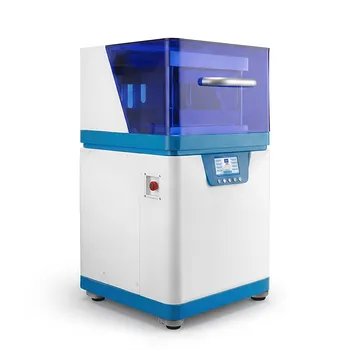
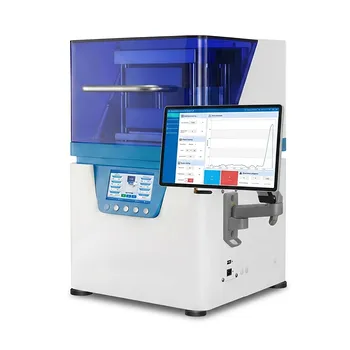
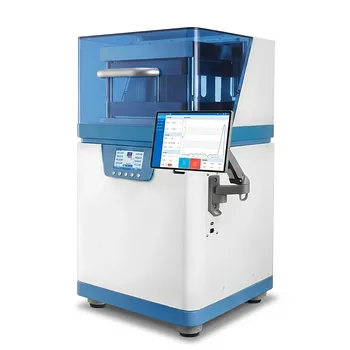
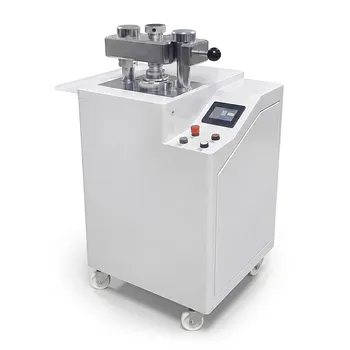
Consistently reaching the 600 MPa threshold requires precision-engineered equipment that guarantees uniformity and reliability. KINTEK specializes in advanced industrial hydraulic presses (pellet, hot, and isostatic) designed to deliver the exact force needed for high-density green compacts and superior mechanical interlocking.
Beyond compaction, we provide a complete ecosystem for your metallurgical success, including:
- High-Temperature Sintering: Muffle, vacuum, and atmosphere furnaces for optimized diffusion.
- Material Preparation: Crushing, milling systems, and high-purity ceramic crucibles.
- Precision Control: Specialized tools for battery research and material characterization.
Ready to eliminate porosity and maximize the structural integrity of your alloyed components?
Contact KINTEK Experts Today — Let us help you select the ideal press and furnace configuration to elevate your production standards.
References
- Stefan Geroldinger, Herbert Danninger. Hardenability of PM Steel Alloyed Using Tailored Master Alloys. DOI: 10.1515/htm-2023-0028
This article is also based on technical information from Kintek Solution Knowledge Base .
Related Products
- Automatic Hydraulic Hot Press with 500x500mm Heating Plates and Multi Stage PLC Control for Material Sintering
- Automatic High Temperature Heated Hydraulic Press Machine with Heated Plates for Lab
- Heated Hydraulic Press Machine with Heated Plates for Vacuum Box Laboratory Hot Press
- 24T 30T 60T Heated Hydraulic Press Machine with Heated Plates for Laboratory Hot Press
- Fully Automatic Heated Hydraulic Lab Press for Materials Sintering and Sample Preparation
People Also Ask
- How do hydraulic presses facilitate material solidification in Low-Temperature LPS? Optimize Your Material Densification
- Why is 800 MPa required for TiNiPdCu alloy green bodies? Master High-Density Compaction for Superior Material Strength
- How does KBr pellet preparation facilitate FTIR of high-ash mud? Precision Sample Prep for Structural Analysis
- Why is an industrial hydraulic press with precision stainless steel molds used? For Uniform Mo-Fe Precursor Compacts.
- Purpose of Coaxial Ring Molds & Presses in EM Testing? Achieve Precise VNA Data & Fit