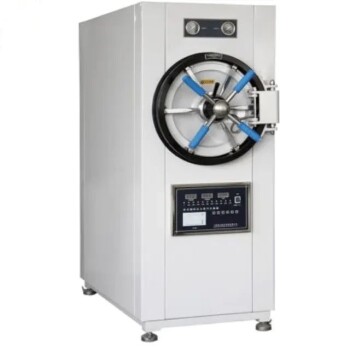
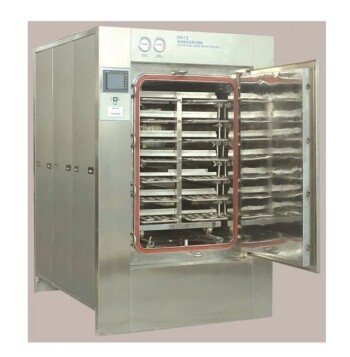
A pressure steam sterilizer is the fundamental gatekeeper of experimental validity. It utilizes high-temperature, high-pressure saturated steam to eradicate all existing microorganisms on your laboratory glassware and in physiological saline. This sterilization step is critical because it ensures that any observed bacterial death is caused solely by your photocatalytic material, Ga0.25Zn4.67S5.08, rather than by environmental variables.
Core Takeaway: In bacterial disinfection experiments, data integrity relies entirely on starting with a sterile environment. Using an autoclave eliminates background microbial "noise," allowing you to accurately calculate E. coli survival rates and attribute results specifically to the photocatalytic activity of your material.
Establishing a Reliable Baseline
To measure the effectiveness of Ga0.25Zn4.67S5.08, you must first ensure that no other factors are influencing the bacteria.
Eliminating Background Interference
Laboratory environments are naturally populated by various microbes.
Without sterilization, your glassware and saline solution introduce unknown quantities of bacteria into the experiment.
The pressure steam sterilizer (autoclave) kills these background organisms, ensuring they do not skew your initial bacterial counts.
Isolating the Variable
The goal of your experiment is to test the specific photocatalytic properties of Ga0.25Zn4.67S5.08.
If the equipment is not sterile, you cannot determine if a reduction in bacteria is due to your material or pre-existing competition between microbes.
Sterilization isolates your material as the single variable affecting the outcome.
Ensuring Calculation Accuracy
The quantitative output of your experiment relies on precise inputs.
Accurate Survival Rate Calculation
Your analysis likely involves calculating the survival rate of specific bacteria, such as E. coli.
To calculate a rate, you must have a verified starting population and a verified ending population.
Contaminated equipment makes the "starting population" an unknown variable, rendering any subsequent calculation of survival rates mathematically invalid.
The Role of Saturated Steam
The mechanism of the sterilizer is key to its effectiveness.
It uses saturated steam under high pressure to penetrate surfaces that standard cleaning cannot reach.
This ensures that even the microscopic irregularities in glassware do not harbor bacteria that could re-contaminate your sterile saline or the Ga0.25Zn4.67S5.08 sample.
Understanding the Risks of Omission
While sterilization adds time to the experimental workflow, skipping it introduces fatal flaws to your research.
The Risk of False Data
If you skip sterilization, you risk generating false positives or false negatives.
Foreign bacteria might grow faster than E. coli, masking the effectiveness of your material.
Alternatively, pre-existing contaminants might die off naturally, falsely inflating the apparent success of the Ga0.25Zn4.67S5.08.
Compounding Errors
Contamination does not just affect one data point; it compounds over time.
If your physiological saline is contaminated, every single sample used in that batch is compromised.
This renders the entire dataset unusable for publication or accurate analysis.
Ensuring Experimental Success
To obtain valid results for your Ga0.25Zn4.67S5.08 disinfection experiments, apply the following standards:
- If your primary focus is Data Accuracy: Ensure every piece of glassware and all saline solutions undergo a full autoclave cycle to guarantee a zero-contamination baseline.
- If your primary focus is Reproducibility: Standardize the sterilization temperature and pressure settings to ensure that E. coli survival rates are calculated under identical conditions for every trial.
Sterilization is not merely a cleaning step; it is the control mechanism that validates the scientific accuracy of your photocatalytic research.
Summary Table:
| Feature | Purpose in Bacterial Experiments | Benefit to Ga0.25Zn4.67S5.08 Research |
|---|---|---|
| Saturated Steam | High-pressure penetration | Eradicates microbes in glassware pores/irregularities. |
| Baseline Control | Eliminates background flora | Ensures any bacterial death is attributed solely to the material. |
| Data Validation | Standardizes saline & glassware | Provides a verified starting population for survival rate math. |
| Contamination Prevention | Isolates experimental variables | Prevents false positives/negatives in photocatalytic analysis. |
Elevate Your Research Precision with KINTEK
Don't let contamination compromise your experimental results. KINTEK specializes in high-performance laboratory equipment designed for the most demanding scientific protocols. Whether you are conducting photocatalytic disinfection with specialized materials or routine microbiology, our comprehensive range of autoclaves and high-pressure reactors ensures a sterile, reliable baseline every time.
From advanced crushing and milling systems for material preparation to precision cooling solutions and lab consumables, we provide the tools you need to achieve reproducible data.
Ready to upgrade your lab's efficiency? Contact our experts today to find the perfect sterilization and processing solutions for your research goals.
References
- Tuo Yan, Huimin Huang. Preparation of Ga<sub>0.25</sub>Zn<sub>4.67</sub>S<sub>5.08</sub> Microsphere by Ultrasonic Spray Pyrolysis and Its Photocatalytic Disinfection Performance under Visible Light. DOI: 10.1155/2019/9151979
This article is also based on technical information from Kintek Solution Knowledge Base .
Related Products
- Laboratory Sterilizer Lab Autoclave Vertical Pressure Steam Sterilizer for Liquid Crystal Display Automatic Type
- Laboratory High Pressure Steam Sterilizer Vertical Autoclave for Lab Department
- Laboratory High Pressure Horizontal Autoclave Steam Sterilizer for Lab Use
- Portable High Pressure Laboratory Autoclave Steam Sterilizer for Lab Use
- Desktop Fast High Pressure Laboratory Autoclave Sterilizer 16L 24L for Lab Use
People Also Ask
- What is the primary function of a laboratory sterilization autoclave? Master the Physics of Wet Heat Sterilization
- In what industries and applications are steam sterilizers or autoclaves used? Discover Key Uses Across 4 Major Sectors
- What is a laboratory autoclave? A Guide to Sterilization with Pressurized Steam
- What precautions should be taken during autoclave in laboratory? A Complete Safety Guide to Prevent Burns and Explosions
- What extreme conditions does a laboratory autoclave simulate? Testing Wear Resistance of Nuclear Fuel Cladding