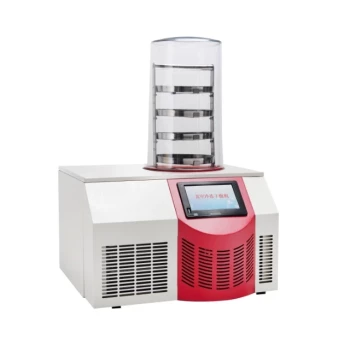
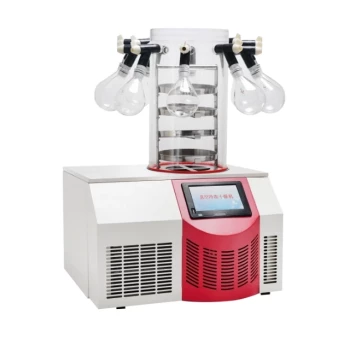
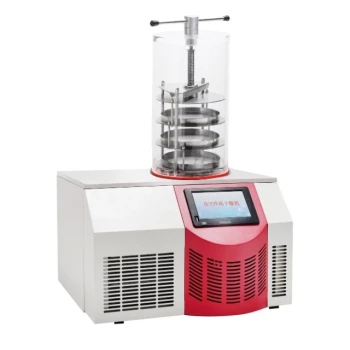
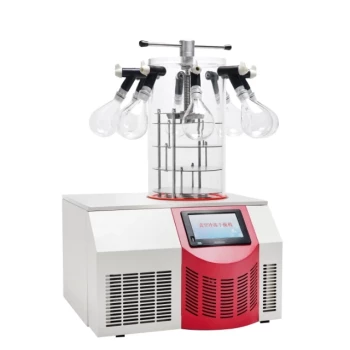
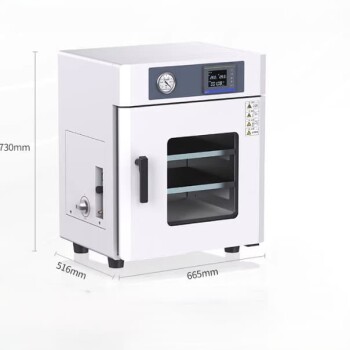
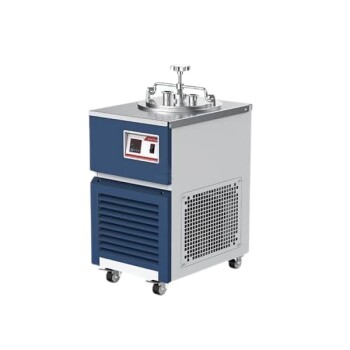
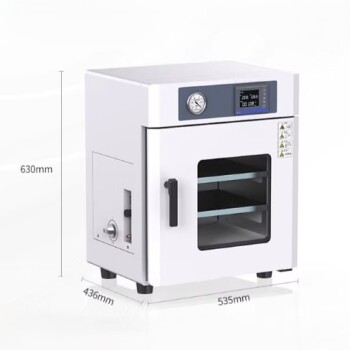
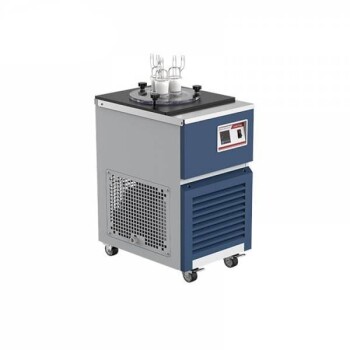
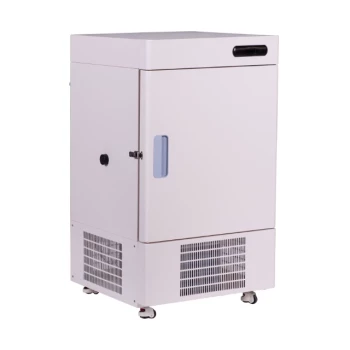
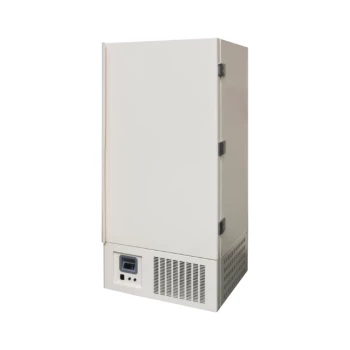
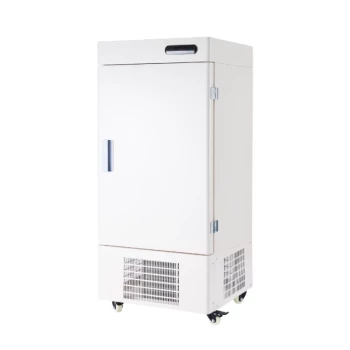
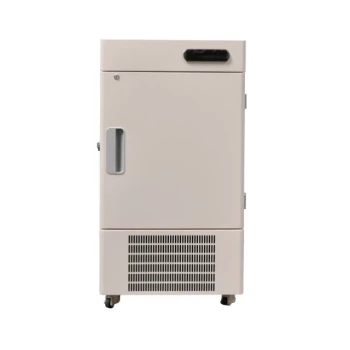
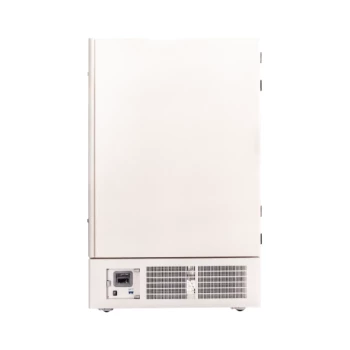
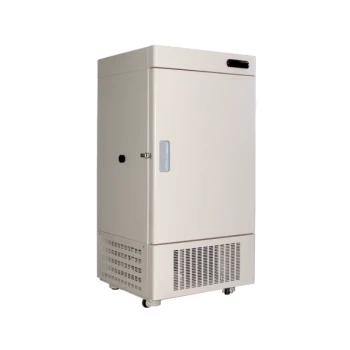
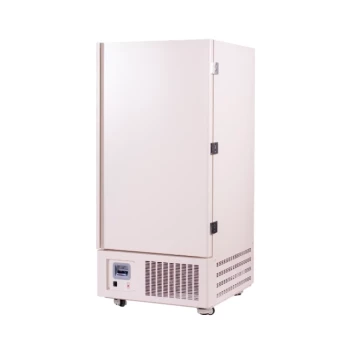
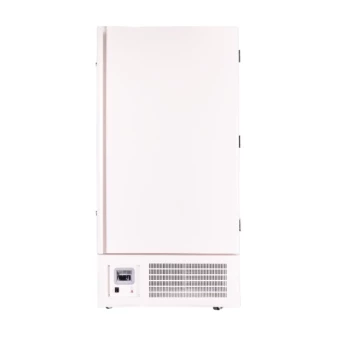
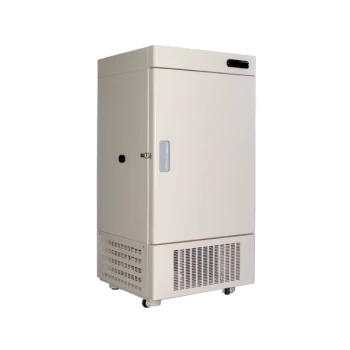
The vacuum freeze dryer (lyophilizer) is the critical instrument for stabilizing volatile compounds during microencapsulation. It enables the removal of moisture from the pectin-lemon oil emulsion at extremely low temperatures, specifically around -55 °C, under high vacuum pressure. This unique environment converts the liquid emulsion into a stable powder without subjecting the heat-sensitive essential oil to temperatures that would cause evaporation or chemical degradation.
Core Takeaway By utilizing a high-vacuum, low-temperature environment, the lyophilizer facilitates sublimation—removing water without passing through the liquid phase. This locks the lemon essential oil within the pectin matrix, preserving its chemical integrity and preventing the loss of volatile aromatics that occurs with standard drying methods.
The Challenge of Volatility
The Sensitivity of Essential Oils
Lemon essential oil is highly volatile and chemically fragile. When exposed to heat or air, its active compounds can rapidly evaporate or degrade, leading to a loss of quality and potency.
The Function of the Pectin Matrix
To protect the oil, it is emulsified into a pectin matrix. However, this creates a liquid mixture that must be dried to form a usable, shelf-stable product.
The Drying Dilemma
Standard drying methods require heat to evaporate water. Applying heat to this emulsion would inevitably destroy the very oil you are trying to encapsulate, defeating the purpose of the process.
How the Lyophilizer Solves the Problem
Extreme Low-Temperature Processing
The vacuum freeze dryer operates at approximately -55 °C. By freezing the material immediately, the device locks the oil droplets in place within the pectin structure before drying begins.
Vacuum-Induced Sublimation
Under high vacuum pressure, the frozen water in the emulsion undergoes sublimation. This means the ice turns directly into vapor without becoming liquid water first.
Preservation of Chemical Integrity
Because the water is removed without heat, the delicate chemical structure of the lemon essential oil remains unaltered. The process yields a dry, powdered microcapsule that retains the full profile of the original oil.
Understanding Process Criticality
The Risk of Temperature Fluctuations
The specific temperature of -55 °C is not arbitrary; it is a critical threshold. If the temperature rises during the process, the material may melt, causing the emulsion to break and the oil to leak or evaporate.
The Necessity of High Vacuum
A consistent high vacuum is required to drive sublimation at these low temperatures. Without adequate pressure control, moisture removal becomes inefficient, potentially leaving residual water that compromises the stability of the powder.
Making the Right Choice for Your Goal
To ensure the successful microencapsulation of lemon essential oil, align your process parameters with your specific quality targets:
- If your primary focus is Chemical Purity: Ensure the lyophilizer maintains a strict temperature of -55 °C to prevent thermal degradation of heat-sensitive compounds.
- If your primary focus is Physical Stability: Verify that high vacuum pressure is sustained throughout the cycle to achieve a fully dried, powdered microcapsule structure.
Ultimately, the vacuum freeze dryer serves as the safeguard for your product, bridging the gap between a fragile liquid emulsion and a robust, high-quality solid state.
Summary Table:
| Feature | Lyophilization (Freeze Drying) | Standard Heat Drying |
|---|---|---|
| Operating Temperature | Approx. -55 °C (Ultra-low) | High Temperatures (Heat-intensive) |
| Moisture Removal | Sublimation (Ice to Vapor) | Evaporation (Liquid to Vapor) |
| Essential Oil Impact | Preserves chemical integrity & volatiles | Causes evaporation & degradation |
| Final Product Form | Stable, high-purity microcapsule powder | Potentially compromised or oily residue |
| Matrix Stability | Locks oil within pectin structure | High risk of emulsion breakage |
Elevate Your Microencapsulation Precision with KINTEK
Don't let heat compromise the quality of your volatile compounds. KINTEK specializes in advanced laboratory solutions, offering high-performance vacuum freeze dryers (lyophilizers) designed to maintain the strict thermal thresholds required for delicate essential oil stabilization.
Our extensive portfolio supports your entire research workflow—from crushing and milling systems for raw material prep to cooling solutions (ULT freezers, freeze dryers) and high-temperature furnaces for specialized processing. Whether you are developing stable pectin matrices or scaling up pharmaceutical powders, KINTEK provides the reliability and precision your lab demands.
Ready to optimize your drying process? Contact KINTEK today to consult with our experts on the right equipment for your application!
References
- Belkis Akachat, Malika Barkat. Development of Pectin-Based Films with Encapsulated Lemon Essential Oil for Active Food Packaging: Improved Antioxidant Activity and Biodegradation. DOI: 10.3390/foods14030353
This article is also based on technical information from Kintek Solution Knowledge Base .
Related Products
- Benchtop Laboratory Vacuum Freeze Dryer
- High Performance Laboratory Freeze Dryer
- High Performance Laboratory Freeze Dryer for Research and Development
- Benchtop Laboratory Freeze Dryer for Lab Use
- Vacuum Cold Mounting Machine for Sample Preparation
People Also Ask
- What are the technical advantages of using a laboratory freeze dryer for porous carbon precursors? Preserve 3D Networks
- How do laboratory freeze dryers support scientific research? Preserve Sample Integrity for Reproducible Results
- Why is a laboratory freeze dryer preferred over traditional heating? Preserve Biochar Structure & Maximize Porosity
- What types of liquid samples can be processed using a laboratory freeze dryer? Preserve Your Sensitive Materials
- What role do laboratory freeze dryers play in the food industry? Unlock Superior Food Preservation