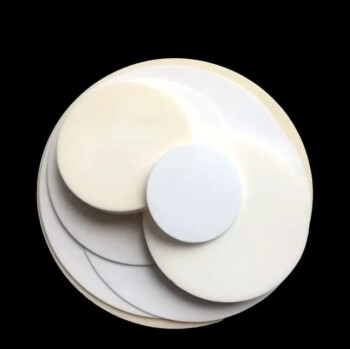
Alumina (aluminum oxide) is selected primarily for its chemical stability and refractoriness. In the high-stakes environment of melting nickel-based superalloys, alumina furnace linings withstand severe thermal shocks while acting as a crucial barrier. This prevents chemical reactions between the molten metal and the furnace wall that would otherwise compromise the alloy's purity.
The selection of alumina is not just about heat resistance; it is about chemical inertness. By preventing contamination from the furnace lining, alumina ensures the precise composition required for the structural integrity of high-performance aero-engine components.
Preserving Alloy Integrity
Combating Contamination
Nickel-based superalloys rely on a precise mixture of elements, such as nickel, chromium, cobalt, and titanium. Alumina’s chemical inertness prevents the furnace lining from reacting with these molten elements. This eliminates the introduction of impurities that could weaken the final product.
Ensuring Mechanical Stability
The ultimate goal is producing turbine blade materials with stable mechanical properties. Even trace impurities from a reactive lining could alter the alloy's performance. Alumina acts as a neutral vessel to maintain the intended metallurgical standards.
Withstanding Extreme Environments
Handling High Temperatures
Aero-engine components require pouring temperatures exceeding 1500°C. Alumina possesses exceptional refractoriness, allowing it to maintain structural integrity under these intense thermal conditions without degrading.
Resisting Thermal Shock
The melting process involves rapid temperature changes. Alumina is specifically chosen because it can absorb the severe thermal shocks inherent in superalloy melting operations without cracking or failing.
The Role of Induction Melting
Electromagnetic Stirring
These alloys are often processed in induction melting furnaces. This method uses electromagnetic induction to stir the melt, ensuring a uniform distribution of the various alloying elements.
Synergy with Alumina
While the furnace provides the heat and vigorous stirring, the alumina lining provides the necessary stability. The combination ensures that the rapid melting and agitation do not erode the wall or degrade the melt quality.
Understanding the Risks of Material Mismatch
The Cost of Reaction
The primary pitfall in this process is using a lining with insufficient chemical stability. If the molten metal reacts with the furnace wall, it introduces impurities that act as defects in the alloy. This directly compromises the mechanical properties required for critical applications like turbine blades.
Thermal Failure Points
Linings that lack alumina's specific resistance to thermal shock may degrade during rapid heating cycles. This endangers the equipment and introduces inconsistencies that are unacceptable for high-performance aerospace components.
Making the Right Choice for Your Goal
Selecting the correct lining is a strategic balance of thermal capability and chemical neutrality.
- If your primary focus is Alloy Purity: Prioritize alumina for its chemical inertness to prevent wall reactions and eliminate the introduction of impurities.
- If your primary focus is Process Durability: Rely on alumina’s refractoriness to withstand pouring temperatures over 1500°C and severe thermal cycling.
Ultimately, the use of alumina guarantees the high-grade composition necessary for critical aerospace applications.
Summary Table:
| Feature | Benefit for Superalloy Melting |
|---|---|
| Chemical Inertness | Prevents reactions between molten metal and lining, ensuring alloy purity. |
| High Refractoriness | Withstands pouring temperatures exceeding 1500°C without structural failure. |
| Thermal Shock Resistance | Absorbs rapid temperature changes during heating cycles without cracking. |
| Metallurgical Integrity | Maintains precise elemental composition for critical aero-engine components. |
| Induction Compatibility | Resists erosion during electromagnetic stirring and vigorous melt agitation. |
Elevate Your Melting Precision with KINTEK Solutions
Maintaining the integrity of nickel-based superalloys requires more than just heat; it requires the right materials and equipment. KINTEK specializes in high-performance laboratory solutions, offering a comprehensive range of high-temperature furnaces (induction, vacuum, and atmosphere) and specialized ceramics and crucibles designed to withstand the most demanding metallurgical processes.
Whether you are developing turbine blades or advanced aerospace components, our expert team provides the crushing, milling, and high-pressure reactor systems needed to ensure your materials meet the highest standards. Contact KINTEK today to discover how our premium laboratory equipment and high-purity consumables can enhance your process durability and product excellence.
References
- Ameer Hussein Morad, Ahmed Y. Shash. NICKEL BASE SUPERALLOYS USED FOR AERO ENGINE TURBINE BLADES. DOI: 10.21608/amme.2014.35549
This article is also based on technical information from Kintek Solution Knowledge Base .
Related Products
- High Temperature Alumina (Al2O3) Furnace Tube for Engineering Advanced Fine Ceramics
- 1700℃ Laboratory High Temperature Tube Furnace with Alumina Tube
- 1400℃ Laboratory High Temperature Tube Furnace with Alumina Tube
- High Temperature Wear-Resistant Alumina Al2O3 Plate for Engineering Advanced Fine Ceramics
- Advanced Engineering Fine Ceramics Alumina Ceramic Saggar for Fine Corundum
People Also Ask
- What is the primary function of an Alumina (Al2O3) tube in LLZTO sintering? Optimize Your Thermal Processing
- What role does a high-alumina furnace tube play in high-temperature nickel slag reduction? Ensure 1400°C Precision
- How does an alumina tube furnace with a controlled atmosphere simulate conditions in CSP environments? Master Accuracy.
- How do you clean an alumina tube furnace? Extend Tube Life with Proper Maintenance
- How to clean an alumina tube furnace? Extend Tube Life and Ensure Experimental Purity