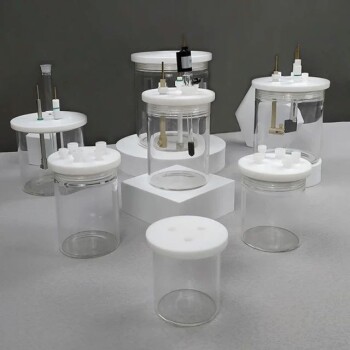
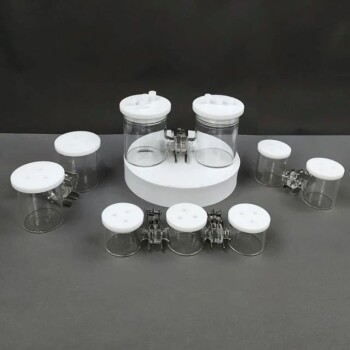
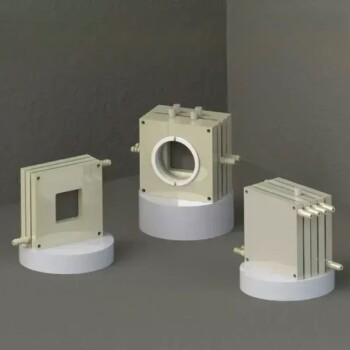
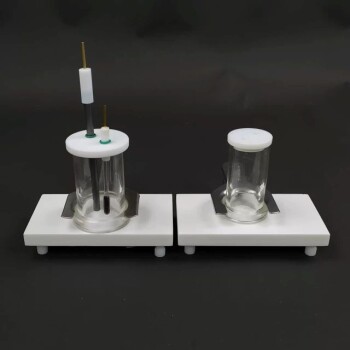
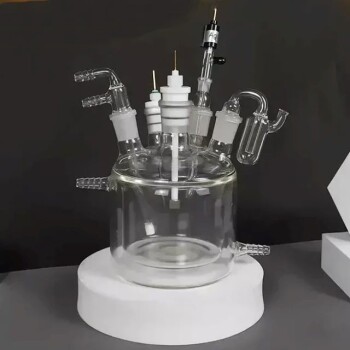
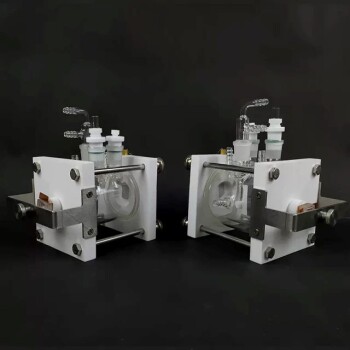
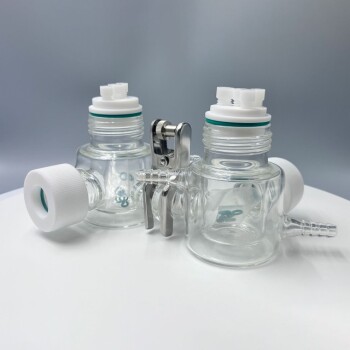
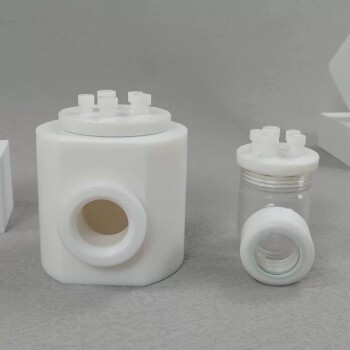
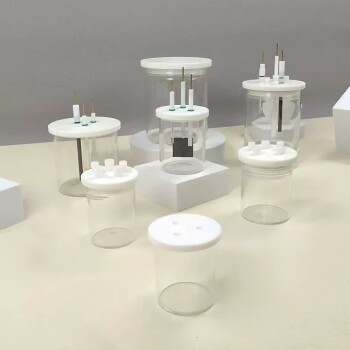
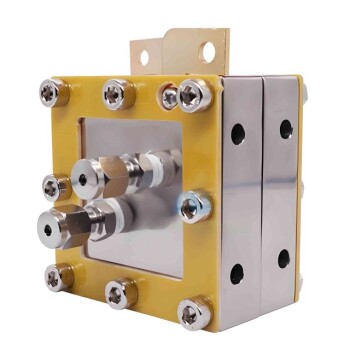
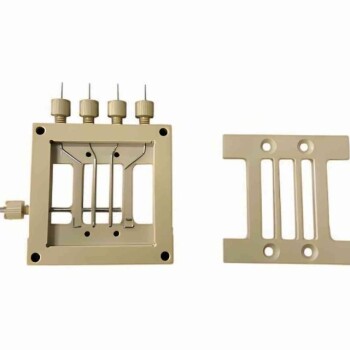
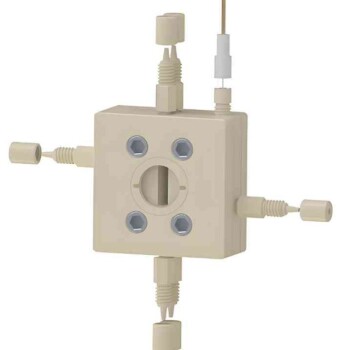
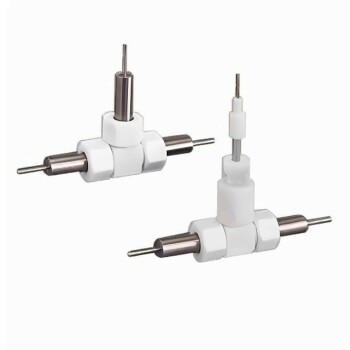
An electrolytic cell system serves as the foundational interface for quantifying the photoelectrochemical (PEC) capabilities of BiFeO3-based materials. By establishing a standard three-electrode configuration, this system allows you to apply precise bias voltages to the material within a controlled electrolyte environment. This precision is required to capture essential metrics—specifically photocurrent density and electrochemical impedance—which are impossible to measure accurately in an uncontrolled setting.
The electrolytic cell isolates the specific electrochemical behaviors of BiFeO3-based materials by controlling the voltage environment. It functions as the critical translation layer that turns material modifications—such as doping or heterostructuring—into measurable data regarding charge migration and transfer resistance.
The Mechanics of PEC Evaluation
Precision via Three-Electrode Configuration
To evaluate BiFeO3 accurately, you cannot simply measure current across two points. The electrolytic cell utilizes a three-electrode configuration to isolate the performance of the working electrode (the BiFeO3 material).
This setup ensures that the applied bias voltages are precise and stable relative to a reference electrode. It eliminates voltage drops associated with the counter electrode, ensuring the data reflects the material's properties, not the testing equipment's limitations.
Measuring Photocurrent Density
The primary output of this system is the photocurrent density-potential curve. This dataset maps how the material generates current under illumination across a range of applied potentials.
Through this measurement, the cell reveals how specific modifications, such as doping or heterostructures, directly influence the material's ability to harvest light and generate charge carriers.
Analyzing Internal Material Dynamics
Electrochemical Impedance Spectroscopy (EIS)
Beyond simple current measurements, the electrolytic cell enables Electrochemical Impedance Spectroscopy (EIS). This technique is vital for looking "inside" the reaction mechanism.
EIS data allows you to quantify the interfacial charge transfer resistance. This metric tells you how easily charge carriers can move from the BiFeO3 surface into the electrolyte, a key bottleneck in photocatalysis.
Determining Carrier Migration and Layer Width
The controlled environment of the cell allows researchers to calculate photocatalytic carrier migration rates. It separates the efficiency of charge generation from the efficiency of charge transport.
Furthermore, these measurements help define the space charge layer width. Understanding this width is essential for optimizing the thickness of BiFeO3 films to match their charge diffusion lengths.
Optimizing Cell Design for Accuracy
Handling Gas Evolution
When your research involves reactions that produce gas, such as the Hydrogen Evolution Reaction (HER) or Oxygen Evolution Reaction (OER), a standard cell may be insufficient.
In these cases, H-type electrolytic cells are necessary. These specialized designs physically separate the cathode and anode chambers to prevent product cross-interference, ensuring that generated gases do not skew the electrochemical readings.
Ensuring Transparency and Purity
The physical construction of the cell dictates the quality of the optical data. Using high-transparency glass (such as quartz) is non-negotiable to ensure the light source reaches the electrode without scattering or absorption losses.
Additionally, the system must support high-purity consumables, including platinum counter electrodes. This prevents contamination from corrosion, which is critical for ensuring data accuracy and repeatability over long testing cycles.
Making the Right Choice for Your Goal
To select the correct electrolytic setup for your BiFeO3 research, consider your specific experimental targets:
- If your primary focus is fundamental electronic properties: Prioritize a standard cell with a high-precision reference electrode to accurately map space charge layers and carrier migration rates via EIS.
- If your primary focus is product analysis (HER/OER): specific H-type cell design is required to separate chambers and isolate gas evolution for accurate quantification.
Ultimately, the electrolytic cell is not just a container; it is the precision instrument that validates whether your material design strategy is actually improving charge transfer efficiency.
Summary Table:
| Metric Evaluated | Role of Electrolytic Cell | Key Measurement Technique |
|---|---|---|
| Charge Generation | Provides controlled illumination & bias | Photocurrent Density (J-V) Curves |
| Interfacial Kinetics | Isolates electrode-electrolyte interface | Electrochemical Impedance (EIS) |
| Carrier Migration | Quantifies charge transport efficiency | Space Charge Layer Analysis |
| Gas Evolution | Prevents product cross-interference | H-type Cell Separation (HER/OER) |
| Applied Potential | Ensures stable, precise voltage control | Three-Electrode Configuration |
Elevate Your Material Research with KINTEK Precision
Are you looking to optimize the photoelectrochemical performance of your BiFeO3-based materials? KINTEK specializes in high-performance laboratory solutions designed for rigorous research.
From high-transparency electrolytic cells and electrodes to specialized H-type cells, our equipment ensures the data accuracy required for measuring carrier migration and interfacial resistance. Beyond electrochemical tools, we offer a comprehensive range of high-temperature furnaces, hydraulic presses, and battery research consumables to support every stage of your material synthesis and testing.
Ready to achieve superior data repeatability? Contact our technical experts today to find the perfect configuration for your laboratory's needs.
References
- Yassine Nassereddine, Mustapha Jouiad. Recent Advances toward Enhanced Photocatalytic Proprieties of BiFeO3-Based Materials. DOI: 10.3390/nano14010051
This article is also based on technical information from Kintek Solution Knowledge Base .
Related Products
- PTFE Electrolytic Cell Electrochemical Cell Corrosion-Resistant Sealed and Non-Sealed
- Super Sealed Electrolytic Electrochemical Cell
- Electrolytic Electrochemical Cell with Five-Port
- H Type Electrolytic Cell Triple Electrochemical Cell
- Electrolytic Electrochemical Cell Gas Diffusion Liquid Flow Reaction Cell
People Also Ask
- What is the necessity of selecting a PTFE electrolytic cell? Ensure Precise Graphene Corrosion Testing Accuracy
- What is the proper method for cleaning the surface of an all-PTFE electrolytic cell? Ensure Accurate Results with a Pristine Surface
- How should an all-PTFE electrolytic cell be stored after use? Expert Maintenance Tips for Long-Lasting Performance
- What is the proper cleaning method for an all-PTFE electrolytic cell? Essential Tips for Surface Integrity
- What are the standard opening specifications for all-PTFE electrolytic cells? A Guide to Sealed vs. Non-Sealed Ports