Chemical Vapor Deposition (CVD) equipment is uniquely capable of engineering superhydrophobic surfaces because it can precisely deposit gaseous reactants to form solid thin films on complex geometries. This technology excels at "decorating" micrometer-scale substrates, such as carbon fibers, with nanoscale elements like carbon nanotubes or nanoparticles. The result is a critical dual micro-nano roughness that physically repels water far more effectively than a single-scale surface could.
The Core Insight True superhydrophobicity requires more than just chemistry; it requires a specific physical architecture. CVD is the ideal tool for this because it builds a hierarchical structure—stacking nanoscale roughness on top of microscale roughness—which dramatically enhances the surface's ability to trap air and repel water.
The Mechanics of Hierarchical Roughness
Creating the Dual-Scale Structure
The primary advantage of CVD in this context is its ability to create a dual micro-nano roughness. Standard coatings often provide only one level of texture.
CVD, however, can take a micrometer-scale foundation (the substrate) and decorate it with nanoparticles or nanotubes. This combination of large and small features creates the "hierarchy" necessary for extreme water repellency.
Trapping Air to Repel Water
This hierarchical configuration is not merely aesthetic; it serves a functional purpose. The gaps created by the nano-decorations on the micro-structure significantly enhance the surface's ability to trap air pockets.
When water droplets land on the surface, they rest on this cushion of trapped air rather than the material itself. This phenomenon leads to exceptionally high contact angles, causing water to bead up and roll off effortlessly.
Advantages in Coverage and Consistency
Coating Complex and Porous Geometries
Unlike line-of-sight methods (like spraying) or liquid-phase methods (which may rely on surface tension), CVD uses gaseous precursors. This allows the reactants to penetrate deep into porous materials, sponges, or contoured surfaces.
Because the nucleation occurs at a molecular level, the resulting film is dense, uniform, and follows the exact shape of the underlying substrate without clogging fine features.
High Purity and Process Control
CVD creates films with extremely high purity and density. The process allows for the precise control of film properties—such as thickness and porosity—by adjusting production parameters.
This ensures that the superhydrophobic layer is not only effective but also mechanically stable and consistent across large surface areas.
Understanding the Trade-offs
Thermal Considerations
Standard CVD often requires high reaction temperatures to decompose the precursor gases. While this allows for the use of diverse materials, it can be destructive to heat-sensitive substrates like certain polymers or biological materials.
The Low-Temperature Alternative (i-CVD)
To address thermal limitations, variations like Initiated Chemical Vapor Deposition (i-CVD) exist. This process uses gas-phase initiators to trigger reactions at room temperature.
This allows for the coating of delicate materials, such as cellulose or fabrics, without damaging their structural integrity. However, this may require more specialized equipment than standard high-temp CVD.
Making the Right Choice for Your Goal
The versatility of CVD allows you to tailor the process to your specific material needs.
- If your primary focus is mechanical durability on rigid substrates: Utilize standard thermal CVD to grow carbon nanotubes or crystalline layers for a robust, high-friction hierarchical structure.
- If your primary focus is coating delicate or heat-sensitive materials: Opt for i-CVD (Initiated CVD) to polymerize coatings at room temperature, ensuring the substrate remains undamaged while achieving full coverage.
- If your primary focus is coating complex, internal geometries: Leverage the gas-phase nature of CVD to penetrate porous structures (like sponges or filters) to ensure the internal surfaces are just as hydrophobic as the exterior.
Ultimately, CVD is the superior choice when your application demands a surface that is not just chemically hydrophobic, but physically engineered at the nanoscale to repel water.
Summary Table:
| Feature | How CVD Enhances Superhydrophobicity |
|---|---|
| Structural Hierarchy | Deposits nanoscale particles on microscale substrates for dual-layer roughness. |
| Air Trapping | Creates dense air pockets that prevent water from contacting the solid surface. |
| Conformal Coverage | Gaseous precursors penetrate porous, complex, and 3D geometries uniformly. |
| Process Control | High-purity film deposition with precise control over thickness and porosity. |
| Material Versatility | Options for thermal CVD (durability) or i-CVD (for heat-sensitive substrates). |
Elevate Your Surface Engineering with KINTEK Precision
Unlock the full potential of hierarchical superhydrophobic coatings with KINTEK’s industry-leading CVD solutions. Whether you are developing advanced carbon nanotube structures or coating delicate fabrics, our high-performance CVD and PECVD systems provide the thermal stability and gaseous precision your research demands.
Beyond CVD, KINTEK specializes in a comprehensive range of laboratory equipment including high-temperature furnaces, hydraulic presses, and advanced battery research tools.
Ready to engineer the next generation of repelling surfaces? Contact us today to consult with our experts and find the perfect equipment for your laboratory needs.
References
- Z. Abdel Hamid, Maamoun Maamoun. The concept, deposition routes, and applications of superhydrophobic surfaces – Review. DOI: 10.21608/ejchem.2020.39234.2803
This article is also based on technical information from Kintek Solution Knowledge Base .
Related Products
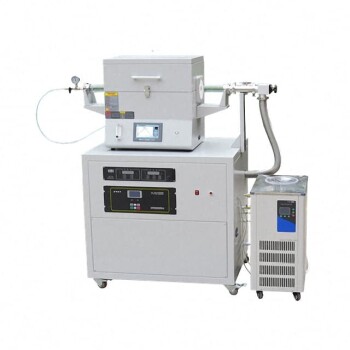
- Chemical Vapor Deposition CVD Equipment System Chamber Slide PECVD Tube Furnace with Liquid Gasifier PECVD Machine
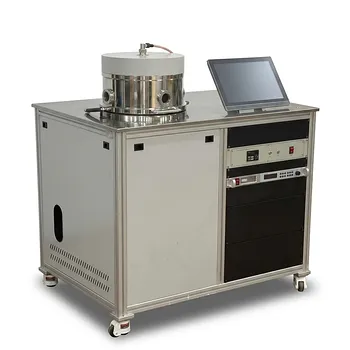
- HFCVD Machine System Equipment for Drawing Die Nano-Diamond Coating
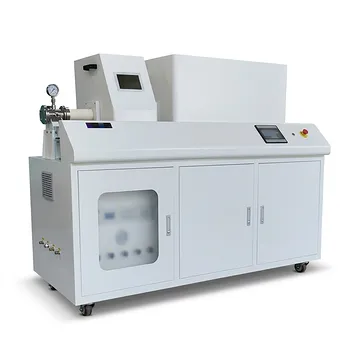
- Customer Made Versatile CVD Tube Furnace Chemical Vapor Deposition Chamber System Equipment
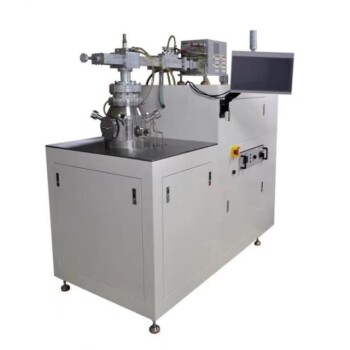
- Split Chamber CVD Tube Furnace with Vacuum Station Chemical Vapor Deposition System Equipment Machine
- Inclined Rotary Plasma Enhanced Chemical Vapor Deposition PECVD Equipment Tube Furnace Machine
People Also Ask
- What are the advantages of chemical vapor deposition? Achieve Superior Thin Films for Your Lab
- What types of substrates are used in CVD to facilitate graphene films? Optimize Graphene Growth with the Right Catalyst
- What is the chemical vapor deposition growth process? Build Superior Thin Films from the Atom Up
- How expensive is chemical vapor deposition? Understanding the True Cost of High-Performance Coating
- What are the core advantages of PE-CVD in OLED encapsulation? Protect Sensitive Layers with Low-Temp Film Deposition