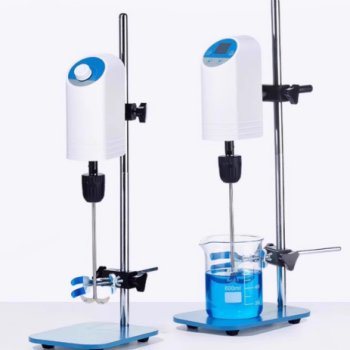
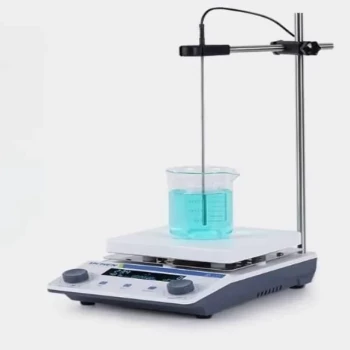
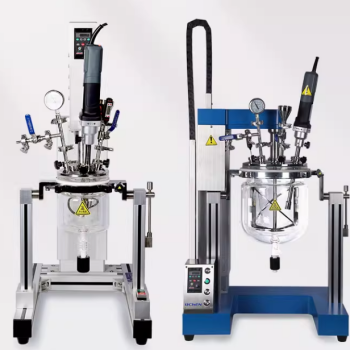
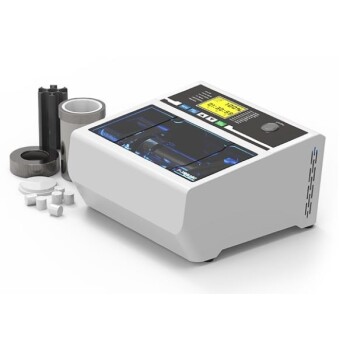
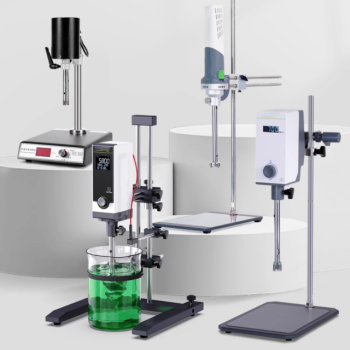
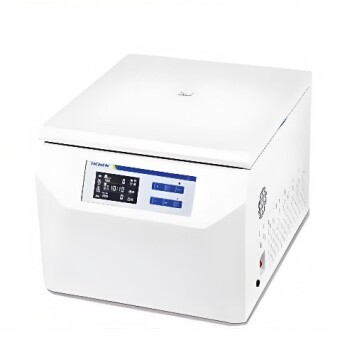
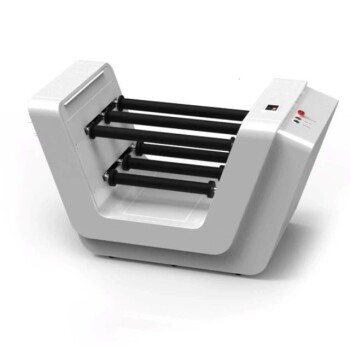
High-precision stirring equipment is the critical control mechanism for managing particle formation at the microscopic level. In the context of the co-precipitation process, this equipment is required to ensure the thorough and consistent mixing of metal salt solutions with precipitants. By achieving this level of homogeneity, you effectively prevent the clumping of active components before they can settle, ensuring the structural integrity of the final material.
High-precision stirring prevents the agglomeration of active components, facilitating the formation of uniformly distributed nanoscale calcium oxide particles. This uniformity is the direct prerequisite for achieving a catalyst with high surface activity and stability.
The Mechanics of Microscopic Mixing
Achieving Thorough Homogeneity
The primary function of high-precision stirring is to mix reactants—specifically metal salt solutions and precipitants—at a microscopic scale.
Standard stirring often leaves "dead zones" or concentration gradients where reactions occur unevenly. High-precision equipment eliminates these inconsistencies, ensuring that every fraction of the solution interacts uniformly.
Preventing Agglomeration
One of the greatest risks in co-precipitation is the natural tendency of particles to clump together, known as agglomeration.
If the mixing energy is inconsistent, particles will adhere to one another rather than dispersing. High-precision stirring imparts the specific shear forces necessary to keep active components separated during the nucleation phase.
Impact on Catalyst Structure
Uniform Particle Distribution
The goal of this process is to create a supported catalyst, meaning the active ingredient (calcium oxide) must sit on a support structure.
The primary reference highlights supports such as magnetic Fe3O4 or aluminum powder. Precision mixing ensures that the calcium oxide particles are distributed evenly across the surface of these supports, rather than piling up in isolated clusters.
Formation of Nanoscale Particles
Catalytic efficiency is driven by surface area.
By preventing agglomeration and ensuring uniform distribution, the stirring process facilitates the formation of nanoscale particles. These smaller particles possess a much higher surface-area-to-volume ratio than larger, clumped particles.
Performance Outcomes and Trade-offs
Maximizing Surface Activity
The physical structure defined by the stirring process directly dictates the chemical performance.
Because the calcium oxide is dispersed as nanoscale particles, the resulting composite nanocatalyst exhibits extremely high surface activity. The reactants in your final application have more surface area to interact with.
Ensuring Stability
A uniform distribution does not just improve activity; it improves mechanical and chemical stability.
When particles are evenly supported on materials like Fe3O4, the catalyst is more robust. Inconsistent mixing leads to weak points in the composite structure, which can cause the catalyst to degrade prematurely.
Common Pitfalls of Inadequate Stirring
It is important to understand that "good enough" mixing is often the failure point in catalyst preparation.
If the stirring speed or precision fluctuates, you will likely produce a mixture of nanoscale particles and large agglomerates. This inconsistency creates a catalyst with unpredictable performance and significantly lower efficiency.
Making the Right Choice for Your Goal
To ensure you are deriving the maximum value from your co-precipitation process, consider your specific performance targets:
- If your primary focus is Maximum Reactivity: Prioritize stirring precision to ensure the smallest possible nanoscale particle size, maximizing the available active surface area.
- If your primary focus is Catalyst Longevity: Focus on the uniformity of mixing to ensure even distribution on the support (e.g., Fe3O4), which prevents structural degradation over time.
Control the mixing at the microscopic level, and you control the macroscopic performance of your catalyst.
Summary Table:
| Feature | Impact on Co-Precipitation Process | Benefit for CaO Catalysts |
|---|---|---|
| Microscopic Mixing | Eliminates concentration gradients and dead zones | Ensures total chemical homogeneity |
| Shear Force Control | Prevents particle clumping (agglomeration) | Facilitates formation of nanoscale particles |
| Uniform Distribution | Evenly coats supports (Fe3O4/Aluminum) | Maximizes available active surface area |
| Precise Speed Stability | Consistent energy input during nucleation | Increases catalyst stability and longevity |
Elevate Your Catalyst Research with KINTEK Precision Solutions
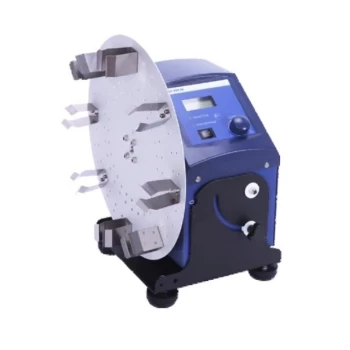
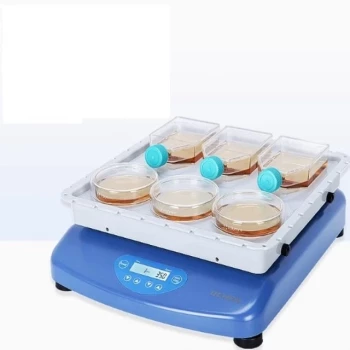
Unlock the full potential of your co-precipitation processes with KINTEK’s advanced laboratory equipment. High-performance catalysis requires exact control, and our high-precision homogenizers and shakers are designed to deliver the microscopic uniformity your nanoscale materials demand.
From preparing supported calcium oxide catalysts to advanced material synthesis, KINTEK specializes in providing the tools essential for modern laboratories, including:
- High-Temperature Furnaces & Reactors: For precise calcination and synthesis.
- Crushing & Milling Systems: To achieve perfect precursor particle sizes.
- Specialized Consumables: High-quality ceramics, crucibles, and PTFE products.
Ready to achieve superior surface activity and catalyst stability? Contact us today to find the perfect equipment for your lab and experience the KINTEK advantage in research precision.
References
- Dhiraj Kumar, Gaurav Kumar. Advancement in the Utilization of Nanocatalyst for Transesterification of Triglycerides. DOI: 10.30799/jnst.111.18040302
This article is also based on technical information from Kintek Solution Knowledge Base .
Related Products
- High Performance Laboratory Stirrers for Diverse Applications
- Laboratory Small Constant Temperature Heated Magnetic Stirrer Heater and Stirrer
- High Performance Lab Homogenizer for Pharma Cosmetics and Food R&D
- Laboratory Micro Horizontal Jar Mill for Precision Sample Preparation in Research and Analysis
- Custom PTFE Teflon Parts Manufacturer for Magnetic Stirring Bar
People Also Ask
- How does a laboratory stirrer influence MOF product quality? Master Precision in Non-Solvothermal Synthesis
- What critical role does a Laboratory Stirrer play during leaching? Enhance Titanium-Magnesium Waste Recovery
- What is the primary function of laboratory stirring equipment in the preparation of compost leachate? Optimize Extraction
- What is a laboratory mixer? A Guide to Achieving Perfect Sample Homogeneity
- What is a laboratory mixer used for? Choose the Right Tool for Liquids or Solids