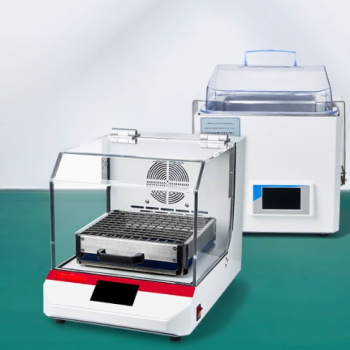
The primary reason for maintaining a 60°C environment using incubators during LPSC-based solid-state battery testing is to overcome the inherent kinetic limitations of solid electrolytes. Raising the temperature significantly increases ionic conductivity and accelerates electrochemical reactions, making it possible to gather meaningful performance data without the delays caused by high internal resistance at room temperature.
Core Insight Testing at 60°C acts as an operational accelerator. It bridges the gap between the theoretical potential of the material and practical testing constraints by lowering the energy barrier for ion movement, ensuring the battery cycles efficiently enough to be observed within a reasonable timeframe.
The Physics of Ion Mobility
Overcoming Room Temperature Limitations
At standard room temperature, LPSC (Lithium Phosphorus Sulfur Chloride) solid electrolytes often exhibit lower ionic conductivity compared to traditional liquid electrolytes. This sluggish ion movement creates high internal resistance within the cell.
Thermal Activation of Ions
The use of temperature control equipment to hold the environment at 60°C provides necessary thermal energy. This energy allows lithium ions to move more freely through the solid electrolyte lattice.
The Impact on Conductivity
Consequently, the ionic conductivity of LPSC increases significantly at this elevated temperature. This drastic improvement in mobility is the foundational requirement for efficient battery operation during the testing phase.
Enhancing Electrochemical Performance
Maximizing Material Utilization
High ionic conductivity is not just about speed; it is about access. At 60°C, the enhanced ion flow ensures a higher utilization of the active material within the battery.
Reducing Dead Zones
Without this thermal boost, parts of the active material might remain electrochemically isolated due to resistance. The heat ensures the battery can access its full capacity during charge and discharge cycles.
Accelerating Reaction Kinetics
Beyond simple transport, the elevated temperature accelerates the electrochemical reaction kinetics at the electrode interfaces. Chemical exchanges happen faster and more completely, reducing polarization and voltage drops.
Practical Implications for Research
The Need for Speed
Battery cycling tests are notoriously time-consuming. Testing LPSC cells at room temperature can result in extremely slow cycles due to high resistance, extending experiments for weeks or months.
Feasible Experimental Timeframes
By increasing the temperature to 60°C, researchers can observe battery cycling performance within a reasonable experimental timeframe. This allows for faster data collection and more rapid iteration of battery designs.
Understanding the Trade-offs
The "Best Case" Scenario
It is important to recognize that testing at 60°C represents an idealized operating condition. While it proves the material can work, it does not guarantee the battery will perform well at room temperature (25°C).
Masking Interface Issues
The elevated temperature can sometimes mask high interfacial resistance that would be problematic in real-world applications. A cell that cycles beautifully at 60°C might fail to deliver power in a standard environment.
Making the Right Choice for Your Goal
When interpreting data derived from 60°C tests, context is everything.
- If your primary focus is fundamental validation: Use 60°C testing to confirm the electrochemical stability and capacity of the material without kinetic limitations getting in the way.
- If your primary focus is commercial viability: You must supplement high-temperature data with room-temperature cycling to prove the battery is practical for real-world use.
Use 60°C as a tool to accelerate discovery, but verify performance across a wider thermal window for final validation.
Summary Table:
| Feature | Impact at Room Temp (25°C) | Impact at Elevated Temp (60°C) |
|---|---|---|
| Ionic Conductivity | Low; sluggish ion movement | High; thermally activated mobility |
| Internal Resistance | High; causes significant voltage drops | Low; reduces polarization |
| Material Utilization | Partial; some zones remain inactive | Maximum; full access to active material |
| Reaction Kinetics | Slow; extended cycling times | Accelerated; faster experimental data |
| Testing Goal | Commercial viability validation | Fundamental material validation |
Optimize Your Battery Research with KINTEK Precision
Accelerate your solid-state battery breakthroughs with KINTEK’s industry-leading laboratory solutions. Whether you are conducting LPSC-based electrochemical testing or developing next-generation energy storage, our comprehensive range of battery research tools, temperature-controlled incubators, and cooling solutions (ULT freezers) ensures stable and repeatable results.
From high-performance hydraulic pellet presses for cell assembly to high-temperature furnaces and specialized electrolytic cells, KINTEK provides the specialized equipment needed to bridge the gap between theoretical potential and commercial reality.
Ready to enhance your lab’s efficiency? Contact our experts today to find the perfect equipment for your research needs!
Related Products
People Also Ask
- What physical conditions does a shaking incubator provide for bioethanol fermentation? Optimize Yeast Productivity
- Why is the mechanical agitation provided by a shaking incubator necessary for the enzymatic hydrolysis of biomass?
- What critical reaction conditions does a shaking incubator provide? Optimize Cassava Cellulose Enzymatic Hydrolysis
- What are the primary functions of a shaking incubator? Optimize Biomass Fenton Pretreatment Efficiency
- What function does a laboratory shaking incubator serve for halophilic archaea? Optimize Your Seed Cultivation Today