Knowledge atmosphere furnace Why is controlling the sintering atmosphere essential? Achieve Optimal Material Properties
Author avatar

Tech Team · Kintek Solution

Updated 3 months ago

Why is controlling the sintering atmosphere essential? Achieve Optimal Material Properties


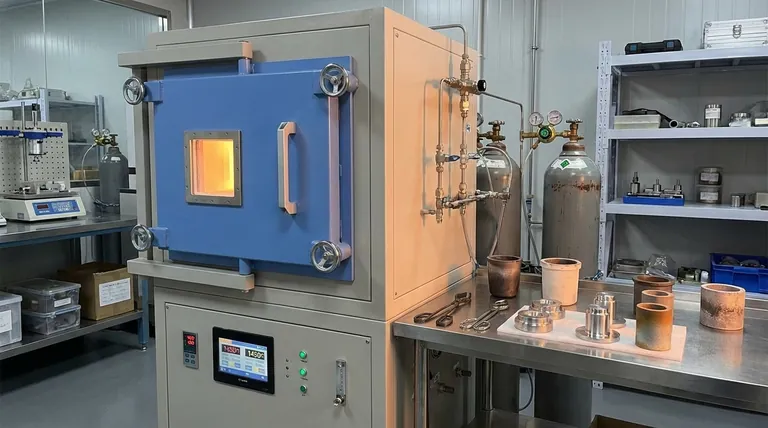
Controlling the atmosphere during sintering is essential to achieve the desired properties of the sintered material. The sintering atmosphere directly influences the chemical and physical processes occurring during sintering, such as oxidation, reduction, and diffusion. By selecting an appropriate atmosphere—whether inert, protective, or reducing—manufacturers can prevent unwanted reactions, such as oxidation, and promote beneficial ones, such as the reduction of surface oxides. This ensures the final product has the required mechanical, thermal, and chemical properties. Additionally, the atmosphere affects the consistency of temperature during sintering, which is critical for controlling grain boundary and bulk diffusion, ultimately determining the material's microstructure and performance.
Why is controlling the sintering atmosphere essential? Achieve Optimal Material Properties

Key Points Explained:

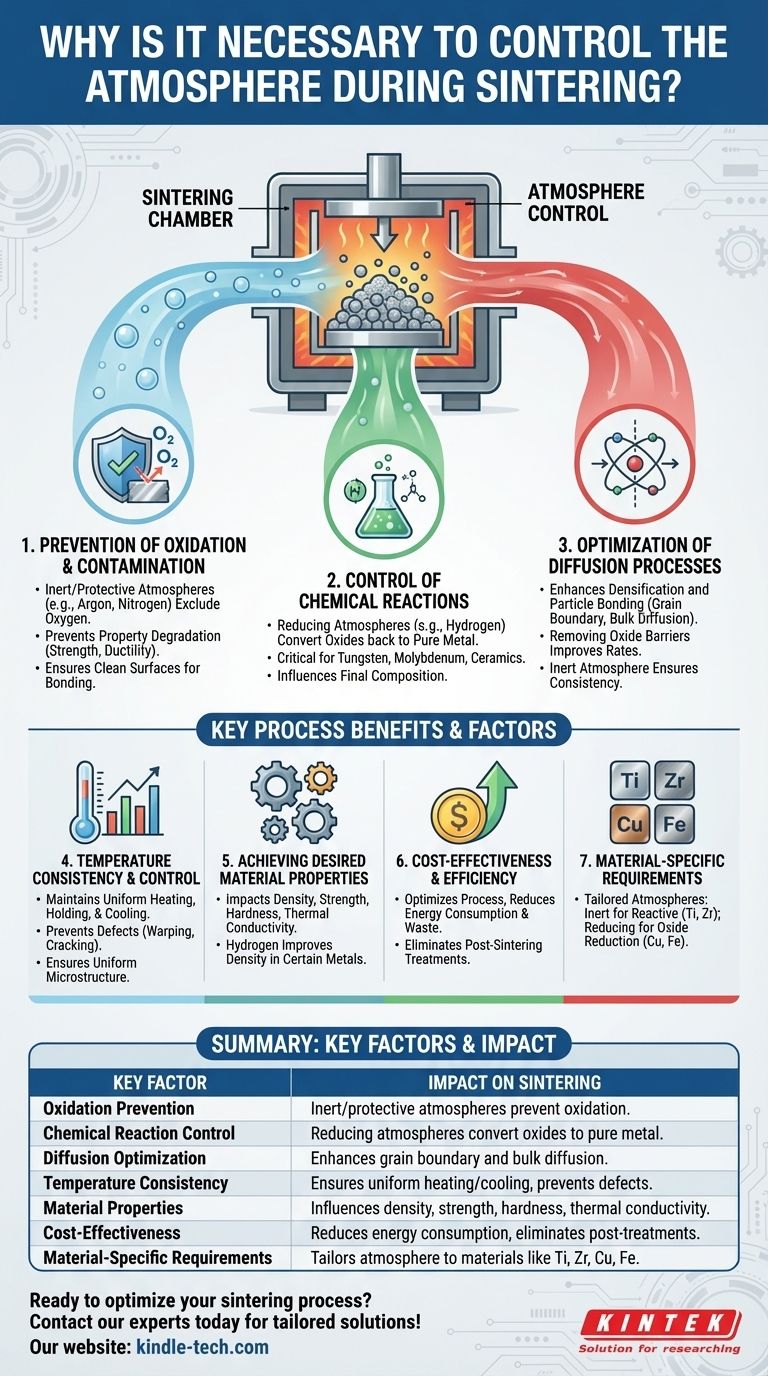
  1. Prevention of Oxidation and Contamination:

    • Sintering often involves metallic compounds that are prone to oxidation when exposed to air at high temperatures. Oxidation can degrade the material's properties, such as strength and ductility.
    • An inert or protective atmosphere (e.g., argon, nitrogen) prevents oxidation by excluding oxygen from the sintering environment.
    • A reducing atmosphere (e.g., hydrogen) can actively reduce surface oxides, ensuring a clean and oxide-free surface, which is critical for achieving strong interparticle bonding.
  2. Control of Chemical Reactions:

    • The sintering atmosphere influences the chemical reactions that occur during the process. For example, in a reducing atmosphere, hydrogen can react with oxides on the powder surfaces, converting them back to pure metal.
    • This control is particularly important for materials like tungsten, molybdenum, and certain ceramics, where oxide formation can significantly alter the material's properties.
  3. Optimization of Diffusion Processes:

    • Sintering relies on diffusion mechanisms, such as grain boundary diffusion and bulk diffusion, to achieve densification and bonding between particles.
    • The atmosphere affects the rate and effectiveness of these diffusion processes. For instance, a reducing atmosphere can enhance diffusion by removing oxide barriers, while an inert atmosphere ensures consistent diffusion without introducing impurities.
  4. Temperature Consistency and Control:

    • The sintering atmosphere helps maintain consistent temperature profiles, especially during critical phases like heating from 900°C to the top temperature, holding at the peak temperature, and cooling back to 900°C.
    • Consistent temperature control is vital for achieving uniform microstructures and avoiding defects such as warping or cracking.
  5. Achieving Desired Material Properties:

    • The choice of sintering atmosphere directly impacts the final properties of the sintered material, including density, strength, hardness, and thermal conductivity.
    • For example, sintering in a hydrogen atmosphere can improve the density and mechanical properties of certain metals by promoting better particle bonding and reducing porosity.
  6. Cost-Effectiveness and Efficiency:

    • Selecting the right atmosphere can optimize the sintering process, reducing energy consumption and material waste.
    • For instance, using a reducing atmosphere can eliminate the need for additional post-sintering treatments to remove oxides, saving time and resources.
  7. Material-Specific Requirements:

    • Different materials require specific sintering atmospheres. For example:
      • Inert atmospheres are suitable for materials like titanium and zirconia, which are highly reactive with oxygen.
      • Reducing atmospheres are ideal for metals like copper and iron, where oxide reduction is necessary for optimal sintering.
    • Understanding these requirements ensures the sintering process is tailored to the material, yielding the best results.

In summary, controlling the sintering atmosphere is critical for preventing oxidation, optimizing chemical reactions, ensuring consistent temperature profiles, and achieving the desired material properties. It also enhances process efficiency and cost-effectiveness, making it an indispensable aspect of sintering technology.

Summary Table:

Key Factor Impact on Sintering
Oxidation Prevention Inert or protective atmospheres (e.g., argon, nitrogen) prevent oxidation.
Chemical Reaction Control Reducing atmospheres (e.g., hydrogen) convert oxides to pure metal.
Diffusion Optimization Enhances grain boundary and bulk diffusion for better densification.
Temperature Consistency Ensures uniform heating and cooling, preventing defects like warping.
Material Properties Influences density, strength, hardness, and thermal conductivity.
Cost-Effectiveness Reduces energy consumption and eliminates post-sintering treatments.
Material-Specific Requirements Tailors atmosphere to materials like titanium, zirconia, copper, and iron.

Ready to optimize your sintering process? Contact our experts today for tailored solutions!

Visual Guide
Why is controlling the sintering atmosphere essential? Achieve Optimal Material Properties Visual Guide

Related Products

People Also Ask

Related Products

Mesh belt controlled atmosphere furnace

Mesh belt controlled atmosphere furnace

Discover our KT-MB mesh belt sintering furnace - perfect for high-temperature sintering of electronic components & glass insulators. Available for open air or controlled atmosphere environments.

Controlled Nitrogen Inert Hydrogen Atmosphere Furnace

Controlled Nitrogen Inert Hydrogen Atmosphere Furnace

KT-AH Hydrogen atmosphere furnace - induction gas furnace for sintering/annealing with built-in safety features, dual housing design, and energy-saving efficiency. Ideal for lab and industrial use.

1200℃ Controlled Atmosphere Furnace Nitrogen Inert Atmosphere Furnace

1200℃ Controlled Atmosphere Furnace Nitrogen Inert Atmosphere Furnace

Discover our KT-12A Pro Controlled atmosphere furnace - high precision, heavy duty vacuum chamber, versatile smart touch screen controller, and excellent temperature uniformity up to 1200C. Ideal for both laboratory and industrial application.

1700℃ Controlled Atmosphere Furnace Nitrogen Inert Atmosphere Furnace

1700℃ Controlled Atmosphere Furnace Nitrogen Inert Atmosphere Furnace

KT-17A Controlled atmosphere furnace: 1700℃ heating, vacuum sealing technology, PID temperature control, and versatile TFT smart touch screen controller for laboratory and industrial use.

1400℃ Controlled Atmosphere Furnace with Nitrogen and Inert Atmosphere

1400℃ Controlled Atmosphere Furnace with Nitrogen and Inert Atmosphere

Achieve precise heat treatment with KT-14A controlled atmosphere furnace. Vacuum sealed with a smart controller, it's ideal for lab and industrial use up to 1400℃.

Vacuum Heat Treat and Sintering Furnace with 9MPa Air Pressure

Vacuum Heat Treat and Sintering Furnace with 9MPa Air Pressure

The air pressure sintering furnace is a high-tech equipment commonly used for the sintering of advanced ceramic materials. It combines vacuum sintering and pressure sintering techniques to achieve high-density and high-strength ceramics.

Spark Plasma Sintering Furnace SPS Furnace

Spark Plasma Sintering Furnace SPS Furnace

Discover the benefits of Spark Plasma Sintering Furnaces for rapid, low-temperature material preparation. Uniform heating, low cost & eco-friendly.

Vacuum Heat Treat and Pressure Sintering Furnace for High Temperature Applications

Vacuum Heat Treat and Pressure Sintering Furnace for High Temperature Applications

Vacuum pressure sintering furnaces are designed for high temperature hot pressing applications in metal and ceramic sintering. Its advanced features ensure precise temperature control, reliable pressure maintenance, and a robust design for seamless operation.

High Temperature Muffle Oven Furnace for Laboratory Debinding and Pre Sintering

High Temperature Muffle Oven Furnace for Laboratory Debinding and Pre Sintering

KT-MD High temperature debinding and pre-sintering furnace for ceramic materials with various molding processes. Ideal for electronic components such as MLCC and NFC.

Vacuum Heat Treat and Molybdenum Wire Sintering Furnace for Vacuum Sintering

Vacuum Heat Treat and Molybdenum Wire Sintering Furnace for Vacuum Sintering

A vacuum molybdenum wire sintering furnace is a vertical or bedroom structure, which is suitable for withdrawal, brazing, sintering and degassing of metal materials under high vacuum and high temperature conditions. It is also suitable for dehydroxylation treatment of quartz materials.

600T Vacuum Induction Hot Press Furnace for Heat Treat and Sintering

600T Vacuum Induction Hot Press Furnace for Heat Treat and Sintering

Discover the 600T Vacuum Induction Hot Press Furnace, designed for high-temperature sintering experiments in vacuum or protected atmospheres. Its precise temperature and pressure control, adjustable working pressure, and advanced safety features make it ideal for nonmetal materials, carbon composites, ceramics, and metal powders.

Small Vacuum Heat Treat and Tungsten Wire Sintering Furnace

Small Vacuum Heat Treat and Tungsten Wire Sintering Furnace

The small vacuum tungsten wire sintering furnace is a compact experimental vacuum furnace specially designed for universities and scientific research institutes. The furnace features a CNC welded shell and vacuum piping to ensure leak-free operation. Quick-connect electrical connections facilitate relocation and debugging, and the standard electrical control cabinet is safe and convenient to operate.

Ultra-High Temperature Graphite Vacuum Graphitization Furnace

Ultra-High Temperature Graphite Vacuum Graphitization Furnace

The ultra-high temperature graphitization furnace utilizes medium frequency induction heating in a vacuum or inert gas environment. The induction coil generates an alternating magnetic field, inducing eddy currents in the graphite crucible, which heats up and radiates heat to the workpiece, bringing it to the desired temperature. This furnace is primarily used for graphitization and sintering of carbon materials, carbon fiber materials, and other composite materials.

Vacuum Dental Porcelain Sintering Furnace

Vacuum Dental Porcelain Sintering Furnace

Get precise and reliable results with KinTek's Vacuum Porcelain Furnace. Suitable for all porcelain powders, it features hyperbolic ceramic furnace function, voice prompt, and automatic temperature calibration.

Dental Porcelain Zirconia Sintering Ceramic Furnace Chairside with Transformer

Dental Porcelain Zirconia Sintering Ceramic Furnace Chairside with Transformer

Experience top-notch sintering with Chairside Sintering Furnace with Transformer. Easy to operate, noise-free pallet, and automatic temperature calibration. Order now!

Dental Porcelain Zirconia Sintering Ceramic Vacuum Press Furnace

Dental Porcelain Zirconia Sintering Ceramic Vacuum Press Furnace

Get precise dental results with Dental Vacuum Press Furnace. Automatic temperature calibration, low noise tray, and touch screen operation. Order now!

2200 ℃ Graphite Vacuum Heat Treat Furnace

2200 ℃ Graphite Vacuum Heat Treat Furnace

Discover the power of the KT-VG Graphite Vacuum Furnace - with a maximum working temperature of 2200℃, it's perfect for vacuum sintering of various materials. Learn more now.

Multi Heating Zones CVD Tube Furnace Machine Chemical Vapor Deposition Chamber System Equipment

Multi Heating Zones CVD Tube Furnace Machine Chemical Vapor Deposition Chamber System Equipment

KT-CTF14 Multi Heating Zones CVD Furnace - Precise Temperature Control and Gas Flow for Advanced Applications. Max temp up to 1200℃, 4 channels MFC mass flow meter, and 7" TFT touch screen controller.

Vacuum Heat Treat Furnace with Ceramic Fiber Liner

Vacuum Heat Treat Furnace with Ceramic Fiber Liner

Vacuum furnace with polycrystalline ceramic fiber insulation liner for excellent heat insulation and uniform temperature field. Choose from 1200℃ or 1700℃ max. working temperature with high vacuum performance and precise temperature control.

Vacuum Arc Induction Melting Furnace

Vacuum Arc Induction Melting Furnace

Discover the power of Vacuum Arc Furnace for melting active & refractory metals. High-speed, remarkable degassing effect, and free of contamination. Learn more now!


Leave Your Message



















