Knowledge Why is it necessary to use a high-temperature crucible for NZSSP electrolytes? Master Stoichiometry Control
Author avatar

Tech Team · Kintek Solution

Updated 2 days ago

Why is it necessary to use a high-temperature crucible for NZSSP electrolytes? Master Stoichiometry Control


Maintaining precise chemical stoichiometry is the defining challenge when sintering NZSSP electrolytes. Using a high-temperature crucible and burying green pellets in "mother powder" acts as a containment system to prevent the evaporation of volatile elements during the heating process.

The use of mother powder creates a localized, element-rich atmosphere around the sample. This micro-environment suppresses the volatilization of sodium and phosphorus, ensuring the final product retains a pure rhombohedral NASICON structure without impurity phases.

The Chemistry of Volatilization

High-Temperature Vulnerability

Sintering NZSSP electrolytes requires temperatures ranging from 900°C to 1150°C.

At these distinctively high thermal levels, specific elements within the compound become unstable. Sodium (Na) and Phosphorus (P) are particularly prone to volatilization, meaning they can easily evaporate from the solid pellet into the surrounding air.

The Cost of Element Loss

If sodium and phosphorus are allowed to evaporate, the chemical balance of the electrolyte is destroyed.

This loss leads to surface composition deviations, where the outer layer of the pellet differs chemically from the core. Furthermore, it triggers the formation of unwanted impurity phases, preventing the material from achieving the pure rhombohedral NASICON structure required for optimal performance.

The Protective Mechanism

Creating a Localized Atmosphere

Burying the green pellets in mother powder—which is powder of the exact same composition—is a strategic countermeasure.

As the temperature rises, the mother powder acts sacrificially. It releases sodium and phosphorus vapor first, saturating the immediate space around the green pellet.

Establishing Equilibrium

Because the air surrounding the pellet is now rich in Na and P from the mother powder, the vapor pressure reaches an equilibrium.

This effectively locks the elements inside the green pellet. There is no driving force for the sodium or phosphorus in the pellet to evaporate because the surrounding atmosphere is already saturated with those specific elements.

The Role of the Crucible

Physical Containment

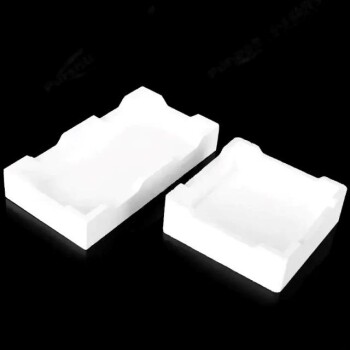
A high-temperature crucible, typically made of alumina, serves as the physical vessel for this reaction.

It holds the mother powder and the pellet together in a compact mass. This proximity is essential for maintaining the density of the localized atmosphere described above.

Chemical Stability and Isolation

Beyond simple containment, the crucible provides a barrier against the furnace environment.

Alumina is chosen for its excellent resistance to heat (up to 1180°C in this context) and chemical stability. It prevents the reactive sample from interacting with the furnace chamber materials, which could otherwise introduce external contaminants or damage the heating elements.

Understanding the Trade-offs

Thermal Mass Considerations

While the crucible and mother powder ensure purity, they also add significant thermal mass to the process.

This increased mass can alter the heating and cooling rates of the sintering profile. You must account for this thermal lag to ensure the sample actually reaches the target dwell temperature for the correct duration.

Material Consumption

The mother powder technique is effective but material-intensive.

Because the powder is essentially sacrificial, this method increases the total amount of raw material required to produce a single viable electrolyte pellet.

Achieving Optimal Sintering Results

To maximize the quality of your NZSSP electrolytes, align your process with these objectives:

  • If your primary focus is Phase Purity: Ensure the green pellets are completely submerged in the mother powder to eliminate any exposure to the open furnace atmosphere.
  • If your primary focus is Reproducibility: Use a crucible with high chemical stability (like alumina) to prevent cross-contamination between the sample and the furnace chamber.

By controlling the atmosphere, you control the structure; only a strictly maintained environment yields a pure NASICON crystal.

Summary Table:

Feature Role in NZSSP Sintering Benefit
High-Temp Crucible Physical containment & thermal barrier Prevents furnace contamination & stabilizes atmosphere
Mother Powder Sacrificial element source (Na & P) Suppresses volatilization via vapor pressure equilibrium
Alumina Material High chemical & thermal stability Withstands temperatures up to 1180°C without reacting
Burial Technique Creates localized micro-environment Ensures chemical stoichiometry & pure phase formation

Elevate Your Material Research with KINTEK

Achieve uncompromising precision in your sintering process. At KINTEK, we specialize in providing researchers with the high-performance laboratory equipment and consumables needed for advanced electrolyte synthesis.

Our extensive portfolio includes:

  • High-Temperature Furnaces: Muffle, tube, and vacuum systems designed for stable thermal profiles.
  • Precision Consumables: Premium alumina crucibles and ceramic tools for pure phase formation.
  • Material Processing: Advanced crushing, milling systems, and hydraulic presses for high-density green pellets.

Don't let element volatilization compromise your NASICON structures. Contact KINTEK today to discover how our high-temperature solutions can optimize your lab's efficiency and ensure reproducible results.

Related Products

People Also Ask

Related Products

Alumina Al2O3 Ceramic Crucible Semicircle Boat with Lid for Engineering Advanced Fine Ceramics

Alumina Al2O3 Ceramic Crucible Semicircle Boat with Lid for Engineering Advanced Fine Ceramics

Crucibles are containers widely used for melting and processing various materials, and semicircular boat-shaped crucibles are suitable for special smelting and processing requirements. Their types and uses vary by material and shape.

Arc-Shaped Alumina Ceramic Crucible High Temperature Resistant for Engineering Advanced Fine Ceramics

Arc-Shaped Alumina Ceramic Crucible High Temperature Resistant for Engineering Advanced Fine Ceramics

In the journey of scientific exploration and industrial production, every detail is crucial. Our arc-shaped alumina ceramic crucibles, with their excellent high temperature resistance and stable chemical properties, have become a powerful assistant in laboratories and industrial fields. They are made of high-purity alumina materials and manufactured through precision processes to ensure excellent performance in extreme environments.

Engineering Advanced Fine Alumina Al2O3 Ceramic Crucible for Laboratory Muffle Furnace

Engineering Advanced Fine Alumina Al2O3 Ceramic Crucible for Laboratory Muffle Furnace

Alumina ceramic crucibles are used in some materials and metal melting tools, and flat-bottomed crucibles are suitable for melting and processing larger batches of materials with better stability and uniformity.

Engineering Advanced Fine Ceramics Alumina Al2O3 Crucible With Lid Cylindrical Laboratory Crucible

Engineering Advanced Fine Ceramics Alumina Al2O3 Crucible With Lid Cylindrical Laboratory Crucible

Cylindrical Crucibles Cylindrical crucibles are one of the most common crucible shapes, suitable for melting and processing a wide variety of materials, and are easy to handle and clean.

Manual High Temperature Heated Hydraulic Press Machine with Heated Plates for Lab

Manual High Temperature Heated Hydraulic Press Machine with Heated Plates for Lab

The High Temperature Hot Press is a machine specifically designed for pressing, sintering and processing materials in a high temperature environment. It is capable of operating in the range of hundreds of degrees Celsius to thousands of degrees Celsius for a variety of high temperature process requirements.

Engineering Advanced Fine Ceramics Alumina Crucibles (Al2O3) for Thermal Analysis TGA DTA

Engineering Advanced Fine Ceramics Alumina Crucibles (Al2O3) for Thermal Analysis TGA DTA

TGA/DTA thermal analysis vessels are made of aluminum oxide (corundum or aluminum oxide). It can withstand high temperature and is suitable for analyzing materials that require high temperature testing.

Automatic High Temperature Heated Hydraulic Press Machine with Heated Plates for Lab

Automatic High Temperature Heated Hydraulic Press Machine with Heated Plates for Lab

The High Temperature Hot Press is a machine specifically designed for pressing, sintering and processing materials in a high temperature environment. It is capable of operating in the range of hundreds of degrees Celsius to thousands of degrees Celsius for a variety of high temperature process requirements.

Evaporation Crucible for Organic Matter

Evaporation Crucible for Organic Matter

An evaporation crucible for organic matter, referred to as an evaporation crucible, is a container for evaporating organic solvents in a laboratory environment.

Electron Beam Evaporation Coating Conductive Boron Nitride Crucible BN Crucible

Electron Beam Evaporation Coating Conductive Boron Nitride Crucible BN Crucible

High-purity and smooth conductive boron nitride crucible for electron beam evaporation coating, with high temperature and thermal cycling performance.

High Temperature Constant Temperature Heating Circulator Water Bath Chiller Circulator for Reaction Bath

High Temperature Constant Temperature Heating Circulator Water Bath Chiller Circulator for Reaction Bath

Efficient and reliable, KinTek KHB Heating Circulator is perfect for your lab needs. With a max. heating temperature of up to 300℃, it features accurate temperature control and fast heating.

High Quality Alumina Ceramic Screw for Engineering Advanced Fine Ceramics with High Temperature Resistance and Insulation

High Quality Alumina Ceramic Screw for Engineering Advanced Fine Ceramics with High Temperature Resistance and Insulation

Alumina ceramic screws are fastening components made of 99.5% alumina, ideal for extreme applications requiring excellent thermal resistance, electrical insulation and chemical resistance.

Folding Molybdenum Tantalum Boat With or Without Cover

Folding Molybdenum Tantalum Boat With or Without Cover

Molybdenum boat is an important carrier for preparing molybdenum powder and other metal powders, with high density, melting point, strength and temperature resistance.

Boron Nitride (BN) Ceramic Rod for High Temperature Applications

Boron Nitride (BN) Ceramic Rod for High Temperature Applications

Boron nitride (BN) rod is the strongest boron nitride crystal form like graphite, which has excellent electrical insulation, chemical stability and dielectric properties.

Custom PTFE Teflon Parts Manufacturer Laboratory High Temperature Mixing Paddle Mixer

Custom PTFE Teflon Parts Manufacturer Laboratory High Temperature Mixing Paddle Mixer

The PTFE mixing paddle mixer is a versatile and robust tool designed for laboratory use, particularly in environments requiring high resistance to chemicals and extreme temperatures. Crafted from high-quality PTFE, this mixer boasts several key features that enhance its functionality and durability.

Zirconia Ceramic Gasket Insulating Engineering Advanced Fine Ceramics

Zirconia Ceramic Gasket Insulating Engineering Advanced Fine Ceramics

Zirconia insulating ceramic gasket has high melting point, high resistivity, low thermal expansion coefficient and other properties, making it an important high temperature resistant material, ceramic insulating material and ceramic sunscreen material.

Custom PTFE Teflon Parts Manufacturer for PTFE Tweezers

Custom PTFE Teflon Parts Manufacturer for PTFE Tweezers

PTFE tweezers inherit the excellent physical and chemical properties of PTFE, such as high temperature resistance, cold resistance, acid and alkali resistance, and corrosion resistance to most organic solvents.

Graphite Vacuum Continuous Graphitization Furnace

Graphite Vacuum Continuous Graphitization Furnace

High-temperature graphitization furnace is a professional equipment for graphitization treatment of carbon materials. It is a key equipment for the production of high-quality graphite products. It has high temperature, high efficiency and uniform heating. It is suitable for various high-temperature treatments and graphitization treatments. It is widely used in metallurgy, electronics, aerospace, etc. industry.

1400℃ Controlled Atmosphere Furnace with Nitrogen and Inert Atmosphere

1400℃ Controlled Atmosphere Furnace with Nitrogen and Inert Atmosphere

Achieve precise heat treatment with KT-14A controlled atmosphere furnace. Vacuum sealed with a smart controller, it's ideal for lab and industrial use up to 1400℃.

Automatic Heated Hydraulic Press Machine with Heated Plates for Laboratory Hot Press 25T 30T 50T

Automatic Heated Hydraulic Press Machine with Heated Plates for Laboratory Hot Press 25T 30T 50T

Efficiently prepare your samples with our Automatic Heated Lab Press. With a pressure range up to 50T and precise control, it's perfect for various industries.

Bomb Type Probe for Steelmaking Production Process

Bomb Type Probe for Steelmaking Production Process

Bomb-type probe for precise steelmaking control: measures carbon content (±0.02%) and temperature (20℃ accuracy) in 4-8s. Boost efficiency now!


Leave Your Message