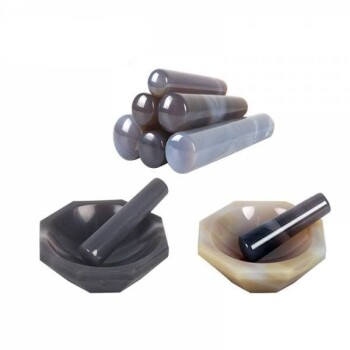
Grinding titanium dioxide xerogel into a fine powder is a critical preparation step that ensures the material heats uniformly. By manually breaking down the dried bulk material, you eliminate density gradients that naturally occur during the drying process. This preparation guarantees that heat is transferred rapidly and evenly to every particle once the material enters the calcination furnace.
Core Takeaway Leaving xerogel in clumps creates thermal barriers that lead to uneven processing. Grinding the material into a fine, uniform powder ensures that every particle experiences the same temperature history, resulting in high consistency in both crystalline phase composition and grain size.
The Physics of Preparation
Eliminating Density Gradients
When xerogel dries, it often shrinks into irregular, dense aggregates. These aggregates contain significant variations in density throughout the bulk material.
Using a mortar and pestle mechanically destroys these gradients. It converts the heterogeneous chunks into a standardized, homogenous powder.
Facilitating Rapid Heat Transfer
Large agglomerates of xerogel act as thermal insulators. The outer layers heat up quickly, while the core lags behind.
Grinding increases the specific surface area of the material available for heat exchange. This ensures that heat penetrates the material instantly and evenly during high-temperature calcination.
Impact on Material Properties
Consistency in Crystalline Phase
Titanium dioxide properties are heavily dependent on its crystal structure (e.g., anatase vs. rutile). These phase transformations are driven by temperature.
If the heat transfer is uneven due to poor grinding, your sample may contain a mixture of phases. Uniform grinding ensures the entire sample transforms at the same rate.
Regulating Grain Size
Grain growth occurs during the calcination process. Temperature gradients within a sample can lead to localized over-sintering or under-development.
By ensuring every particle sees the same heat profile, you achieve a narrow and consistent grain size distribution across the entire sample.
Understanding the Risks
The Consequence of Incomplete Grinding
If the grinding process is rushed or incomplete, you effectively reintroduce thermal gradients. "Coarse" powders will still suffer from differential heating, albeit less than raw chunks.
This leads to a "core-shell" effect where the interior of a particle has different physical properties than the exterior.
The Trade-off of Manual Processing
While a mortar and pestle offers excellent control, it introduces human variability. The consistency of the powder depends entirely on the operator's thoroughness.
It is essential to visually inspect the powder for uniformity before proceeding to calcination to avoid wasting the thermal treatment step.
Making the Right Choice for Your Goal
To maximize the quality of your titanium dioxide sample, ensure your preparation phase is as rigorous as the heating phase.
- If your primary focus is phase purity: Grind the xerogel until no visible lumps remain to ensure the entire batch undergoes the exact same phase transformation.
- If your primary focus is uniform particle size: Invest extra time in grinding to prevent density gradients that cause irregular sintering and grain growth.
A consistent input is the only way to guarantee a consistent output.
Summary Table:
| Factor | Impact of Grinding | Risk of Incomplete Grinding |
|---|---|---|
| Density Gradients | Eliminates variations for a homogenous powder | Retains dense aggregates that act as insulators |
| Heat Transfer | Rapid, instant, and even penetration | Slow heating in core vs. fast on exterior |
| Crystalline Phase | Ensures consistent transformation (Anatase/Rutile) | Resulting sample contains mixed, unintended phases |
| Grain Size | Achievement of narrow, uniform distribution | Localized over-sintering or under-development |
Elevate Your Material Research with KINTEK Precision
Achieving consistent results in titanium dioxide synthesis requires the right preparation and thermal processing tools. KINTEK specializes in high-performance laboratory equipment designed for rigorous scientific workflows. From our precision crushing and milling systems to our advanced muffle, tube, and vacuum furnaces, we provide the technology you need to ensure every particle experiences the exact temperature profile required for phase purity.
Ready to optimize your calcination process? Contact KINTEK today to explore our comprehensive range of high-temperature solutions, hydraulic presses, and essential ceramic consumables tailored for your laboratory's success.
References
- H.R. Khan. Sol-Gel Synthesis of TiO2 from TiOSO4 (Part 2): Kinetics and Photocatalytic Efficiency of Methylene Blue Degradation Under UV Irradiation. DOI: 10.3390/catal15010064
This article is also based on technical information from Kintek Solution Knowledge Base .
Related Products
- Nature Agate Mortar and Pestle for Grinding and Mixing
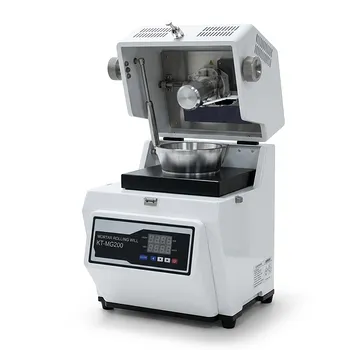
- Laboratory Grinding Mill Mortar Grinder for Sample Preparation
People Also Ask
- Why are agate mortars and pestles used for grinding iron oxide? Ensure Sample Purity for XRD Analysis
- What is the function of an agate mortar and pestle? Ensure Purity in Halide Solid-State Electrolyte Synthesis
- What is the primary function of an agate mortar and pestle? Optimize VO2+ CaZn2(PO4)2 Nanopowder Pre-Treatment
- Why is an agate mortar and pestle required for grinding Zr3(Al1-xSix)C2? Ensure Maximum Sample Purity
- Why is an agate mortar and pestle preferred for grinding MAX phase? Ensure Sample Purity & Zero Contamination