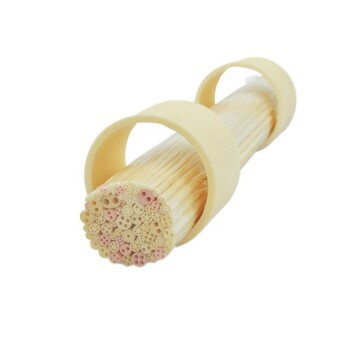
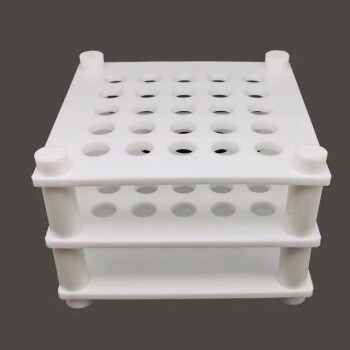
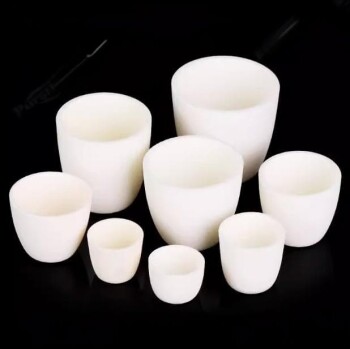
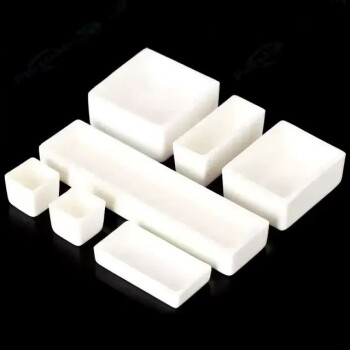
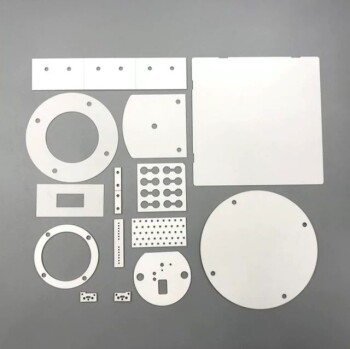
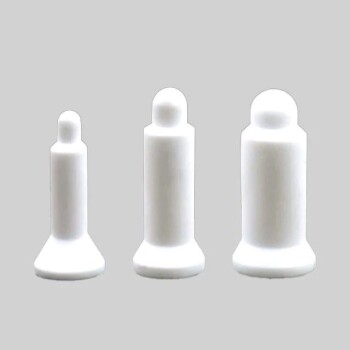
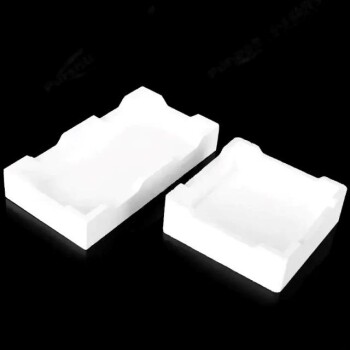
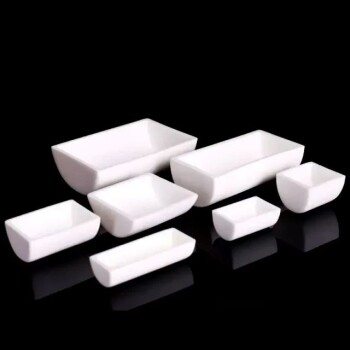
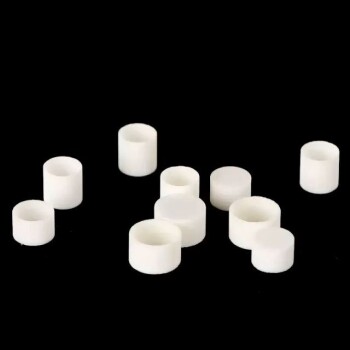
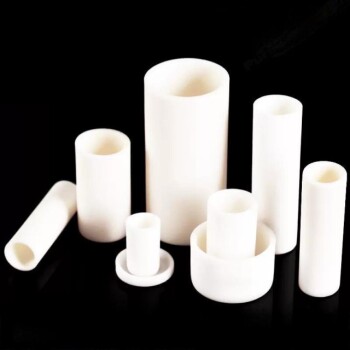
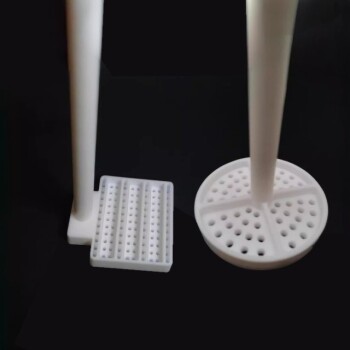
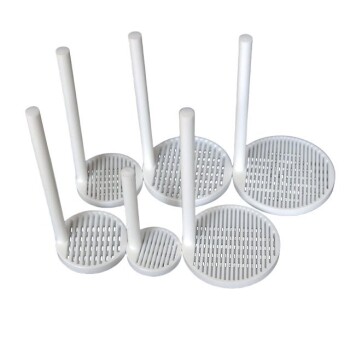
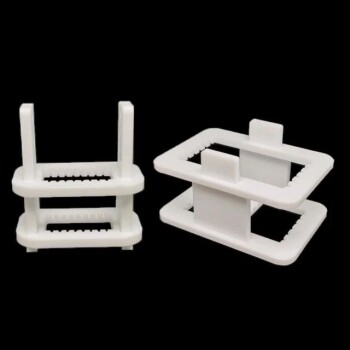
High-alumina support racks and auxiliary tubes are strictly necessary in high-temperature corrosion experiments to serve as a chemically inert structural foundation. Their primary function is to position samples within the precise thermal center of the furnace without reacting with the test specimens, corrosive gases, or the furnace components themselves.
Core Takeaway The validity of a corrosion experiment relies on the principle of isolation. High-alumina hardware acts as a neutral barrier that prevents the test environment from being contaminated by external impurities, ensuring that observed corrosion is caused solely by your variables, not your equipment.
Ensuring Chemical Neutrality
Eliminating Reaction Interference
The primary value of high-alumina (corundum) components is their chemical stability.
Unlike metallic supports, alumina does not react with metallic samples at elevated temperatures. This guarantees that the support structure does not become a variable in your experiment.
Preventing Gas-Phase Contamination
In environments containing aggressive agents like HCl (hydrochloric acid) or active potassium salts, standard materials degrade rapidly.
Alumina exhibits excellent chemical inertia against acid gas erosion. By resisting reaction with these gases, alumina prevents the release of impurity gases that would otherwise alter the composition of the experimental atmosphere.
Protecting Equipment Integrity
Shielding Heating Elements
Corrosive agents, particularly active salts like KCl and K2CO3, can wreak havoc on furnace heating elements.
High-alumina auxiliary tubes function as high-purity reaction vessels. They isolate the volatile corrosive agents inside the tube, physically separating them from the sensitive heating elements and extending the lifespan of the furnace.
Preserving Furnace Walls
Without an alumina barrier, gases like HCl can react with metal furnace walls.
This reaction not only damages the furnace but generates byproducts that back-contaminate the sample area. Alumina linings and tubes act as a sacrificial or inert layer to stop this cycle of degradation.
Optimizing Thermal Precision
Accurate Sample Positioning
Temperature within a furnace is rarely uniform; it has a specific "thermal center" where the heat is most consistent.
High-alumina racks possess high refractoriness, meaning they retain structural integrity under extreme heat. This allows them to hold samples rigidly in the exact thermal center, ensuring optimal contact with the gas flow and uniform heating.
Common Pitfalls and Requirements
The "High-Purity" Imperative
Not all alumina is created equal.
The references explicitly state the need for high-purity alumina or corundum. Lower-grade alumina may contain binders or impurities that release contaminants at high temperatures, effectively ruining the "cleanliness" of the experiment you are trying to protect.
Thermal Shock Sensitivity
While not a chemical flaw, users must acknowledge that high-alumina ceramics are brittle.
They generally lack the thermal shock resistance of metals. Rapid heating or cooling can cause cracking, which compromises the isolation barrier and exposes the experiment to the very contaminants you are trying to avoid.
Making the Right Choice for Your Goal
To ensure your experimental design is robust, prioritize your hardware selection based on your specific analytical needs:
- If your primary focus is Data Credibility: Ensure you use high-purity corundum tubes to guarantee that collected corrosion products result exclusively from the interaction between your specific salts and samples.
- If your primary focus is Equipment Longevity: Utilize alumina liners and tubes to create a physical seal that prevents acid gases (like HCl) from eroding furnace walls and heating elements.
Using high-alumina components is not just about holding a sample; it is about guaranteeing that your data reflects chemical reality rather than experimental error.
Summary Table:
| Feature | High-Alumina (Corundum) Benefit | Experimental Impact |
|---|---|---|
| Chemical Stability | Inert reaction to samples and gases | Eliminates data contamination and interference |
| Refractoriness | Maintains structural integrity at high temps | Ensures precise sample positioning in the thermal center |
| Corrosion Resistance | Resists acid gases (HCl) and active salts | Protects furnace walls and heating elements |
| Purity Levels | Low binder content and high-purity composition | Prevents release of impurity gases during heating |
Elevate Your Research Integrity with KINTEK Precision Hardware
Don't let equipment interference compromise your experimental data. KINTEK specializes in providing high-purity ceramic solutions and high-temperature furnace systems designed for the most demanding laboratory environments. From high-purity alumina and corundum tubes to specialized muffle, tube, and vacuum furnaces, we ensure your research remains uncontaminated and your equipment stays protected.
Whether you are conducting high-pressure corrosion studies using our high-temperature reactors or processing materials in our crushing and milling systems, our expertise in laboratory consumables—including PTFE products, ceramics, and crucibles—guarantees superior results.
Ready to optimize your lab's performance? Contact KINTEK today to find the perfect high-alumina components for your next experiment!
References
- Benjamin Aymans, Marcel A.J. Somers. Evaluation of the Corrosion Resistance of Heat Resistant Cast Alloys in Ammonia Containing Atmospheres: The Role of Oxide Scales. DOI: 10.1002/maco.70046
This article is also based on technical information from Kintek Solution Knowledge Base .
Related Products
- High Temperature Alumina (Al2O3) Furnace Tube for Engineering Advanced Fine Ceramics
- High Temperature Aluminum Oxide (Al2O3) Protective Tube for Engineering Advanced Fine Ceramics
- High Purity Alumina Granulated Powder for Engineering Advanced Fine Ceramics
- 1400℃ Laboratory High Temperature Tube Furnace with Alumina Tube
- 1700℃ Laboratory High Temperature Tube Furnace with Alumina Tube
People Also Ask
- What is the primary function of an Alumina (Al2O3) tube in LLZTO sintering? Optimize Your Thermal Processing
- What role does a high-alumina furnace tube play in high-temperature nickel slag reduction? Ensure 1400°C Precision
- How does an alumina tube furnace with a controlled atmosphere simulate conditions in CSP environments? Master Accuracy.
- How do you clean an alumina tube furnace? Extend Tube Life with Proper Maintenance
- How to clean an alumina tube furnace? Extend Tube Life and Ensure Experimental Purity