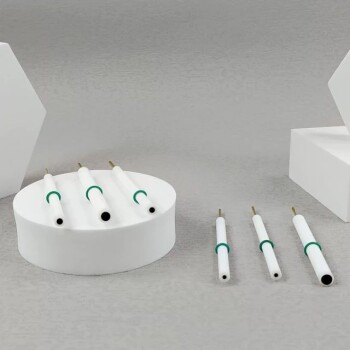
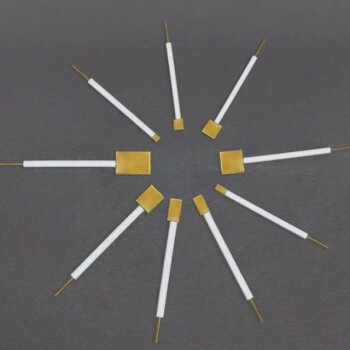
Precision in electrochemical testing depends on strict geometric control. You must use high-temperature insulation coatings to completely encapsulate the non-working surfaces of your metal sample. This isolation creates a precise, defined active working area—such as a specific 6mm diameter cross-section—ensuring that electrochemical currents interact only with that intended surface.
Core Insight: Without proper insulation, undefined surface areas lead to "edge effects" that skew current density calculations. High-temperature coatings provide the robust physical barrier necessary to secure accurate kinetic parameters, such as polarization current density and corrosion current.
The Science of Surface Definition
Establishing a Controlled Geometry
Electrochemical data is rarely useful as a raw value; it must be normalized by surface area (e.g., mA/cm²).
To calculate accurate current density, you must know the exact surface area participating in the reaction.
Insulation coatings block the electrolyte from contacting the sides or back of the sample, restricting reactions to a known, measurable face.
Eliminating Edge Effect Interference
The edges of a metal sample often possess higher surface energy and different roughness compared to the flat face.
If left exposed, these edges attract a disproportionate amount of current, a phenomenon known as the "edge effect."
This interference introduces noise and error, making the material appear more reactive or conductive than it truly is.
Impact on Kinetic Parameters
Securing Polarization Current Density
Polarization curves describe how a material responds to applied potential.
If the non-working surfaces are not sealed, the measured current reflects a mix of different surface behaviors.
High-temperature insulation ensures the current density data reflects only the specific material kinetics of the working face.
Validating Corrosion Current
Corrosion current ($I_{corr}$) is the fundamental metric for calculating corrosion rates.
Any leakage of current through the sides of the sample inflates the total $I_{corr}$ value.
By encapsulating the sample, you prevent these parasitic currents, ensuring the calculated corrosion rate is mathematically valid.
Understanding the Trade-offs
The Importance of Thermal Stability
Standard coatings often fail or soften when subjected to the heat generated during testing or required for curing.
If the coating degrades, the seal between the metal and insulation breaks.
This failure leads to crevice corrosion—a localized attack underneath the coating that invalidates the entire experiment.
Application Consistency
While high-temperature coatings are necessary, they introduce a variable in sample preparation.
If the coating is applied unevenly or creeps onto the working surface, the defined area will be smaller than calculated.
You must rigorously inspect the boundary of the coating to ensure the exposed diameter (e.g., 6mm) is consistent across all samples.
Ensuring Experimental Integrity
To generate publishable, reliable electrochemical data, consider your specific experimental goals:
- If your primary focus is obtaining absolute kinetic data: Prioritize the thermal stability of the coating to prevent crevice corrosion and ensure the $I_{corr}$ reflects only the intended surface.
- If your primary focus is comparative material screening: strictly standardize the application process to ensure the exposed geometric area is identical for every sample tested.
Ultimately, the reliability of your electrochemical parameters is only as strong as the integrity of your electrode's insulation.
Summary Table:
| Feature | Importance in Electrochemical Testing | Impact of Failure |
|---|---|---|
| Geometric Control | Defines exact active area for current density (mA/cm²) | Skewed kinetic parameters and area calculations |
| Edge Effect Mitigation | Prevents disproportionate current draw at high-energy edges | Signal noise and artificially high reactivity data |
| Thermal Stability | Maintains seal integrity under heat/curing conditions | Crevice corrosion and invalidation of experiments |
| Current Isolation | Ensures current only interacts with intended surface | Parasitic currents and inflated corrosion rates ($I_{corr}$) |
Precision Engineering for Your Electrochemical Research
To achieve publishable and reliable data, the integrity of your electrode insulation is non-negotiable. KINTEK specializes in advanced laboratory equipment and consumables designed to meet the rigorous demands of material science.
Whether you are performing high-temperature corrosion studies or battery research, KINTEK provides the high-performance tools you need, including:
- High-Temperature High-Pressure Reactors & Autoclaves
- Precision Electrolytic Cells & Electrodes
- Specialized Battery Research Consumables & PTFE Products
- Crushing, Milling, & Advanced Thermal Processing Systems
Don't let inconsistent surface definition compromise your kinetic parameters. Contact KINTEK today to discuss how our high-temperature solutions and comprehensive lab portfolio can enhance your experimental accuracy.
References
- Chuanzhen Zang, Zhanghua Lian. Study on the Galvanic Corrosion between 13Cr Alloy Tubing and Downhole Tools of 9Cr and P110: Experimental Investigation and Numerical Simulation. DOI: 10.3390/coatings13050861
This article is also based on technical information from Kintek Solution Knowledge Base .
Related Products
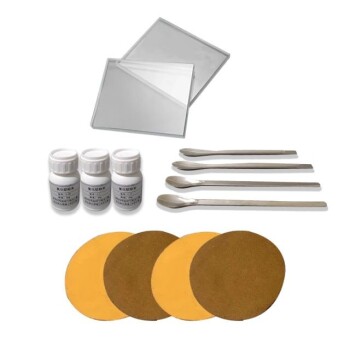
- Electrode Polishing Material for Electrochemical Experiments
- Electrolytic Electrochemical Cell for Coating Evaluation
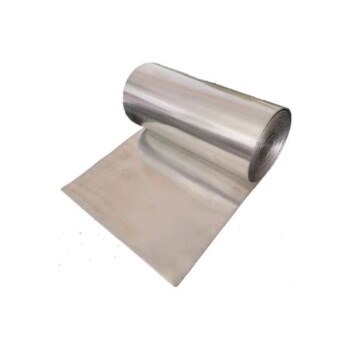
- High Purity Zinc Foil for Battery Lab Applications
- High Temperature Wear-Resistant Alumina Al2O3 Plate for Engineering Advanced Fine Ceramics
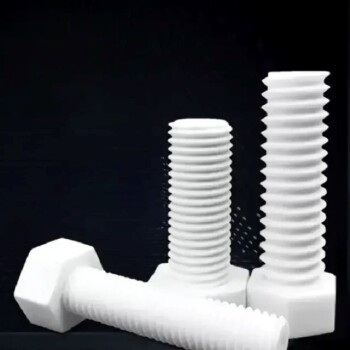
- High Quality Alumina Ceramic Screw for Engineering Advanced Fine Ceramics with High Temperature Resistance and Insulation
People Also Ask
- How do you prepare the polishing setup for an electrode? Achieve a Flawless Mirror Finish for Reliable Electrochemistry
- What is the general procedure and what precautions should be taken during the polishing process? Achieve a Flawless Electrode Finish
- What are the electrode materials? A Guide to Choosing the Right Conductor for Your Application
- What are the examples of electrode materials? From Platinum to Graphite for Your Application
- How is a polished electrode tested for quality? Validate Performance with Cyclic Voltammetry