Long-term vacuum drying is the definitive purification step required to prepare high-performance PS-b-POEGMA solid-state electrolyte membranes. Specifically, subjecting the membrane to 60°C for 48 hours is necessary to completely eradicate residual solvents, such as tetrahydrofuran (THF), and any absorbed environmental moisture that remains after the casting process.
Core Insight: The physical appearance of a dry membrane is deceptive; microscopic traces of solvent and water can destroy battery performance. Long-term vacuum drying is not just about drying—it is a chemical stabilization process that prevents parasitic reactions, ensuring the battery maintains a wide electrochemical window and stable cycling capability.
The Critical Necessity of Contaminant Removal
The preparation of PS-b-POEGMA membranes typically involves solution casting, where the polymer is dissolved in a solvent. While the bulk solvent evaporates quickly, trace amounts remain trapped deep within the polymer matrix.
Eliminating Residual THF
The primary reference indicates that solvents like THF (tetrahydrofuran) are commonly used in this process.
Standard drying is often insufficient to pull these trapped solvent molecules out of the solidifying polymer chains.
Vacuum drying lowers the boiling point of the solvent, forcing even the most stubborn molecules to evaporate from the membrane structure.
Removing Environmental Moisture
Electrolytes are often hygroscopic, meaning they absorb moisture from the air during handling.
Water is detrimental to lithium-ion batteries. Even trace amounts can lead to immediate degradation of performance.
The combination of heat (60°C) and vacuum pressure provides the thermodynamic drive needed to desorb this bound water.
Impact on Battery Performance
The deep need for this rigorous drying process lies in the electrochemical sensitivity of lithium-ion batteries. If you skip this step, the membrane becomes a chemically active component rather than a passive ion conductor.
Preventing Parasitic Side Reactions
Residual solvents and water are not chemically inert inside a battery cell.
When voltage is applied, these contaminants undergo undesirable chemical reactions at the electrode interfaces.
These "side reactions" consume active lithium, irreversibly degrading the capacity of the cell.
Preserving the Electrochemical Window
A key metric for solid electrolytes is the electrochemical window—the voltage range in which the material remains stable without breaking down.
Contaminants like THF and water decompose at lower voltages than the polymer electrolyte itself.
If present, they trigger early breakdown, significantly narrowing the usable voltage range and limiting the battery's energy density.
Ensuring Cycle Stability
Long-term cycling stability refers to the battery's ability to charge and discharge repeatedly without losing capacity.
Contaminants accelerate the aging of the battery by continuously reacting over time.
Thorough vacuum drying ensures the membrane remains chemically stable, allowing for a longer operational lifespan.
Common Pitfalls to Avoid
While the drying process is straightforward, the parameters must be precise to avoid damaging the material.
The Risk of Rushing (Time vs. Purity)
There is often a temptation to shorten the 48-hour drying window to save time.
However, the diffusion of solvents from a solid polymer is a slow kinetic process. Reducing the time results in a membrane that looks dry but contains microscopic pockets of solvent that will ruin performance.
Thermal Degradation Limits
Temperature control is vital. The process uses 60°C because it is the "sweet spot."
It is high enough to drive off THF and water effectively under vacuum.
However, it is low enough to prevent thermal damage or degradation to the PS-b-POEGMA polymer chains themselves. Exceeding this temperature risks altering the mechanical structure of the membrane.
Making the Right Choice for Your Goal
To ensure your PS-b-POEGMA membranes perform as intended, apply the following principles based on your specific engineering priorities:
- If your primary focus is Cycle Life: strictly adhere to the 48-hour duration, as even trace solvents will cause cumulative degradation over hundreds of cycles.
- If your primary focus is Voltage Range: prioritize the vacuum level and temperature accuracy (60°C) to ensure total moisture removal, which maximizes the electrochemical window.
- If your primary focus is Manufacturing Speed: do not compromise on drying time; instead, optimize the casting thickness, as thinner films release solvents faster but may sacrifice mechanical strength.
Ultimately, the reliability of a solid-state battery is defined not by the polymer you choose, but by the impurities you successfully remove.
Summary Table:
| Parameter/Factor | Requirement | Impact on Performance |
|---|---|---|
| Drying Temperature | 60°C | Removes THF and moisture without damaging polymer chains |
| Drying Duration | 48 Hours | Ensures complete diffusion of solvents from the solid matrix |
| Environment | Deep Vacuum | Lowers solvent boiling points for total purification |
| Goal | Contaminant Removal | Prevents parasitic reactions and preserves the electrochemical window |
Precision drying is the foundation of high-performance battery research. At KINTEK, we specialize in the advanced laboratory equipment necessary for your breakthrough developments. From our precision vacuum furnaces and high-temperature reactors to specialized crushing and milling systems, we provide the tools to ensure your solid-state electrolyte membranes meet the highest purity standards. Whether you need reliable cooling solutions, crucibles, or battery research consumables, our expert team is ready to help you optimize your process. Contact us today to discover how KINTEK can enhance your lab's efficiency and ensure the long-term stability of your energy storage solutions.
Related Products
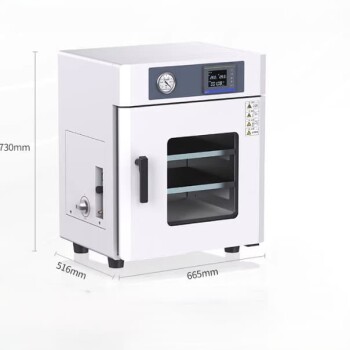
- 56L Vertical Laboratory Vacuum Drying Oven
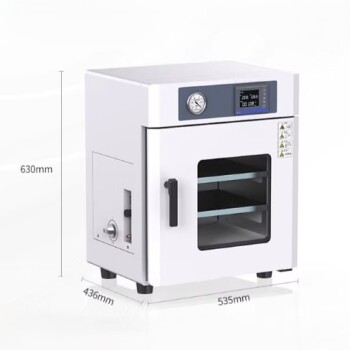
- 23L Laboratory Vacuum Drying Oven
- Laboratory Scientific Electric Heating Blast Drying Oven
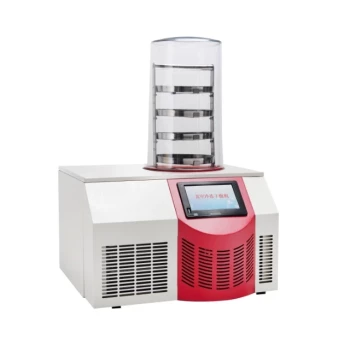
- Benchtop Laboratory Vacuum Freeze Dryer
- Dental Porcelain Zirconia Sintering Ceramic Vacuum Press Furnace
People Also Ask
- Why is a laboratory vacuum drying oven recommended for rice straw residues? Protect Your Biomass Integrity
- What role does a laboratory vacuum drying oven play in the preparation of modified multi-walled carbon nanotubes?
- What is the importance of using a laboratory vacuum drying oven? Preserving Slow-Release Microcapsule Integrity
- Why is a Laboratory Vacuum Drying Oven recommended for PBAT microspheres? Protect Sensitive Polymer Integrity
- What role does a laboratory vacuum drying oven play in processing nanoparticle powder samples? Protect Sample Integrity