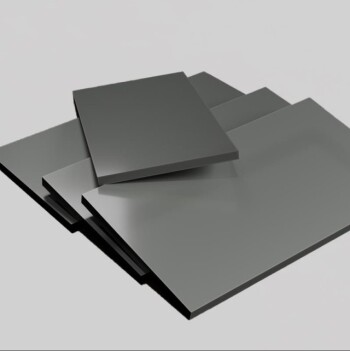
High-strength graphite molds are essential for NITE-SiC sintering because they function simultaneously as a precise shaping container and a robust medium for transmitting pressure under extreme heat. Their unique thermal properties allow them to withstand significant stress while ensuring the Silicon Carbide green body is heated evenly, which is the deciding factor in achieving a final product with consistent density.
The necessity of these molds lies in their ability to bridge the gap between mechanical containment and thermodynamic control. They provide the stability required to prevent deformation while delivering the uniform heat transfer necessary for a high-quality bulk material.
The Critical Roles of the Graphite Mold
Dual Functionality
In the sintering process, the mold performs two distinct but vital tasks.
First, it acts as a rigid container to define the shape of the sample. Second, it serves as the physical medium that transmits uniform pressure to the material while it is being subjected to high temperatures.
Thermal Stability Under Stress
Sintering environments generate intense thermal stresses that would compromise lesser materials.
High-strength graphite exhibits excellent thermal stability, allowing it to maintain its structural integrity throughout the heating cycle. This is particularly effective when the process is conducted within an argon-protected environment.
Ensuring Material Quality Through Thermodynamics
High Thermal Conductivity
One of the most important characteristics of high-strength graphite is its ability to conduct heat efficiently.
This property ensures that thermal energy is not concentrated in specific areas but is instead distributed evenly. This uniform heat transfer is critical for the "green body" (the unfired ceramic material).
Achieving Consistent Density
The direct result of uniform heating is material consistency.
Because the graphite mold eliminates uneven temperature gradients during hot pressing, the Silicon Carbide cures uniformly. This results in a bulk material with consistent density throughout, preventing structural weaknesses associated with uneven sintering.
Understanding the Operational Requirements
Environmental Dependencies
While high-strength graphite is robust, its performance is tied to environmental control.
The material specifically exhibits its stability in an argon-protected environment. Without this inert atmosphere, the mold's integrity and its ability to withstand thermal stress could be compromised.
Material Specificity
It is crucial to note that not all graphite is interchangeable for this application.
The process specifically demands high-strength graphite. Standard grades may lack the necessary durability to withstand the specific thermal stresses generated during the sintering of NITE-SiC.
Making the Right Choice for Your Process
To ensure the success of your sintering project, focus on these specific material attributes:
- If your primary focus is dimensional accuracy: Ensure your graphite grade is certified "high-strength" to withstand thermal stress without deformation during shaping.
- If your primary focus is internal structural integrity: Verify the thermal conductivity ratings of the mold to guarantee the uniform heating required for consistent density.
The graphite mold is not merely a vessel; it is an active thermal component that dictates the final quality of your Silicon Carbide material.
Summary Table:
| Feature | Benefit for NITE-SiC Sintering |
|---|---|
| High Thermal Conductivity | Ensures uniform heat distribution for consistent material density. |
| Structural Integrity | Withstands extreme thermal stress and high pressure without deformation. |
| Dual Functionality | Acts as both a precise shaping container and a pressure transmission medium. |
| Inert Atmosphere Stability | Maintains peak performance and durability in argon-protected environments. |
Elevate Your Advanced Ceramics Production with KINTEK
Achieving the perfect density in NITE-SiC sintering requires more than just high temperatures—it requires the precision and durability of professional-grade equipment. KINTEK specializes in laboratory excellence, providing the high-performance crushing and milling systems, high-temperature furnaces, and hydraulic presses needed to prepare and sinter your materials to perfection.
Whether you are focusing on battery research, material science, or industrial ceramic production, our comprehensive portfolio—including PTFE products, ceramics, and crucibles—is designed to meet the most rigorous thermal and mechanical demands.
Ready to optimize your sintering process? Contact our technical experts today to find the ideal equipment solutions for your laboratory's success.
References
- Chad M. Parish, Yutai Katoh. Microstructure and hydrothermal corrosion behavior of NITE-SiC with various sintering additives in LWR coolant environments. DOI: 10.1016/j.jeurceramsoc.2016.11.033
This article is also based on technical information from Kintek Solution Knowledge Base .
Related Products
- Ultra-High Temperature Graphite Vacuum Graphitization Furnace
- High Purity Pure Graphite Crucible for Evaporation
- High Purity Pure Graphite Crucible for Electron Beam Evaporation
- 2200 ℃ Graphite Vacuum Heat Treat Furnace
- Special Shape Press Mold for Lab
People Also Ask
- What is the disadvantage of graphite furnace? Managing Reactivity and Contamination Risks
- Is a graphite melting point high or low? Discover Its Extreme Thermal Resilience
- What are the advantages and disadvantages of graphite furnace? Unlock Extreme Heat Performance
- What gas is used in graphite furnace? Maximize Accuracy with the Right Inert Gas
- What are the disadvantages of graphite furnace? Key Limitations and Operational Costs