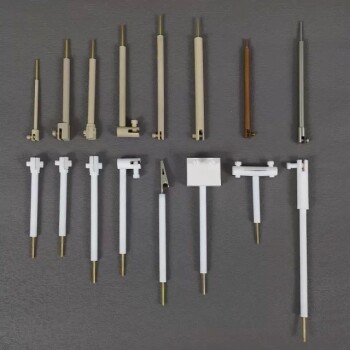
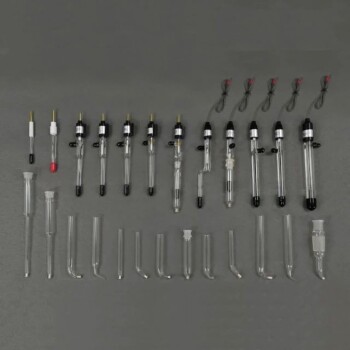
Electrode holders in Contact Glow Discharge Electrolysis (CGDE) must be coated to electrically isolate the holder from the electrolyte. This specific insulation prevents the formation of shunt or parasitic currents, ensuring that all recorded electrical activity originates solely from the intended active area of the electrode.
The Integrity of Your Data Depends on Isolation Without high-temperature insulating resin, current leaks through the holder creates a variable surface area. This makes accurate calculations of current density impossible and compromises the reliability of breakdown voltage monitoring.
Preventing Electrical Interference
Eliminating Shunt Currents
In a CGDE setup, the goal is to drive current exclusively through the electrode tip to generate a glow discharge.
If the holder is exposed to the electrolyte, it creates an unintended electrical path. This phenomenon, known as a shunt current or parasitic current, bypasses the active electrode area.
Confining the Active Area
The insulation defines the geometry of the experiment. By coating the holder, you force the electrical interaction to occur only at the active area of the electrode immersed in the solution.
This physical confinement is the only way to ensure the current measured by your power supply represents the actual physical process occurring at the electrode tip.
Ensuring Measurement Precision
Guaranteeing Current Density Accuracy
Current density is calculated by dividing the total current by the surface area of the electrode.
If parasitic currents are present, the total current reading increases while your calculated surface area remains fixed. This results in erroneous current density calculations, leading you to believe the efficiency or intensity of the reaction is higher than it actually is.
Reliable Breakdown Voltage Monitoring
CGDE relies on monitoring specific voltage thresholds where the electrolytic process transitions into a plasma discharge.
Parasitic currents introduce noise and instability into the circuit. Proper insulation ensures a stable electrical load, allowing for the accurate monitoring of breakdown voltage required to control the discharge process.
Material Requirements and Trade-offs
The Need for High-Temperature Resistance
CGDE is an energetic process that generates significant localized heat and plasma.
Standard insulation often fails under these conditions. The resin must be high-temperature resistant to maintain its structural integrity; if the coating melts or cracks, electrolyte contact is re-established, and the data becomes invalid.
Chemical Inertness
The resin must also be chemically inert.
If the coating reacts with the electrolyte, it can contaminate the solution or degrade the insulation layer. This dual requirement—thermal stability and chemical resistance—is why specific industrial resins are required rather than standard electrical tape or low-grade varnishes.
Common Pitfalls to Avoid
The "Pin-Hole" Failure
A common mistake is assuming that "mostly coated" is sufficient.
Even a microscopic pinhole in the resin allows the electrolyte to contact the metal holder. This creates a highly concentrated point of current leakage that can distort measurements just as severely as a completely uninsulated holder.
Aging and Degradation
Over time, thermal cycling can cause resin to become brittle or detach from the metal holder.
Regular inspection is critical. Using a holder with degraded insulation introduces intermittent parasitic currents, causing inexplicable fluctuations in your experimental data that are often misdiagnosed as plasma instability.
Making the Right Choice for Your Goal
To ensure your CGDE setup yields publishable and reproducible results, follow these guidelines:
- If your primary focus is precise current density data: Verify the coating integrity before every run to ensure the active surface area is constant and known.
- If your primary focus is process stability: Select a resin specifically rated for the peak temperatures of your glow discharge to prevent mid-experiment insulation failure.
The coating is not merely a safety feature; it is a fundamental boundary condition for the physics of your experiment.
Summary Table:
| Feature | Purpose in CGDE | Impact of Failure |
|---|---|---|
| Electrical Isolation | Prevents shunt/parasitic currents | Inaccurate current density & data noise |
| Area Confinement | Defines active electrode geometry | Variable surface area & unrepeatable results |
| High-Temp Resistance | Maintains integrity during plasma discharge | Coating melt/cracks leading to leakage |
| Chemical Inertness | Prevents electrolyte contamination | Degradation of insulation & sample impurity |
Elevate Your Electrochemical Research with KINTEK
Precise results demand high-quality equipment. At KINTEK, we understand that in Contact Glow Discharge Electrolysis (CGDE), the integrity of your insulation is as critical as your power supply.
We specialize in providing high-performance electrolytic cells, electrodes, and laboratory equipment tailored for extreme conditions. Whether you need robust high-temperature high-pressure reactors, specialized furnaces (muffle, vacuum, CVD), or precise battery research tools, KINTEK delivers the durability and precision your research deserves.
Ready to optimize your experimental setup? Contact our technical experts today to find the perfect materials and consumables for your next breakthrough.
References
- Giovanni Battista Alteri, Danilo Dini. Contact Glow Discharge Electrolysis: Effect of Electrolyte Conductivity on Discharge Voltage. DOI: 10.3390/catal10101104
This article is also based on technical information from Kintek Solution Knowledge Base .
Related Products
- Electrode Fixture for Electrochemical Experiments
- Customizable XRD Sample Holders for Diverse Research Applications
- Electrolytic Electrochemical Cell Gas Diffusion Liquid Flow Reaction Cell
- XRD Sample Holder X-ray Diffractometer Powder Slide
- Sample Support Body for Electrochemical Tests
People Also Ask
- What criteria are used during the visual inspection of electrodes? Essential Quality Assessment for Your Lab
- How should an electrode holder be cleaned as part of regular maintenance? Ensure Reliable Electrochemical Measurements
- What is a critical precaution regarding electrolyte contact when using an electrode holder? Ensure Accurate and Safe Electrochemical Measurements
- What are the proper procedures for post-treatment and storage of an electrode holder after an experiment? Ensure Accuracy and Longevity
- What maintenance check is required for the electrical connections of an electrode holder? Ensure Reliable Data and Lab Safety