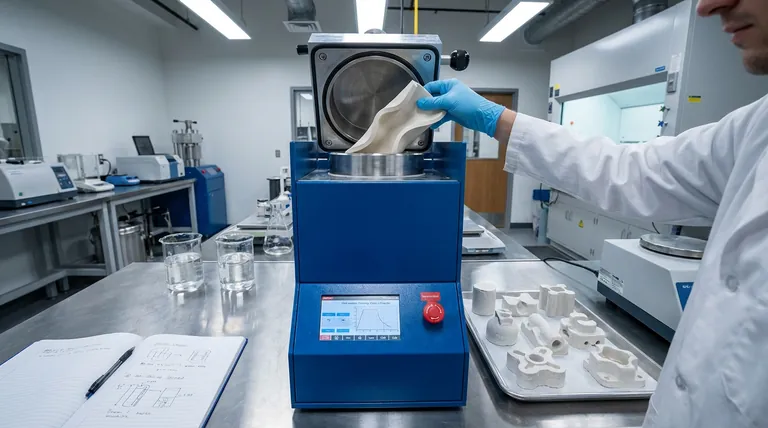
The Illusion of Direct Force
Our intuition about shaping things is ancient and simple: apply force, create form. A blacksmith’s hammer, a hydraulic press—they all rely on direct, directional force. This works perfectly for simple shapes.
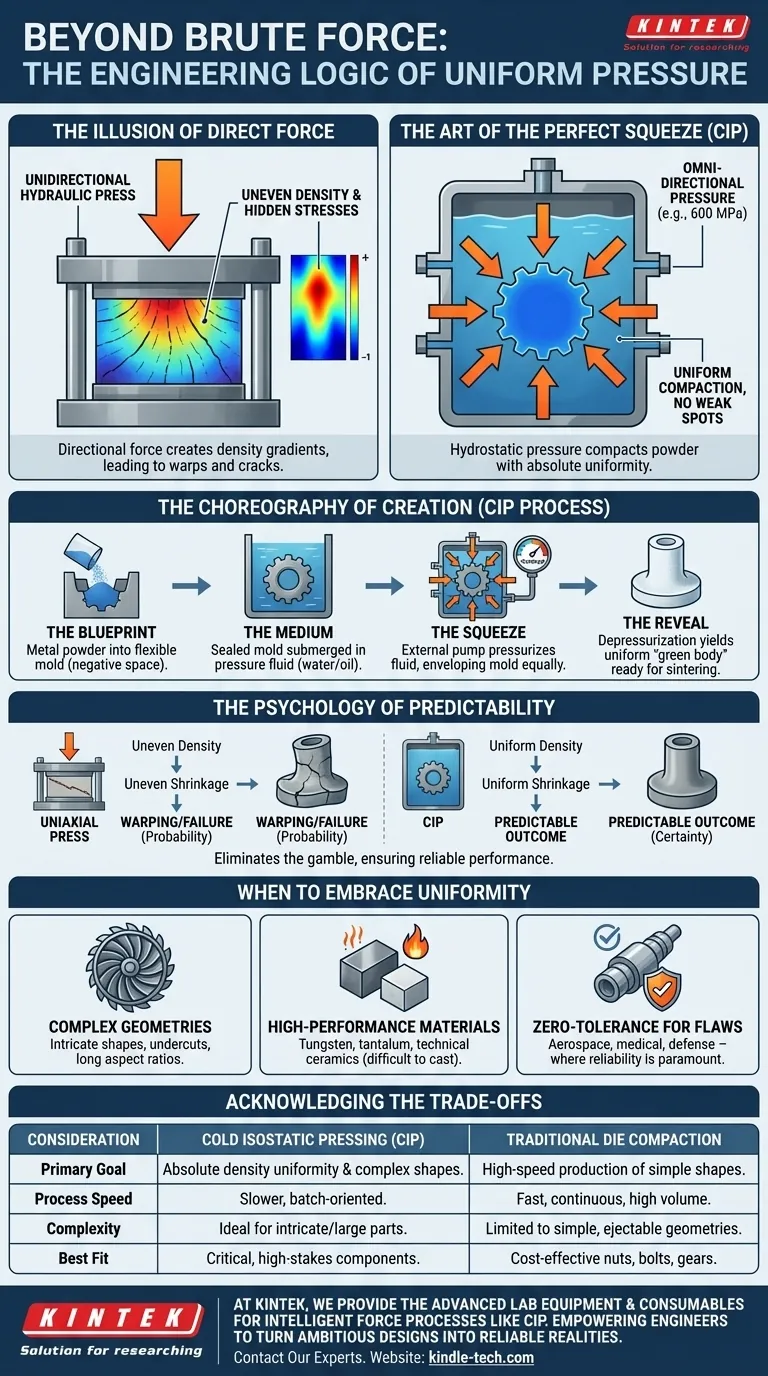
But when the geometry becomes complex or the material is unforgiving, this intuition fails. Direct pressure creates invisible battlegrounds within the material. Density becomes a landscape of peaks and valleys, a map of hidden stresses waiting to become cracks or warps under load.
The problem isn't the pressure; it's the application. True mastery over form requires a different kind of thinking. It requires pressure without direction.
Cold Isostatic Pressing: The Art of the Perfect Squeeze
Cold Isostatic Pressing (CIP) is the engineering answer to this challenge. It’s a powder metallurgy process that operates on a profoundly elegant principle: if you apply immense pressure equally from all directions, the material has no choice but to compact uniformly.
There are no weak spots, because there is no "direction" of force.
The Choreography of Creation
The process is a methodical ballet of physics and materials science.
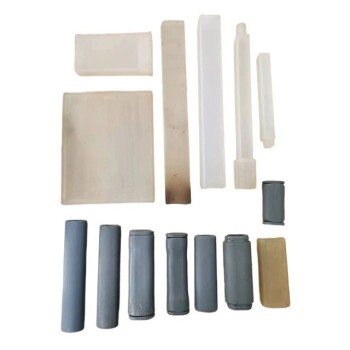
- The Blueprint: A high-performance metal powder is poured into a flexible, elastomer mold. This mold is the negative space of the final part—a precise, flexible container for a future component.
- The Medium: The sealed mold is submerged in a chamber of fluid, typically water or oil. This fluid is the key; it's the medium that will transmit pressure perfectly and evenly to every point on the mold's surface.
- The Squeeze: An external pump pressurizes the fluid, sometimes to astonishing levels over 600 MPa (nearly 90,000 psi). The hydrostatic pressure envelops the mold, compacting the powder inside with absolute uniformity.
- The Reveal: After depressurization, a "green body" emerges. It has the consistency of chalk—solid enough to handle but awaiting its final transformation.
This green body is a perfect, uniformly dense promise of the final component. It must then be sintered—heated to bond the particles—to achieve its ultimate strength.
The Psychology of Predictability
Why is this uniformity so critical? Because it addresses a fundamental human need in engineering: the desire to eliminate uncertainty.
A component made with a uniaxial press has density gradients. This means when it's heated during sintering, it shrinks unevenly. The part can warp, crack, or fail to meet tolerances. The outcome is a probability, not a certainty.
CIP removes this gamble.
By starting with a green body of perfectly even density, shrinkage during sintering becomes uniform and predictable. The final part behaves exactly as the models predict. This isn't just a manufacturing benefit; it's a strategic advantage that reduces waste, improves reliability, and builds confidence in the final product's performance.
When to Embrace Uniformity
The elegance of CIP makes it the superior choice for specific, demanding applications.
- Complex Geometries: For parts with intricate shapes, undercuts, or long aspect ratios (like thin rods), CIP is often the only way to achieve consistent density throughout.
- High-Performance Materials: It's essential for forming materials with exceptionally high melting points, such as tungsten, tantalum, and technical ceramics. Melting and casting them is impractical; CIP allows them to be shaped at room temperature.
- Zero-Tolerance for Flaws: In aerospace, medical, and defense applications, a single internal flaw can be catastrophic. The uniform structure created by CIP minimizes these internal risks.
Acknowledging the Trade-offs
CIP is a philosophy of precision, not speed. It is not the solution for every problem.
| Consideration | Cold Isostatic Pressing (CIP) | Traditional Die Compaction |
|---|---|---|
| Primary Goal | Absolute density uniformity and complex shape capability. | High-speed production of simple shapes. |
| Process Speed | Slower, batch-oriented process. | Fast, continuous process suitable for high volume. |
| Complexity | Ideal for intricate parts, undercuts, and large components. | Limited to simpler geometries that can be easily ejected. |
| Post-Processing | Sintering is mandatory to achieve final part strength. | Sintering is also required. |
| Best Fit | High-performance, critical components where reliability is paramount. | Cost-effective production of nuts, bolts, and gears. |
The choice is not about which process is "better," but which one aligns with the project's most critical outcome. For simple, high-volume parts, the brute force of die compaction is efficient. For complex, high-stakes components, the intelligent force of CIP is essential.
Understanding this distinction is the key to successful manufacturing. At KINTEK, we provide the advanced lab equipment and consumables that empower engineers to harness processes like Cold Isostatic Pressing. We believe that having the right tools is the first step toward turning ambitious designs into reliable realities.
If you are facing the challenge of producing complex components from advanced materials, let's explore how the right equipment can provide the control and predictability you need. Contact Our Experts
Visual Guide
Related Products
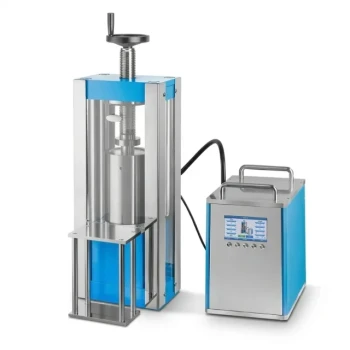
- Electric Split Lab Cold Isostatic Press CIP Machine for Cold Isostatic Pressing
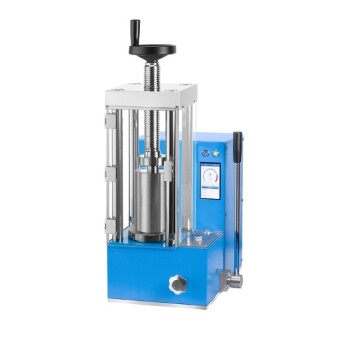
- Electric Lab Cold Isostatic Press CIP Machine for Cold Isostatic Pressing
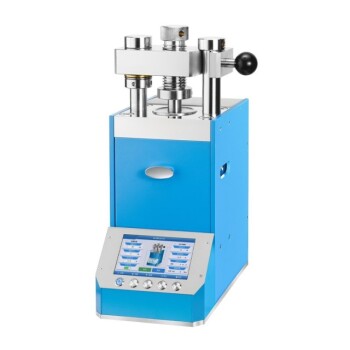
- Automatic Lab Cold Isostatic Press CIP Machine Cold Isostatic Pressing
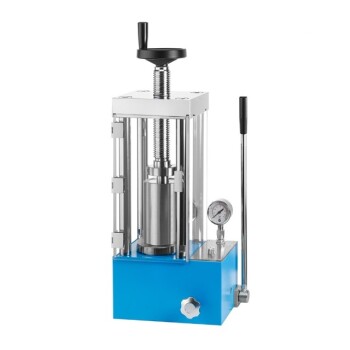
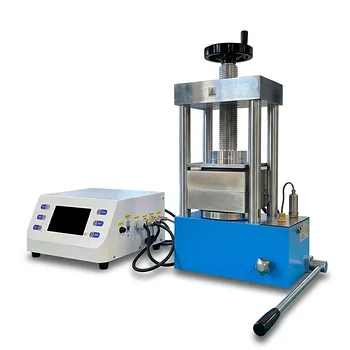
- Manual Cold Isostatic Pressing Machine CIP Pellet Press
- Warm Isostatic Press for Solid State Battery Research