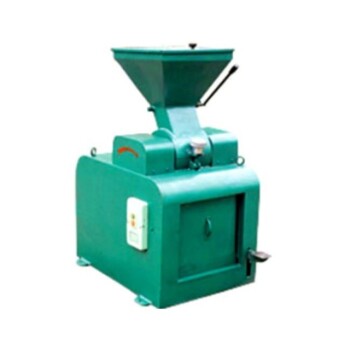
The double roll crusher operates specifically at the fine crushing stage of the mineral preparation process for magnesite and associated minerals. It functions as a critical intermediate unit, processing ore that has already passed through primary equipment and reducing it to a size suitable for final grinding.
The double roll crusher acts as the bridge between coarse crushing and fine grinding. Its primary objective is to process the output from jaw crushers and deliver a precise, compression-crushed feed to ball or rod mills.
Positioning in the Process Flow
Processing Primary Output
The double roll crusher is not designed to handle raw, run-of-mine ore directly. It is typically positioned immediately downstream of the jaw crusher.
The jaw crusher handles the initial coarse reduction of the mined material. The double roll crusher then accepts this pre-crushed output to perform the necessary fine crushing work.
Preparing for the Grinding Stage
The ultimate goal of this stage is to prepare the ore for ball milling or rod milling. These grinding mills operate most efficiently when supplied with material of a consistent, specific size.
The double roll crusher reduces the ore to meet these strict feed requirements. By doing so, it ensures the subsequent milling equipment does not have to expend excess energy breaking down oversized particles.
Operational Mechanics
Compression-Based Reduction
Unlike impact crushers that shatter rock, the double roll crusher utilizes a compression-based crushing mechanism.
Material is drawn between two rotating rolls and crushed until it passes through the gap. This method is highly effective for generating fines without creating excessive dust or irregular shards.
Precision Size Control
A key advantage of this stage is the ability to control the maximum particle size of the final product.
By adjusting the gap between the rolls, operators can ensure that the output strictly adheres to the specifications required for the milling stage.
Understanding the Trade-offs
Dependency on Upstream Equipment
The double roll crusher cannot operate in isolation. Because it is a fine crushing tool, it is strictly dependent on the efficiency of the jaw crusher.
If the primary jaw crusher fails to reduce the ore sufficiently, the feed may be too large for the rolls to grip and crush effectively.
Throughput vs. Reduction Ratio
While the double roll crusher offers precise control over particle size, it is generally limited to a specific reduction ratio.
Attempting to achieve too drastic a size reduction in a single pass can reduce throughput or cause mechanical stress. It is a precision tool, not a bulk volume breaker.
Making the Right Choice for Your Goal
To maximize the efficiency of your mineral preparation circuit, consider how the double roll crusher integrates with your specific equipment.
- If your primary focus is Grinding Efficiency: Ensure the roll crusher gap is set to produce the smallest practical feed size to minimize the energy consumption of your ball or rod mill.
- If your primary focus is Circuit Reliability: Verify that the upstream jaw crusher is consistently producing output that fits easily within the nip angle of the double roll crusher to prevent blockages.
The double roll crusher is the essential "polishing" step in crushing, ensuring your ore is perfectly sized for the final liberation phase.
Summary Table:
| Process Stage | Equipment Used | Primary Function | Output Characteristic |
|---|---|---|---|
| Primary Crushing | Jaw Crusher | Initial coarse reduction of run-of-mine ore | Large, irregular fragments |
| Fine Crushing | Double Roll Crusher | Intermediate reduction via compression | Uniform, precisely sized feed |
| Final Grinding | Ball Mill / Rod Mill | Final liberation and pulverization | Fine powder for processing |
Maximize Your Mineral Processing Efficiency with KINTEK
Enhance your laboratory and production workflows with KINTEK’s precision-engineered crushing and milling systems. Whether you are processing magnesite or complex minerals, our robust double roll crushers provide the exact particle size control needed to optimize your downstream ball or rod milling performance.
From high-performance crushing and milling systems to essential high-temperature furnaces and pellet presses, KINTEK delivers the comprehensive equipment and consumables your research and production demand. Our expert solutions ensure uniform material preparation, reducing energy waste and increasing throughput.
Ready to elevate your lab’s precision? Contact our technical specialists today to discover how KINTEK can streamline your mineral preparation circuit!
Related Products
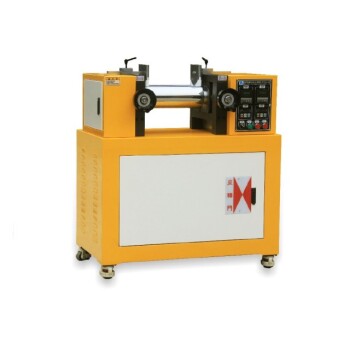
- Open Type Two Roll Mixing Mill Machine for Rubber Crusher
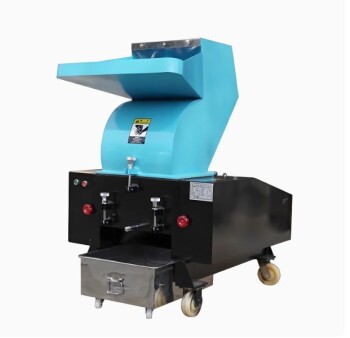
- Powerful Plastic Crusher Machine
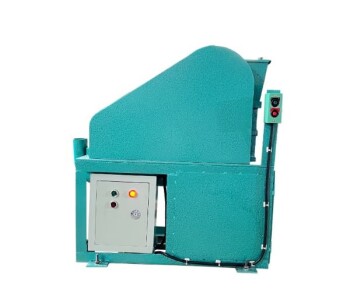
- Sealed Jaw Crusher High Efficiency Environmental Protection Safe and Reliable
- Laboratory Jaw Crusher
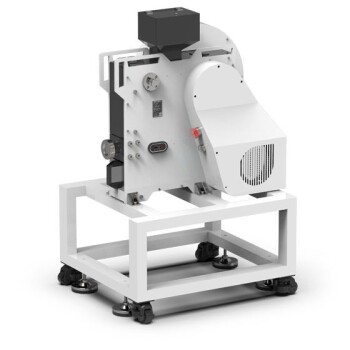
- Laboratory Sealed Hammer Crusher for Efficient Sample Preparation
People Also Ask
- What is a two roll mill for rubber compounding? A Foundational Tool for Polymer Processing
- What is the use of two roll mill? Essential for Polymer Mixing, R&D, and Quality Control
- What is the two roll mill mixing process? Master Polymer Compounding with High Shear
- What is the disadvantage of a two-roll mill? Limited Thickness Reduction Due to Roll Flattening
- What are the advantages of a two roll mill? Achieve Superior Polymer Mixing & Quality Control