Knowledge Can you provide a typical example of the calcination process? Discover the Limestone to Lime Transformation
Author avatar

Tech Team · Kintek Solution

Updated 5 days ago

Can you provide a typical example of the calcination process? Discover the Limestone to Lime Transformation


The classic and most definitive example of calcination is the production of lime from limestone. In this process, raw limestone (calcium carbonate) is subjected to high temperatures, causing it to decompose and release carbon dioxide gas, leaving behind calcium oxide (lime).

Core Takeaway: Calcination is a thermal treatment process where solids are heated below their melting point to induce chemical decomposition. Its primary function is to drive off volatile fractions—like carbon dioxide—to fundamentally transform the material's physical and chemical state.

The Limestone Transformation Explained

The Chemical Mechanism

At the heart of this example is thermal decomposition. When limestone is heated, the calcium carbonate ($CaCO_3$) becomes unstable.

This forces the material to release carbon dioxide ($CO_2$) as a gas.

The solid material that remains is chemically changed into calcium oxide ($CaO$), commonly known as lime.

Physical Changes

The transformation is not just chemical; it alters the physical properties of the ore.

While the original limestone is a hard rock, the resulting lime is produced in an easily powdered condition.

This physical change makes the material suitable for downstream applications, such as cement production.

Key Principles of Calcination

Temperature Control

Crucially, calcination involves heating the material to a temperature below its melting point.

The goal is not to melt the ore (as in smelting) but to heat it sufficiently to break chemical bonds and release volatiles.

Controlled Atmosphere

The process is typically conducted in the absence of air or with a limited oxygen supply.

This restriction prevents unwanted oxidation reactions and ensures the process focuses strictly on decomposition and volatile removal.

Equipment and Uniformity

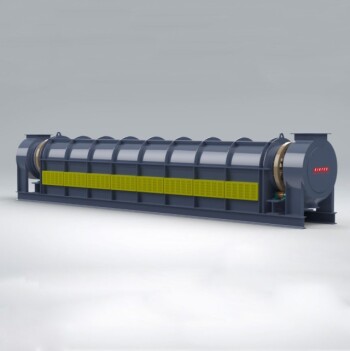
In industrial settings, this occurs in specialized equipment like shaft furnaces, rotary kilns, or muffle furnaces.

To ensure the product is consistent, the sample is often stirred or agitated during heating, guaranteeing uniform thermal exposure.

Understanding the Trade-offs

Energy vs. Material Integrity

The primary challenge in calcination is achieving the precise thermal window.

If the temperature is too low, the decomposition will be incomplete, leaving behind raw impurities (uncalcined limestone).

Melting Risks

If the temperature exceeds the specific threshold for that material, you risk melting or sintering the ore.

Melting defeats the purpose of calcination, as it creates a fused mass rather than the desired porous or powdered reactive solid.

Volatile Management

The release of gases like carbon dioxide requires careful ventilation management.

In large-scale operations like cement production, managing these off-gases is a significant environmental and operational consideration.

Making the Right Choice for Your Goal

To apply the principles of calcination effectively, consider your specific objective:

  • If your primary focus is Industrial Production: Prioritize the selection of the furnace type (e.g., rotary kiln vs. shaft furnace) to ensure uniform heating and efficient agitation of the solid.
  • If your primary focus is Chemical Purity: Focus on precise temperature regulation to ensure complete decomposition without reaching the melting point of the substrate.

Calcination is the bridge between a raw, stable ore and a reactive, useful industrial material.

Summary Table:

Stage Material Chemical State Physical State
Input Limestone Calcium Carbonate ($CaCO_3$) Hard Rock
Process Thermal Heating Decomposition (Release of $CO_2$) Agitated/Stirred
Output Quicklime Calcium Oxide ($CaO$) Easily Powdered
Goal Desired Product Chemical Purity Reactive Solid

Elevate Your Material Processing with KINTEK Precision

Are you looking to optimize your calcination, sintering, or thermal decomposition workflows? KINTEK specializes in high-performance laboratory equipment designed for precision and durability. Whether you are producing lime, refining ceramics, or conducting battery research, our comprehensive range of equipment ensures uniform thermal exposure and exact temperature control.

Our solutions for your laboratory and industrial needs include:

  • High-Temperature Furnaces: Muffle, tube, rotary, and vacuum furnaces for perfect calcination.
  • Processing Systems: Crushing, milling, and sieving equipment to prepare your raw materials.
  • Advanced Reactors: High-temperature high-pressure reactors and autoclaves for complex chemical synthesis.
  • Specialized Tools: Hydraulic presses, electrolytic cells, and high-purity ceramics or crucibles.

Don't let inconsistent heating or impure results stall your research. Partner with KINTEK to access industry-leading expertise and equipment tailored to your specific application.

Ready to transform your materials? Contact our experts today to find the perfect furnace solution!

Related Products

People Also Ask

Related Products

1700℃ Muffle Oven Furnace for Laboratory

1700℃ Muffle Oven Furnace for Laboratory

Get superior heat control with our 1700℃ Muffle Furnace. Equipped with intelligent temperature microprocessor, TFT touch screen controller & advanced insulation materials for precise heating up to 1700C. Order now!

1400℃ Muffle Oven Furnace for Laboratory

1400℃ Muffle Oven Furnace for Laboratory

Get precise high-temperature control up to 1500℃ with KT-14M Muffle furnace. Equipped with a smart touch screen controller and advanced insulation materials.

1800℃ Muffle Oven Furnace for Laboratory

1800℃ Muffle Oven Furnace for Laboratory

KT-18 muffle furnace with Japan Al2O3 polycrystalline fibe and Silicon Molybdenum heating element, up to 1900℃, PID temperature control and 7" smart touch screen. Compact design, low heat loss, and high energy efficiency. Safety interlock system and versatile functions.

Laboratory Muffle Oven Furnace Bottom Lifting Muffle Furnace

Laboratory Muffle Oven Furnace Bottom Lifting Muffle Furnace

Efficiently produce batches with excellent temperature uniformity using our Bottom Lifting Furnace. Features two electric lifting stages and advanced temperature control up to 1600℃.

1400℃ Laboratory High Temperature Tube Furnace with Alumina Tube

1400℃ Laboratory High Temperature Tube Furnace with Alumina Tube

Looking for a tube furnace for high-temperature applications? Our 1400℃ Tube Furnace with Alumina Tube is perfect for research and industrial use.

1200℃ Split Tube Furnace with Quartz Tube Laboratory Tubular Furnace

1200℃ Split Tube Furnace with Quartz Tube Laboratory Tubular Furnace

KT-TF12 split tube furnace: high-purity insulation, embedded heating wire coils, and max. 1200C. Widely used for new materials and chemical vapour deposition.

Laboratory Rapid Thermal Processing (RTP) Quartz Tube Furnace

Laboratory Rapid Thermal Processing (RTP) Quartz Tube Furnace

Get lightning-fast heating with our RTP Rapid Heating Tube Furnace. Designed for precise, high-speed heating and cooling with convenient sliding rail and TFT touch screen controller. Order now for ideal thermal processing!

1700℃ Laboratory High Temperature Tube Furnace with Alumina Tube

1700℃ Laboratory High Temperature Tube Furnace with Alumina Tube

Looking for a high-temperature tube furnace? Check out our 1700℃ Tube Furnace with Alumina Tube. Perfect for research and industrial applications up to 1700C.

Multi-zone Laboratory Tube Furnace

Multi-zone Laboratory Tube Furnace

Experience precise, efficient thermal testing with our Multi Zone Tube Furnace. Independent heating zones and temperature sensors allow for controlled high-temperature gradient heating fields. Order now for advanced thermal analysis!

1400℃ Controlled Atmosphere Furnace with Nitrogen and Inert Atmosphere

1400℃ Controlled Atmosphere Furnace with Nitrogen and Inert Atmosphere

Achieve precise heat treatment with KT-14A controlled atmosphere furnace. Vacuum sealed with a smart controller, it's ideal for lab and industrial use up to 1400℃.

Molybdenum Vacuum Heat Treat Furnace

Molybdenum Vacuum Heat Treat Furnace

Discover the benefits of a high-configuration molybdenum vacuum furnace with heat shield insulation. Ideal for high-purity, vacuum environments like sapphire crystal growth and heat treatment.

Vacuum Heat Treat and Molybdenum Wire Sintering Furnace for Vacuum Sintering

Vacuum Heat Treat and Molybdenum Wire Sintering Furnace for Vacuum Sintering

A vacuum molybdenum wire sintering furnace is a vertical or bedroom structure, which is suitable for withdrawal, brazing, sintering and degassing of metal materials under high vacuum and high temperature conditions. It is also suitable for dehydroxylation treatment of quartz materials.

Ultra-High Temperature Graphite Vacuum Graphitization Furnace

Ultra-High Temperature Graphite Vacuum Graphitization Furnace

The ultra-high temperature graphitization furnace utilizes medium frequency induction heating in a vacuum or inert gas environment. The induction coil generates an alternating magnetic field, inducing eddy currents in the graphite crucible, which heats up and radiates heat to the workpiece, bringing it to the desired temperature. This furnace is primarily used for graphitization and sintering of carbon materials, carbon fiber materials, and other composite materials.

Vertical High Temperature Graphite Vacuum Graphitization Furnace

Vertical High Temperature Graphite Vacuum Graphitization Furnace

Vertical high temperature graphitization furnace for carbonization and graphitization of carbon materials up to 3100℃.Suitable for shaped graphitization of carbon fiber filaments and other materials sintered in a carbon environment.Applications in metallurgy, electronics, and aerospace for producing high-quality graphite products like electrodes and crucibles.

Laboratory Vacuum Tilt Rotary Tube Furnace Rotating Tube Furnace

Laboratory Vacuum Tilt Rotary Tube Furnace Rotating Tube Furnace

Discover the versatility of Laboratory Rotary Furnace: Ideal for calcination, drying, sintering, and high-temperature reactions. Adjustable rotating and tilting functions for optimal heating. Suitable for vacuum and controlled atmosphere environments. Learn more now!

Horizontal High Temperature Graphite Vacuum Graphitization Furnace

Horizontal High Temperature Graphite Vacuum Graphitization Furnace

Horizontal Graphitization Furnace: This type of furnace is designed with the heating elements placed horizontally, allowing for uniform heating of the sample. It's well-suited for graphitizing large or bulky samples that require precise temperature control and uniformity.

Vacuum Heat Treat Sintering Brazing Furnace

Vacuum Heat Treat Sintering Brazing Furnace

A vacuum brazing furnace is a type of industrial furnace used for brazing, a metalworking process that joins two pieces of metal using a filler metal that melts at a lower temperature than the base metals. Vacuum brazing furnaces are typically used for high-quality applications where a strong, clean joint is required.

Mesh belt controlled atmosphere furnace

Mesh belt controlled atmosphere furnace

Discover our KT-MB mesh belt sintering furnace - perfect for high-temperature sintering of electronic components & glass insulators. Available for open air or controlled atmosphere environments.

600T Vacuum Induction Hot Press Furnace for Heat Treat and Sintering

600T Vacuum Induction Hot Press Furnace for Heat Treat and Sintering

Discover the 600T Vacuum Induction Hot Press Furnace, designed for high-temperature sintering experiments in vacuum or protected atmospheres. Its precise temperature and pressure control, adjustable working pressure, and advanced safety features make it ideal for nonmetal materials, carbon composites, ceramics, and metal powders.

Vacuum Heat Treat and Sintering Furnace with 9MPa Air Pressure

Vacuum Heat Treat and Sintering Furnace with 9MPa Air Pressure

The air pressure sintering furnace is a high-tech equipment commonly used for the sintering of advanced ceramic materials. It combines vacuum sintering and pressure sintering techniques to achieve high-density and high-strength ceramics.


Leave Your Message