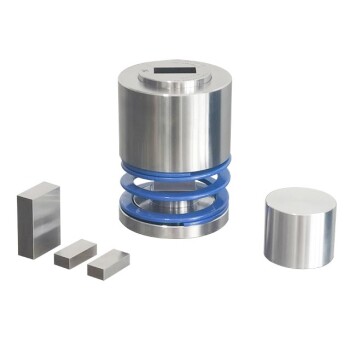
High-pressure reactors serve as the critical validation step for nuclear safety by replicating the extreme environmental conditions of a Design Basis Accident (DBA). To verify performance, coating samples are isolated within the reactor and subjected to a continuous spray of boric acid solution at 153°C under specific pressures for a duration of 4 to 7 days.
Core Takeaway The primary goal of this testing is to ensure coating integrity under catastrophic failure conditions. By simulating the thermal shock and chemical exposure of a reactor accident, engineers can certify that coatings will not delaminate, blister, or peel—failures that could debris and clog emergency cooling systems when they are needed most.
Replicating the Accident Environment
To understand the reliability of a coating, we must move beyond standard wear-and-tear testing and simulate the "worst-case scenario."
The Chemical Atmosphere
The reactor chamber is filled with a boric acid solution adjusted to a pH of 9-10.
This specific chemistry mimics the emergency coolant used in many nuclear reactors. The high-pressure reactor ensures the coating is chemically compatible with this solution and will not degrade or react adversely during exposure.
Thermal and Pressure Stress
The test does not simply soak the material; it subjects it to continuous spraying at 153°C.
The combination of high heat and elevated pressure creates a rigorous environment that tests the physical bond of the coating. This thermal shock is designed to induce failure in any sub-standard material instantly.
Duration of Exposure
This is an endurance test, not a momentary pulse. The samples undergo this treatment continuously for 4 to 7 days.
This prolonged timeframe verifies that the coating can withstand the accident environment for the entire period required to bring a reactor to a safe shutdown state.
Evaluating Failure Modes
Once the simulation cycle is complete, the samples are removed and inspected for specific signs of failure.
Resistance to Delamination
The most critical metric is adhesion. The test determines if the coating maintains its bond to the substrate or if it begins to peel away (delamination).
In a real accident scenario, peeling paint is a safety hazard because it can transport debris into sumps and strainers, potentially blocking coolant flow.
Blistering and Surface Integrity
Inspectors examine the surface microstructure for blistering.
Blisters indicate that the high-pressure environment has forced fluid or gas between the coating layers. High-pressure reactors provide the precise conditions necessary to reveal these microscopic weaknesses that standard pressure testing would miss.
Understanding the Trade-offs
While high-pressure reactor testing is the industry standard for DBA qualification, it is important to recognize the nuances of the methodology.
Simulation vs. Reality
This testing method provides a controlled, "idealized" version of a chaotic event.
While it accurately replicates temperature, pressure, and chemistry, it may not fully account for other variables present in a live accident, such as physical debris impact or radiation flux, unless specifically integrated into the reactor design.
Specificity of Conditions
The results are highly specific to the chemical solution used (in this case, boric acid).
As noted in broader industrial applications, changing the chemical input (e.g., to the acid gases found in biomass boilers) fundamentally changes the degradation mechanism. Therefore, a "pass" in a nuclear DBA test does not guarantee performance in other high-pressure industrial environments.
Making the Right Choice for Your Goal
When reviewing coating specifications or planning a qualification regime, align your focus with your ultimate objective.
- If your primary focus is Regulatory Compliance: Ensure the test protocol strictly adheres to the 153°C temperature and Boric acid (pH 9-10) parameters to meet DBA standards.
- If your primary focus is Safety Margins: extend the testing duration beyond the minimum 4 days to determine the absolute limit of the coating's adhesion properties.
- If your primary focus is Material Selection: Prioritize coatings that show zero blistering, as this is often the precursor to total delamination under pressure.
The ultimate value of this testing is confidence: knowing that the passive protection systems will hold fast when the active systems are pushed to their breaking point.
Summary Table:
| Test Parameter | Requirement for DBA Simulation | Purpose/Goal |
|---|---|---|
| Temperature | 153°C | Replicate thermal shock of a reactor accident |
| Pressure Medium | Boric acid solution (pH 9-10) | Mimic emergency coolant chemical environment |
| Test Duration | 4 to 7 days | Verify endurance for long-term safe shutdown |
| Key Metric | Adhesion & Blister Resistance | Prevent debris from clogging cooling systems |
Ensure Nuclear Safety with KINTEK Precision
Don't leave safety to chance. KINTEK specializes in advanced laboratory equipment, including high-temperature high-pressure reactors and autoclaves designed specifically to meet the rigorous demands of nuclear industry standards and DBA simulations. Our precision-engineered systems allow researchers and safety engineers to accurately validate coating performance, ensuring zero delamination and total reliability in the most extreme environments.
From high-performance reactors to comprehensive material testing solutions like crushing systems, hydraulic presses, and cooling tools, KINTEK provides the specialized hardware you need to achieve regulatory compliance and absolute material confidence.
Ready to upgrade your safety testing protocols? Contact us today to find the perfect solution for your lab!
References
- Jianzhuang Xiao, Qinghai Xie. Review of Research on the High Temperature Resistance of Concrete Structures in Chinese NPP. DOI: 10.3151/jact.14.335
This article is also based on technical information from Kintek Solution Knowledge Base .
Related Products
- Customizable Laboratory High Temperature High Pressure Reactors for Diverse Scientific Applications
- Customizable High Pressure Reactors for Advanced Scientific and Industrial Applications
- Stainless High Pressure Autoclave Reactor Laboratory Pressure Reactor
- Visual High-Pressure Reactor for In-Situ Observation
- Mini SS High Pressure Autoclave Reactor for Laboratory Use
People Also Ask
- How do high-pressure and high-temperature reactors ensure the effective treatment of lignocellulosic wastewater in WAO?
- What equipment is required for high-pressure high-temperature reactions? Master Extreme Chemistry Safely
- How do you control high pressure in a reactor? A Guide to Safe & Stable Operation
- Why is argon better than nitrogen for inert atmosphere? Ensure Absolute Reactivity & Stability
- How does initial oxygen pressure affect the wet oxidation of pharmaceutical sludge? Master Your Oxidation Depth