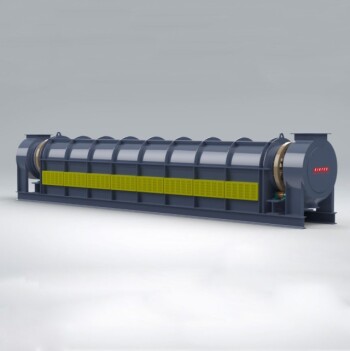
High-precision regulation of the thermal environment is the decisive factor in ensuring product diversity during coal gangue processing. By maintaining strictly oxygen-free or oxygen-poor conditions, typically around 600°C, these furnaces prevent simple combustion and instead facilitate the targeted cracking of organic components. Through the manipulation of heating rates and residence times, the system forces the raw material to separate into distinct, high-value product streams.
Controlled atmosphere pyrolysis moves beyond simple waste disposal to achieve "stepped utilization" of resources. By precisely tuning the reaction environment, a single low-value input is transformed into three distinct, high-value outputs: pyrolysis oil, combustible gas, and high-activity coke.
The Mechanics of Controlled Transformation
To understand how product diversity is achieved, one must look at the specific control parameters managed by the furnace.
The Critical Role of Atmosphere
The defining feature of this technology is the exclusion of oxygen. In an oxygen-free or oxygen-poor environment, the organic matter in coal gangue cannot burn to ash.
Instead, the material undergoes thermal cracking, where long chemical chains break down into smaller, valuable molecules without oxidizing.
Precision Temperature Regulation
The furnace relies on high-precision temperature control to dictate which chemical bonds break.
The primary reference highlights 600°C as a critical operating point. At this specific thermal level, the system maximizes the efficiency of the cracking process for specific organic components.
Controlling Time and Rate
Temperature alone is not enough; the heating rate and residence time (how long the material stays hot) are equally vital.
Adjusting how fast the material heats up and how long it remains at the target temperature allows operators to "stepped" or stage the release of different products.
The Output: Achieving Stepped Utilization
The ultimate goal of this precise control is to fractionate the coal gangue into three specific phases of matter.
Pyrolysis Oil (Liquid Phase)
By controlling the condensation of vapors released during cracking, the furnace recovers pyrolysis oil. This is a direct result of breaking down heavier organic structures into liquid hydrocarbons.
Combustible Gas (Gas Phase)
Lighter fractions that do not condense form combustible gas. This product can be harvested for energy generation or used as a chemical feedstock.
High-Activity Coke (Solid Phase)
The remaining solid residue transforms into high-activity coke. Because the process avoids combustion, the carbon structure remains intact and highly reactive, suitable for industrial applications.
Understanding the Trade-offs
While controlled atmosphere pyrolysis offers high value, it presents specific operational challenges.
Complexity of Process Control
Achieving "stepped utilization" requires maintaining a delicate balance between heating rate and residence time. Deviations in these parameters can lead to incomplete cracking or the degradation of valuable oil into less valuable gas.
Sensitivity to Feedstock
The efficiency of the "guidance" provided by the furnace depends on the consistency of the coal gangue. Variations in the organic content of the input material may require real-time adjustments to the thermal profile to maintain consistent product quality.
Maximizing Value for Your Project
To leverage controlled atmosphere pyrolysis effectively, align your operational parameters with your specific output goals.
- If your primary focus is maximizing liquid yields (Oil): Prioritize precise temperature regulation around 600°C to ensure optimal cracking without "over-cracking" the molecules into gas.
- If your primary focus is solid residue quality (Coke): Strict adherence to an oxygen-free atmosphere is essential to prevent oxidation and ensure the resulting coke retains high chemical activity.
Success lies in viewing temperature and time not just as settings, but as the precise tools that carve value out of raw waste.
Summary Table:
| Parameter | Influence on Product Diversity | Key Output Goal |
|---|---|---|
| Atmosphere | Oxygen-free/poor conditions prevent combustion | Preservation of carbon & liquid hydrocarbons |
| Temperature | Precisely controlled (typically around 600°C) | Optimal cracking of specific organic bonds |
| Heating Rate | Determines the speed of chemical chain breakdown | Maximization of pyrolysis oil yields |
| Residence Time | Controls the duration of the cracking process | High-activity coke & combustible gas quality |
Elevate Your Material Transformation with KINTEK
At KINTEK, we understand that precision is the difference between waste and wealth. Our advanced controlled atmosphere rotary and tube furnaces provide the high-precision thermal regulation required to achieve the "stepped utilization" of coal gangue and other complex feedstocks.
Whether you are focusing on maximizing pyrolysis oil yields or producing high-activity coke, our equipment—including high-temperature furnaces, crushing systems, and specialized reactors—is engineered to meet the rigorous demands of battery research and industrial material processing.
Ready to optimize your pyrolysis outputs? Contact our laboratory equipment experts today to find the perfect solution for your research and production needs.
References
- Yinghui Sun, Boxiong Shen. Coal Gangue Utilization: Applications, Challenges, and Sustainable Development Strategies. DOI: 10.3390/en18020444
This article is also based on technical information from Kintek Solution Knowledge Base .
Related Products
- 1200℃ Controlled Atmosphere Furnace Nitrogen Inert Atmosphere Furnace
- 1700℃ Controlled Atmosphere Furnace Nitrogen Inert Atmosphere Furnace
- 1400℃ Controlled Atmosphere Furnace with Nitrogen and Inert Atmosphere
- Mesh belt controlled atmosphere furnace
- Controlled Nitrogen Inert Hydrogen Atmosphere Furnace
People Also Ask
- Why is a high-temperature furnace with a controlled atmosphere required for S@MMPC? Master Precision Synthesis
- What is the necessity of a controlled atmosphere furnace for corrosion research? Replicating Realistic Industrial Risks
- Can you braze copper to brass without flux? Yes, but only under these specific conditions.
- What are the two primary purposes of using a controlled atmosphere? Master Protection vs. Material Modification
- What is a controlled atmosphere furnace? Achieve Purity and Precision in High-Temp Processing