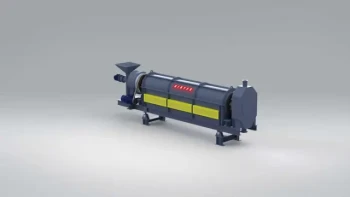
Laboratory atmosphere furnaces facilitate the sintering of Ti2AlC foams by creating a precisely controlled thermal environment insulated from atmospheric oxygen. Specifically, these furnaces utilize high-purity argon gas to protect the material at temperatures up to 1400 °C, ensuring the formation of a high-strength porous framework without chemical degradation.
Core Takeaway The success of sintering Ti2AlC foams relies on maintaining strict chemical purity during extreme heating. The furnace acts as a protective vessel that combines multi-stage temperature regulation with a dynamic argon flow to simultaneously remove binder byproducts and prevent oxidation.
Environmental Control and Chemical Purity
The Necessity of an Inert Atmosphere
At the high sintering temperature of 1400 °C, Ti2AlC is highly susceptible to oxidation. The atmosphere furnace mitigates this risk by flooding the chamber with high-purity argon.
Preventing Material Degradation
This inert environment ensures that the ceramic powders undergo solid-phase reactions without reacting with oxygen. This protection is critical for preserving the material's stoichiometry and preventing lattice disintegration.
Active Removal of Byproducts
Sintering is not a static process; it generates decomposition products. The furnace maintains a stable argon flow that actively sweeps these volatile byproducts out of the chamber.
Enhancing Structural Purity
By continuously flushing the environment, the furnace prevents re-deposition of contaminants. This results in a cleaner final microstructure and ensures the integrity of the resulting ceramic framework.
Thermal Management and Structural Integrity
Precise Multi-Stage Temperature Control
Creating a foam structure requires more than simple heating; it requires a complex thermal program. The furnace executes precise multi-stage temperature control programs to manage different phases of the synthesis.
Controlled Binder Removal
Before sintering occurs, the gel binders used to shape the foam must be eliminated. The furnace allows for the slow, controlled removal of these organic binders to prevent structural collapse or cracking.
Facilitating Phase Sintering
Once the binders are removed, the furnace ramps up to the target sintering temperature. This facilitates either liquid-phase or solid-phase sintering of the ceramic particles, bonding them into a cohesive unit.
Achieving High-Strength Frameworks
The ultimate output of this thermal management is a robust material. The combination of heat and atmosphere control enables the particles to fuse effectively, creating a high-strength porous framework.
Understanding the Trade-offs
Flow Rate Sensitivity
While argon flow is essential for removing impurities, improper flow rates can induce thermal gradients. If the flow is too aggressive, it may disrupt temperature uniformity across the sample.
Temperature Ramp Limitations
The "slow removal" of binders mentioned in the primary reference implies a significant time investment. Rushing the temperature ramp to save time often leads to structural defects or incomplete binder burnout.
Making the Right Choice for Your Goal
To maximize the quality of your Ti2AlC foams, align your furnace settings with your specific structural requirements.
- If your primary focus is Structural Integrity: Prioritize a slow initial heating ramp to ensure complete, gentle removal of gel binders before high-temperature sintering begins.
- If your primary focus is Chemical Purity: Ensure your argon flow rate is optimized to continuously evacuate decomposition products without causing local cooling effects.
The atmosphere furnace is not just a heat source; it is a chemical process chamber that determines the ultimate viability of the sintered foam.
Summary Table:
| Feature | Role in Ti2AlC Sintering | Benefit to Final Product |
|---|---|---|
| Inert Argon Atmosphere | Prevents oxidation at 1400 °C | Maintains stoichiometry & lattice integrity |
| Dynamic Gas Flow | Flushes volatile decomposition products | Enhances structural purity & microstructure |
| Multi-Stage Control | Manages slow binder burnout | Prevents structural collapse or cracking |
| Thermal Uniformity | Facilitates phase sintering | Creates a high-strength porous framework |
Elevate Your Advanced Ceramic Research with KINTEK
Precision is non-negotiable when sintering reactive materials like Ti2AlC foams. KINTEK specializes in state-of-the-art laboratory atmosphere furnaces, vacuum furnaces, and CVD systems designed to provide the rigorous environmental control your research demands.
Our expertise extends across a comprehensive range of lab solutions, including:
- High-Temperature Furnaces: Muffle, tube, and atmosphere furnaces for precise thermal processing.
- Material Preparation: Crushing, milling, and high-pressure hydraulic presses for pellet and target fabrication.
- Advanced Reactors: High-temperature high-pressure reactors and electrolytic cells for specialized chemical synthesis.
- Lab Consumables: Premium ceramics, crucibles, and PTFE products to ensure zero-contamination results.
Ready to optimize your sintering outcomes? Contact KINTEK today to discuss your specific requirements with our technical team and discover how our equipment can enhance your laboratory's efficiency and material performance.
References
- Marek Potoczek, Tomasz Brylewski. Oxidation behavior of Ti2AlC MAX-phase foams in the temperature range of 600–1000 °C. DOI: 10.1007/s10973-023-11990-z
This article is also based on technical information from Kintek Solution Knowledge Base .
Related Products
- 1700℃ Controlled Atmosphere Furnace Nitrogen Inert Atmosphere Furnace
- 1200℃ Controlled Atmosphere Furnace Nitrogen Inert Atmosphere Furnace
- 1400℃ Controlled Atmosphere Furnace with Nitrogen and Inert Atmosphere
- Controlled Nitrogen Inert Hydrogen Atmosphere Furnace
- Mesh belt controlled atmosphere furnace
People Also Ask
- What is a controlled atmosphere furnace for heat treatment? Master Surface Chemistry and Metallurgy
- What is the necessity of a controlled atmosphere furnace for corrosion research? Replicating Realistic Industrial Risks
- What are the two primary purposes of using a controlled atmosphere? Master Protection vs. Material Modification
- How is oxygen (O2) used in controlled furnace atmospheres? Mastering Surface Engineering for Metals
- What is the necessity of controlled atmosphere furnaces for gas corrosion? Ensure Precise Material Failure Modeling