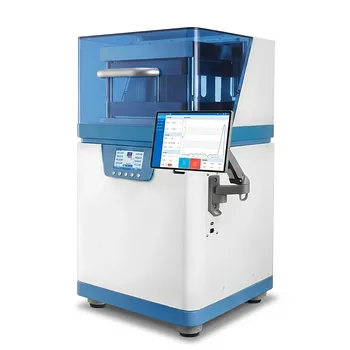
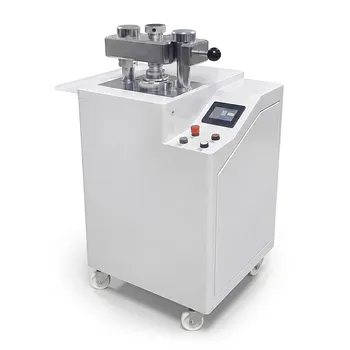
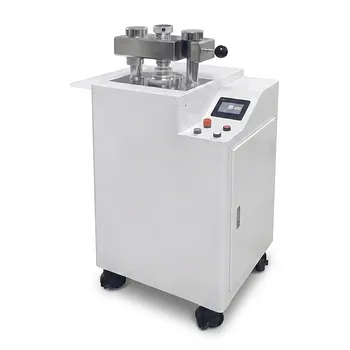
Precision coating and high-precision hydraulic pressing are the fundamental processes that dictate the electrochemical efficiency of LiFePO4 (LFP) cathodes. These tools transform a loose slurry of active material, binders, and conductive agents into a dense, highly conductive, and uniform electrode structure. By controlling mass loading and compaction density, this equipment directly determines the battery's energy density, internal resistance, and long-term cycle life.
Core Takeaway: The synergy between precision coating and hydraulic pressing ensures that LFP cathodes achieve the optimal balance of porosity and particle contact. This technical harmony is essential for minimizing interfacial resistance and maximizing the ion transport required for high-performance energy storage.
The Role of Precision Coating in Cathode Uniformity
Achieving Consistent Mass Loading
Precision coating equipment ensures that the slurry—containing the LFP active material, binders, and conductive agents—is distributed with absolute uniformity across the aluminum foil current collector. This consistency is vital because even minor fluctuations in mass loading can lead to uneven current distribution and localized overcharging during operation.
Optimizing Slurry Distribution
High-quality coating machines maintain a precise thickness of the cathode layer, which is the first step in ensuring predictable electrochemical behavior. This uniformity allows for stable ion migration pathways and prevents the formation of "dead zones" where active material remains underutilized.
The Impact of High-Precision Hydraulic Pressing
Optimizing Porosity and Area Density
After coating and drying, the electrode structure is inherently loose; a high-precision hydraulic press or rolling machine is then used to optimize porosity and area density. This step is critical for improving electrolyte wetting efficiency, ensuring that the liquid electrolyte can penetrate the cathode structure to facilitate rapid ion exchange.
Reducing Interfacial Contact Resistance
Physical compaction through a hydraulic press significantly increases the contact density between LFP particles and the conductive carbon network. This process reduces interfacial contact resistance and strengthens the bond between the cathode coating and the aluminum current collector, providing superior electron conduction paths.
Enhancing Mechanical Stability
Applying precise and uniform pressure ensures that the active material is tightly bonded to the substrate, which is crucial for maintaining performance at high current densities. This mechanical integrity prevents the cathode from delaminating or degrading during the repeated expansion and contraction cycles of the battery.
Understanding the Trade-offs
The Risk of Over-Compaction
While increasing density improves conductivity, excessive pressure can lead to over-compaction, which crushes the pore structure. If porosity is too low, electrolyte transport is hindered, significantly reducing the rate performance and making the battery sluggish during high-discharge demands.
The Consequences of Under-Compaction
Conversely, insufficient pressure results in a high-resistance electrode with poor mechanical stability. Under-compacted cathodes suffer from weak particle-to-particle contact, leading to rapid capacity fade and shorter cycle life due to the breakdown of electronic pathways.
How to Apply This to Your Project
Recommendations for Process Optimization
When configuring your electrode manufacturing line, the equipment settings must be tailored to your specific performance targets.
- If your primary focus is High Energy Density: Prioritize high-precision hydraulic pressing to achieve maximum compaction density without compromising the structural integrity of the LFP particles.
- If your primary focus is High Rate Performance: Calibrate your coating equipment for thinner layers and use moderate pressing to maintain a higher porosity for rapid electrolyte diffusion.
- If your primary focus is Long Cycle Life: Ensure the coating equipment provides a perfectly uniform slurry distribution to prevent localized stress and use multi-stage rolling to maximize mechanical adhesion.
By mastering the balance between uniform coating and controlled compaction, manufacturers can unlock the full theoretical potential of LFP cathode materials.
Summary Table:
| Process | Key Role | Technical Impact | Target Performance |
|---|---|---|---|
| Precision Coating | Uniform slurry distribution | Consistent mass loading & thickness | Stable ion migration pathways |
| Hydraulic Pressing | Controlled compaction | Reduced interfacial contact resistance | High energy density & mechanical stability |
| Process Synergy | Porosity optimization | Balanced electrolyte wetting efficiency | Long cycle life & high rate performance |
Elevate Your Battery Research with KINTEK Precision
Unlock the full potential of your LiFePO4 (LFP) materials with KINTEK’s industry-leading laboratory equipment. As specialists in battery research tools, we provide the high-precision technology necessary to achieve the perfect balance of compaction and porosity.
Our comprehensive portfolio features:
- High-Precision Hydraulic Presses: Pellet, hot, and isostatic presses for optimal electrode density.
- Advanced Coating & Milling: Precision coating systems, crushing, and milling equipment for uniform slurry distribution.
- Thermal Processing: A wide range of muffle, tube, and vacuum furnaces for material synthesis.
- Essential Consumables: High-quality ceramics, crucibles, and battery-grade consumables.
Whether you are focusing on high energy density, rapid rate performance, or extended cycle life, KINTEK delivers the reliability and accuracy your project demands.
Ready to optimize your cathode manufacturing process? Contact our technical experts today to find the ideal solution for your lab!
References
- Rubha Ponraj, Dong Jun Kim. Enhancing the Cycle Life of Lithium‐Anode‐Free Batteries through Polydopamine‐Coated Substrates. DOI: 10.1002/aesr.202300051
This article is also based on technical information from Kintek Solution Knowledge Base .
Related Products
- Automatic Laboratory Hydraulic Pellet Press Machine for Lab Use
- Laboratory Hydraulic Press Lab Pellet Press Machine for Glove Box
- Laboratory Manual Hydraulic Pellet Press for Lab Use
- Laboratory Hydraulic Press Lab Pellet Press for Button Battery
- Hydraulic Diaphragm Lab Filter Press for Laboratory Filtration
People Also Ask
- What is the role of a laboratory hydraulic pellet press and stainless steel molds in the fabrication of RuO2/NbC anodes?
- What role does a laboratory pellet press play in the enhancement of biomass energy products? Optimize Fuel Efficiency
- What is the purpose of using a laboratory pellet press when evaluating the electronic conductivity of carbon powders? Guide
- How does a laboratory hydraulic pellet press contribute to SiCw/2024 aluminum composite preforms? Optimize Densification
- What is the significance of applying 200 MPa of pressure with a laboratory hydraulic pellet press for composite ceramics?