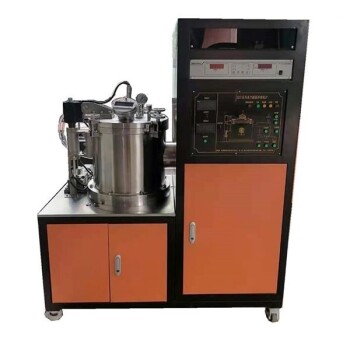
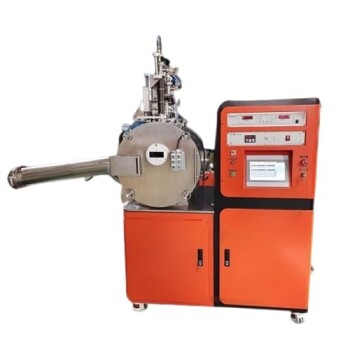
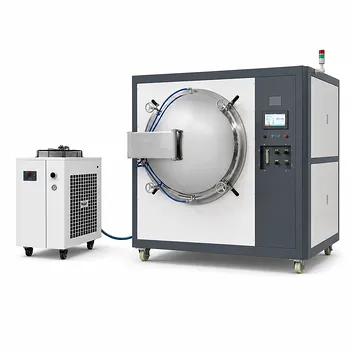
Vacuum induction and arc melting furnaces facilitate the synthesis of Uranium-Aluminum-Carbon (U-Al-C) MAX phases by combining extreme thermal energy with rigorous environmental control. Arc melting provides the sheer heat required to liquefy refractory elements like uranium and carbon, while vacuum environments eliminate impurities that would otherwise degrade the material's crystalline structure.
These technologies solve the dual challenge of processing refractory materials while maintaining chemical purity. By simulating high-temperature eutectic crystallization in a controlled atmosphere, they allow for the rapid fusion of components into high-crystallinity ternary carbide phases without the interference of oxidation.
Overcoming the Thermal Barrier with Arc Melting
To synthesize U-Al-C derivatives, you must first overcome the incredibly high melting points of the precursor materials.
Extreme Temperature Generation
Arc melting furnaces are essential because they generate temperatures exceeding 3500 °C.
This extreme heat is non-negotiable for melting and reacting refractory components, specifically uranium and carbon, which remain solid at standard processing temperatures.
Rapid Fusion and Homogenization
The intense energy of the electric arc forces the raw components to fuse rapidly.
Under inert gas protection, this process homogenizes the mixture quickly, ensuring the elements are evenly distributed before solidification begins.
Simulating Eutectic Crystallization
The rapid heating and cooling cycles in arc melting simulate high-energy events, such as the crystallization processes found in explosion clouds.
This unique thermal profile promotes the formation of ternary carbide phases with high crystallinity, which is critical for the material's final performance.
Ensuring Purity Through Vacuum Environments
While heat creates the alloy, the vacuum environment ensures it remains a viable MAX phase material.
Preventing Oxidation
MAX phase materials are extremely sensitive to interstitial impurities, particularly oxygen and nitrogen.
High-vacuum equipment creates an environment with extremely low oxygen partial pressure, preventing the raw powders from oxidizing during the high-temperature synthesis.
Avoiding Secondary Phases
Without vacuum protection, impurities lead to the formation of undesirable secondary phases (such as oxides or carbides) rather than the target MAX phase.
These secondary phases weaken the material and inhibit its ability to form continuous, dense protective films (like Al2O3) in harsh operating conditions.
Achieving Single-Phase Integrity
The precise control offered by vacuum induction or sintering allows for the production of high-purity, single-phase ceramic blocks.
This purity is essential for ensuring the material exhibits the specific oxidation resistance and mechanical properties required for nuclear or high-temperature applications.
Common Pitfalls to Avoid
When selecting a synthesis method, understanding the relationship between volatility and contamination is vital.
The Risk of Constituent Loss
While arc melting provides necessary heat, the extreme temperatures can lead to the volatilization of lower-melting-point elements like Aluminum.
You must carefully balance the input ratios to compensate for potential mass loss during the rapid fusion process.
The Contamination Trap
Failing to maintain a strict inert or vacuum atmosphere renders the thermal process useless.
Even minor leaks or low-quality inert gas can introduce enough oxygen to degrade the U-Al-C structure, resulting in a brittle composite rather than a resilient MAX phase.
Making the Right Choice for Your Goal
Selecting the correct furnace technology depends on the specific constraints of your synthesis requirements.
- If your primary focus is melting refractory precursors: Prioritize Arc Melting, as its ability to exceed 3500 °C is the only reliable way to fully liquify and react uranium and carbon.
- If your primary focus is phase purity and oxidation resistance: Prioritize High-Vacuum Induction, as its ability to minimize oxygen partial pressure is critical for preventing secondary phase formation and ensuring long-term material stability.
Success in synthesizing U-Al-C MAX phases lies in balancing the brute force of thermal energy with the precision of environmental isolation.
Summary Table:
| Feature | Arc Melting Furnaces | Vacuum Induction Furnaces |
|---|---|---|
| Core Advantage | High-energy thermal fusion | Environmental purity & control |
| Max Temperature | Exceeds 3500 °C | Up to 2000-3000 °C (depending on setup) |
| Best For | Melting refractory U and C precursors | Ensuring single-phase integrity |
| Environment | Inert gas / Partial vacuum | High-vacuum / Controlled atmosphere |
| Key Outcome | Rapid homogenization & crystallinity | Oxidation prevention & phase purity |
Advance Your Nuclear & High-Temperature Material Research
Synthesizing complex U-Al-C MAX phases requires the perfect synergy of extreme thermal power and environmental isolation. KINTEK provides the specialized laboratory equipment you need to achieve single-phase integrity and superior material performance.
Our extensive portfolio features high-performance vacuum induction and arc melting systems, alongside high-temperature furnaces (muffle, tube, vacuum, and atmosphere), hydraulic presses, and crushing and milling systems designed for the most demanding research applications. Whether you are developing advanced nuclear fuels or oxidation-resistant ceramics, KINTEK offers the precision tools and consumables—including ceramics and crucibles—to drive your innovation forward.
Ready to optimize your synthesis process? Contact KINTEK today for expert guidance and tailored laboratory solutions.
References
- Barbara Etschmann, Joël Brugger. Environmental stability of a uranium-plutonium-carbide phase. DOI: 10.1038/s41598-024-56885-7
This article is also based on technical information from Kintek Solution Knowledge Base .
Related Products
- Lab-Scale Vacuum Induction Melting Furnace
- Vacuum Heat Treat Furnace and Levitation Induction Melting Furnace
- Vacuum Induction Melting Spinning System Arc Melting Furnace
- Non Consumable Vacuum Arc Induction Melting Furnace
- Vacuum Arc Induction Melting Furnace
People Also Ask
- Why use VIM for rare earth steel? Essential Precision for Melting Reactive Lanthanum and Cerium
- What is the primary function of a vacuum induction melting furnace in Ni-Mo-Cr-Fe master alloy prep? Ensure High Purity
- What types of metals are typically processed in a vacuum induction melting furnace? High-Purity Alloys for Critical Applications
- What are the advantages of a vacuum induction melting furnace? Achieve High-Purity Alloys with Precision VIM
- What is the function of a vacuum induction melting furnace? Essential Guide for High-Purity FeCrAl Alloy Production