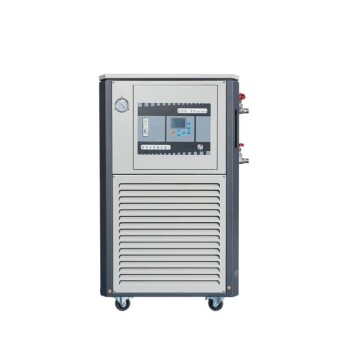
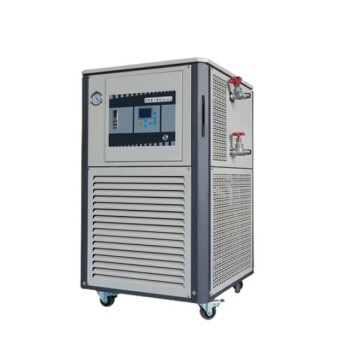
A constant temperature oil bath serves as the critical vaporization mechanism in a tar reforming feeding system, specifically when using naphthalene as a simulated tar compound. By maintaining a naphthalene bubbler at a precise temperature—typically 65°C—the bath facilitates the controlled transition of solid naphthalene into a vapor, allowing a carrier gas to transport a stable and consistent concentration of reactants to the catalyst bed.
Core Insight: In experimental setups, consistency is paramount. The oil bath does not just heat the fuel; it locks the saturated vapor pressure to a specific value, ensuring that the "tar" concentration fed to the reactor never fluctuates, which is essential for accurate catalyst evaluation.
The Physical Challenge of Simulating Tar
Handling Solid Precursors
In many tar reforming experiments, naphthalene is used as a model compound to simulate biomass tar. However, naphthalene is a solid at room temperature, making it impossible to pump directly into a reactor like a standard liquid or gas.
The Requirement for Vaporization
To test a catalyst effectively, the tar surrogate must be in a gaseous phase when it interacts with the catalyst bed. This requires a system that can continuously sublime or vaporize the solid naphthalene at a steady rate.
The Role of the Oil Bath
Precise Thermal Stability
The primary function of the oil bath is to provide a thermal environment that is far more stable than an air oven or a heating tape. By immersing the naphthalene bubbler in oil, the system mitigates rapid temperature fluctuations.
Regulating Vapor Pressure
The concentration of tar in the feed stream is dictated by the saturated vapor pressure of the naphthalene. Vapor pressure is a direct function of temperature; even a minor deviation in heat results in a significant change in how much naphthalene turns into gas.
Enabling Consistent Transport
A carrier gas is bubbled through the heated vessel. Because the oil bath holds the temperature at exactly 65°C, the gas picks up a predictable, constant amount of naphthalene vapor. This ensures the "load" sent to the catalyst remains uniform throughout the experiment.
Operational Considerations and Trade-offs
Temperature Sensitivity
While the oil bath provides stability, the set point must be chosen carefully. If the temperature is too low, the vapor concentration may be insufficient to simulate real-world tar loads.
Condensation Risks
Conversely, generating a high concentration of vapor requires higher bath temperatures. This increases the risk of the naphthalene condensing in the lines after it leaves the bath but before it hits the reactor, potentially clogging the system.
Response Time
Oil baths have high thermal mass. This is excellent for stability, but it means they respond slowly to set-point changes. They are designed for steady-state operation, not rapid thermal cycling.
Ensuring Experimental Success
To maximize the reliability of your data, align your equipment settings with your specific experimental needs:
- If your primary focus is baseline stability: Ensure the oil bath has a high-quality thermostat and circulation feature to prevent hot/cold spots around the bubbler.
- If your primary focus is varying tar concentration: You must adjust the oil bath temperature to change the vapor pressure, but allow sufficient time for the thermal mass to stabilize at the new set point.
The accuracy of your reforming data relies entirely on the stability of your feed; the constant temperature oil bath provides the thermal inertia necessary to guarantee that stability.
Summary Table:
| Feature | Function in Tar Reforming | Impact on Experiment |
|---|---|---|
| Thermal Stability | Maintains precise temperature (e.g., 65°C) | Prevents fluctuations in naphthalene vapor concentration |
| Vapor Regulation | Locks the saturated vapor pressure of solids | Ensures a uniform "load" of simulated tar to the catalyst |
| Thermal Inertia | High thermal mass of the oil medium | Resists environmental temperature changes for steady-state data |
| Carrier Gas Sync | Facilitates bubbling through heated precursors | Enables consistent transport of gaseous reactants to the reactor |
Elevate Your Research Precision with KINTEK
Achieving consistent experimental results in tar reforming requires more than just a heating source—it demands absolute thermal stability. KINTEK specializes in high-precision laboratory equipment and consumables designed for the most demanding research environments.
From our constant temperature baths and cooling solutions to our advanced high-temperature furnaces (muffle, tube, and vacuum) and high-pressure reactors, we provide the tools necessary to lock in your experimental variables. Whether you are conducting catalyst evaluation with our crushing and milling systems or requiring specialized PTFE and ceramic consumables, KINTEK is your partner in laboratory excellence.
Ready to stabilize your feeding systems and enhance your data accuracy?
Contact KINTEK Today to Find Your Solution
References
- Francesco Parrillo, Umberto Arena. Steam reforming of tar in hot syngas cleaning by different catalysts: Removal efficiency and coke layer characterization. DOI: 10.1002/cjce.24535
This article is also based on technical information from Kintek Solution Knowledge Base .
Related Products
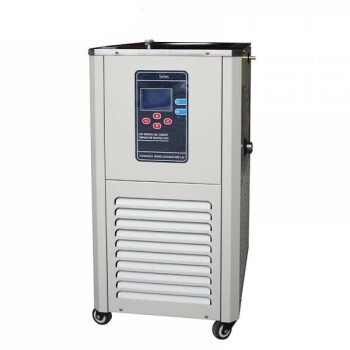
- High Temperature Constant Temperature Heating Circulator Water Bath Chiller Circulator for Reaction Bath
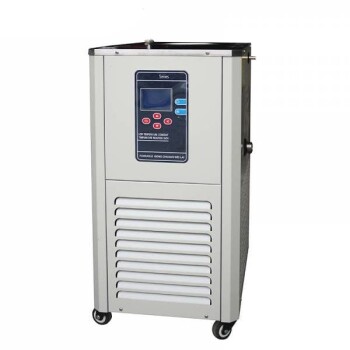
- 10L Chilling Circulator Cooling Water Bath Low Temperature Constant Temperature Reaction Bath
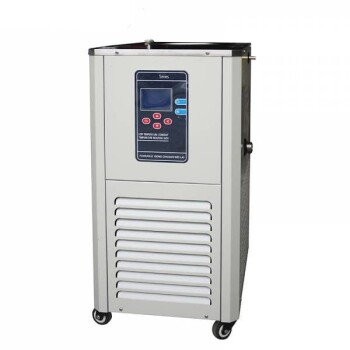
- 50L Chiller Water Bath Cooling Circulator Low Temperature Constant Temperature Reaction Bath
- 30L Chiller Water Bath Cooling Circulator Low Temperature Constant Temperature Reaction Bath
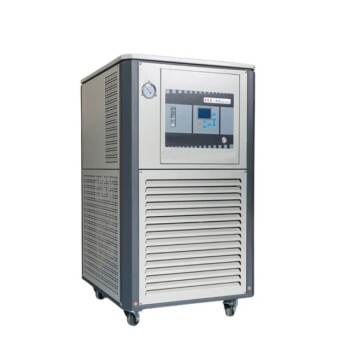
- 5L Chilling Circulator Cooling Water Bath Circulator for Low Temperature Constant Temperature Reaction Bath
People Also Ask
- What is the necessity of a circulating water bath in chlorate production? Optimize Yield & Purity with Precision
- How do constant temperature circulators impact weight-loss immersion tests? Ensure Precision in Corrosion Analysis
- How does a constant temperature circulator support the leaching reaction of gold scrap? Optimize Gold Recovery Results
- Why is a constant temperature water bath used for precursor storage in CVD? Achieve Stable Nanocrystalline SiC Deposition
- Why is a high-precision constant temperature water bath necessary for anaerobic digestion? Ensure Success at 37±0.02°C