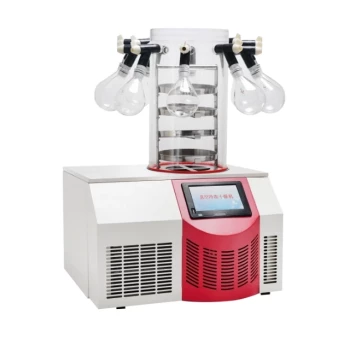
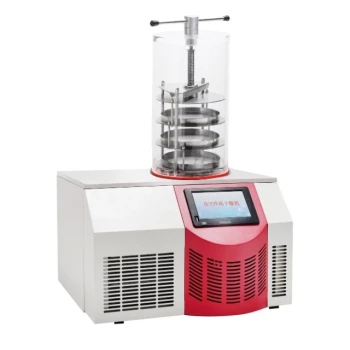
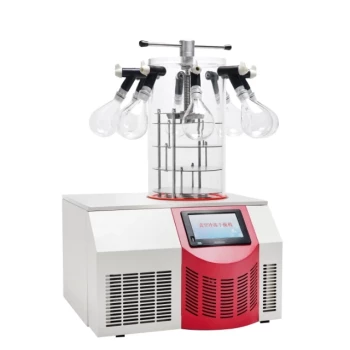
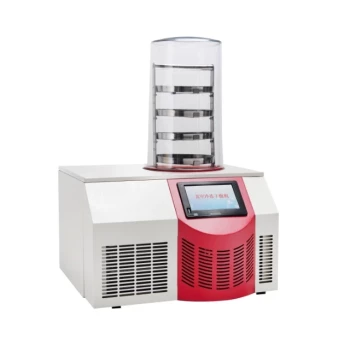
A freeze dryer improves the preparation of C@Si anode precursors by utilizing sublimation to remove moisture, thereby preserving the structural integrity of the material. Unlike conventional oven drying, which relies on evaporation, freeze drying prevents the nanoparticles from sticking together or collapsing. This results in a "fluffy," non-agglomerated powder that retains a uniform coating, essential for high-quality carbonization.
The core advantage of freeze drying lies in its ability to bypass the liquid phase during moisture removal. By avoiding the surface tension associated with liquid evaporation, this method eliminates the forces that typically drive structural collapse and particle clumping in silicon anodes.
The Mechanism of Preservation
Sublimation Over Evaporation
The primary mechanism behind this improvement is the principle of sublimation.
In this process, the solvent (moisture) transitions directly from a solid ice state to a gas, completely skipping the liquid phase.
Preventing Structural Collapse
Conventional drying methods often cause the internal structure of the nanomaterial to collapse as moisture evaporates.
Freeze drying maintains the original framework of the dopamine-coated silicon, ensuring the material remains robust rather than shrinking or densifying.
Solving the Agglomeration Challenge
Eliminating Particle Clumping
A major challenge in nanomaterial preparation is agglomeration, where particles bunch together into large, unusable clusters.
By removing moisture without liquid surface tension, freeze drying effectively prevents these particles from adhering to one another.
Maintaining Coating Integrity
For a Carbon-coated Silicon (C@Si) anode to function correctly, the silicon must be uniformly wrapped in its precursor (dopamine).
Freeze drying ensures this coating layer remains intact and uniform, rather than cracking or pooling during the drying phase.
Impact on Subsequent Processing
Optimized for Carbonization
The output of the freeze-drying process is a "fluffy" powder rather than a hard, dense cake.
This loose, airy structure is highly beneficial for the subsequent carbonization treatment, allowing for more uniform heat distribution and chemical conversion.
Common Pitfalls to Avoid
The Risks of Conventional Oven Drying
The primary alternative—conventional oven drying—presents significant risks to material quality.
This method typically leads to severe agglomeration, creating dense clumps that are difficult to process further.
compromising Material Structure
Relying on heat evaporation exposes the precursor to capillary forces that can destroy the delicate nanostructure.
This often results in the structural collapse of the coating layer, rendering the precursor less effective for high-performance battery applications.
Making the Right Choice for Your Goal
To optimize your C@Si anode preparation, align your drying method with your quality requirements:
- If your primary focus is coating uniformity: Prioritize freeze drying to maintain the integrity of the dopamine layer without cracking.
- If your primary focus is particle dispersion: Use freeze drying to produce a fluffy powder and prevent the formation of hard agglomerates.
By controlling the drying phase through sublimation, you ensure the precursor retains the ideal architecture for high-performance energy storage.
Summary Table:
| Feature | Conventional Oven Drying | Freeze Drying (Lyophilization) |
|---|---|---|
| Mechanism | Evaporation (Liquid to Gas) | Sublimation (Solid to Gas) |
| Particle Structure | Dense, hard agglomerates | Fluffy, non-agglomerated powder |
| Structural Integrity | Risk of collapse/shrinkage | Maintains original framework |
| Coating Uniformity | Potential cracking or pooling | Intact and uniform coating |
| Carbonization Prep | Poor heat distribution | Optimized for uniform treatment |
Elevate Your Battery Research with KINTEK Precision
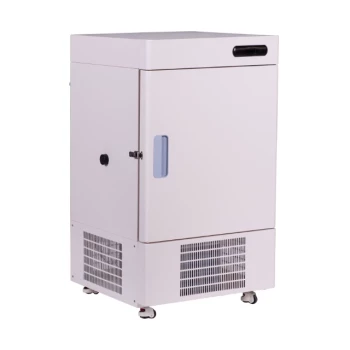
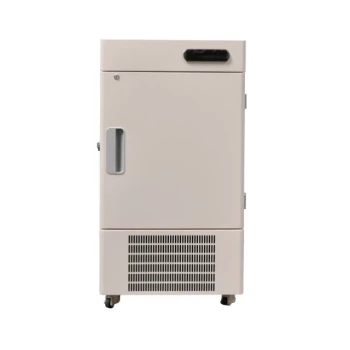
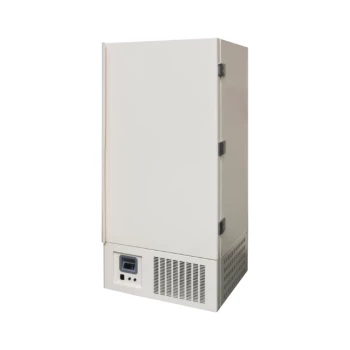
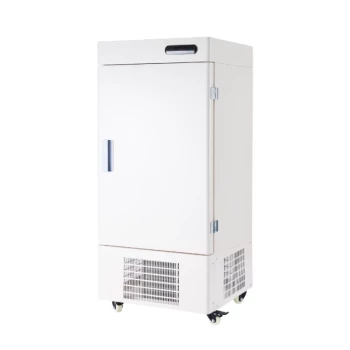
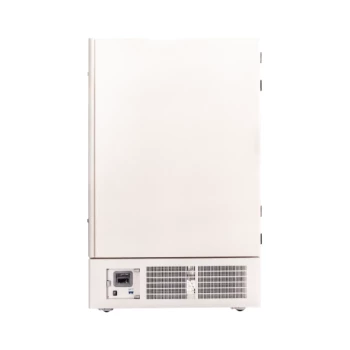
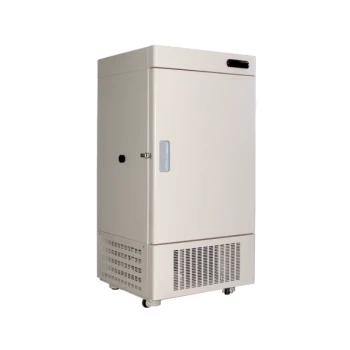
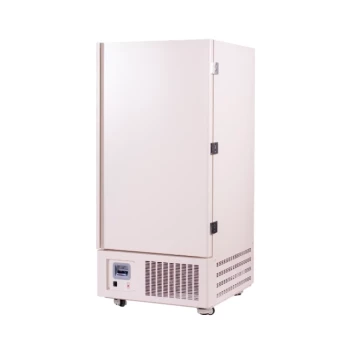
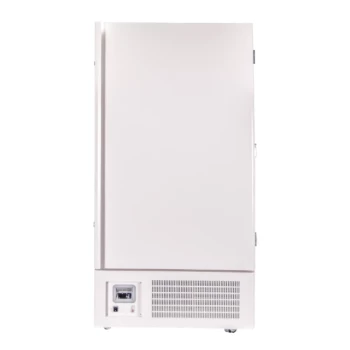
High-performance energy storage starts with the perfect precursor. KINTEK specializes in advanced laboratory solutions designed to preserve your material's delicate nanostructures. From high-capacity freeze dryers (lyophilizers) and ULT freezers to subsequent high-temperature furnaces (vacuum, tube, or atmosphere) for carbonization, we provide the complete toolset for C@Si anode development.
Our portfolio also includes:
- Milling and crushing systems for particle size control.
- High-temperature high-pressure reactors and electrolytic cells.
- Essential consumables like crucibles and ceramics.
Don't let structural collapse compromise your battery innovation. Contact KINTEK today to find the right equipment for your lab and ensure the highest quality for your nanomaterial synthesis.
Related Products
- High Performance Laboratory Freeze Dryer
- High Performance Laboratory Freeze Dryer for Research and Development
- Benchtop Laboratory Freeze Dryer for Lab Use
- Benchtop Laboratory Vacuum Freeze Dryer
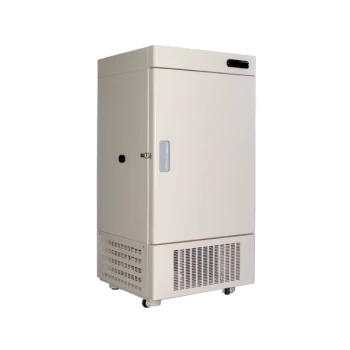
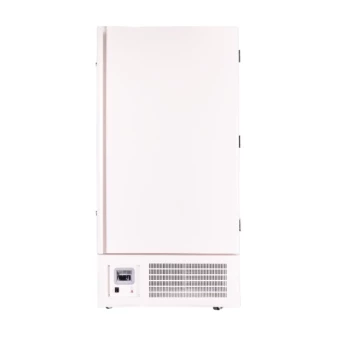
- 108L Vertical Ultra Low Temperature ULT Freezer
People Also Ask
- What role does a laboratory freeze dryer play in the synthesis of graphene-based electrocatalysts? Preserve 3D Structures
- What are the technical advantages of using a laboratory freeze dryer for porous carbon precursors? Preserve 3D Networks
- What types of liquid samples can be processed using a laboratory freeze dryer? Preserve Your Sensitive Materials
- How do laboratory freeze dryers support scientific research? Preserve Sample Integrity for Reproducible Results
- Why is a laboratory freeze dryer preferred over traditional heating? Preserve Biochar Structure & Maximize Porosity