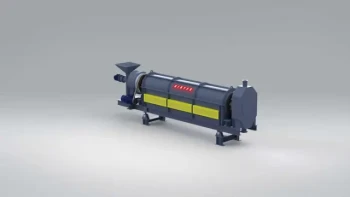
A high-temperature carbonization and activation furnace acts as the central processing unit for converting raw biomass into functional activated carbon. It primarily executes two critical thermal processes: pyrolysis, which removes volatiles under an inert atmosphere to build a carbon skeleton, and activation, which engineers the material’s porosity using physical or chemical agents to maximize surface area.
The furnace is not merely a heating device; it is a precision instrument for material engineering. By strictly regulating temperature and atmosphere, it dictates the final pore size distribution and charge storage capacity, transforming organic precursors like coconut shells into high-performance components for supercapacitors.
The Foundation: Carbonization and Pyrolysis
Creating the Carbon Skeleton
The initial role of the furnace is to perform pyrolysis on biomass precursors. This occurs in an oxygen-deficient or inert atmosphere, typically at temperatures between 500°C and 600°C.
Removal of Volatiles
During this phase, the furnace drives off non-carbon elements and volatile compounds from the raw material. This prevents the biomass from simply burning to ash, leaving behind a stable, preliminary carbon framework.
Structural Rearrangement
Precise control of heating curves during this stage induces the breakdown and rearrangement of biomass structures. This foundational step determines the mechanical stability and electrical conductivity of the final material.
The Transformation: The Activation Process
Developing the Pore Structure
Once the skeleton is formed, the furnace facilitates the pore-forming process. This is the most critical step for developing the material's utility, as it drastically increases the specific surface area.
Physical Activation Mechanisms
For physical activation, the furnace escalates temperatures to between 800°C and 1000°C. It introduces oxidizing gases—such as steam, carbon dioxide, or methane—to gasify parts of the carbon, opening up internal pores without destroying the structure.
Chemical Activation Mechanisms
In chemical activation scenarios, the furnace creates a controlled environment (400°C to 900°C) for reactions between carbon and agents like KOH (potassium hydroxide). This process etches the skeleton via redox reactions and causes lattice expansion, potentially yielding surface areas exceeding 3000 m²/g.
Critical Trade-offs in Thermal Processing
The Risk of Over-Oxidation
While high temperatures are necessary for creating pores, they present a risk of over-oxidation. If the inert atmosphere is breached or the activation time is too long, the carbon structure can collapse, destroying the micropores required for high performance.
Yield vs. Surface Area
There is an inherent trade-off between the final yield of the material and its quality. Aggressive activation in the furnace creates more surface area (better performance) but burns off more carbon, resulting in lower product yields.
Process Complexity
Using a furnace for chemical activation often requires handling corrosive byproducts and precise solid-liquid reactions. This adds operational complexity compared to physical activation, demanding more robust furnace construction and maintenance.
Making the Right Choice for Your Goal
The type of furnace protocol you implement should depend heavily on the intended application of the activated carbon.
- If your primary focus is Energy Storage (Supercapacitors): Prioritize chemical activation processes that target ultra-high specific surface area and optimized pore size distribution to maximize charge storage capacity.
- If your primary focus is Adsorption/Filtration: Utilize physical activation with steam or CO2 to balance pore development with mechanical strength, ensuring the material can effectively trap contaminants.
- If your primary focus is Sustainability and Cost: Leverage the furnace for thermal regeneration (around 815°C) to pyrolyze trapped organics in spent carbon, restoring pore activity and extending the material's lifecycle.
The high-temperature furnace is the definitive tool that bridges the gap between raw organic waste and advanced, high-value industrial materials.
Summary Table:
| Process Phase | Temperature Range | Atmosphere/Agents | Primary Outcome |
|---|---|---|---|
| Carbonization | 500°C - 600°C | Inert/Oxygen-deficient | Removal of volatiles; creation of carbon skeleton |
| Physical Activation | 800°C - 1000°C | Steam, CO2, or Methane | Pore development via partial gasification |
| Chemical Activation | 400°C - 900°C | Chemical agents (e.g., KOH) | Lattice expansion; ultra-high surface area (>3000 m²/g) |
| Thermal Regeneration | ~815°C | Controlled oxidizing | Pyrolysis of trapped organics; restoration of pore activity |
Scale Your Biomass Research with KINTEK Precision
From converting organic waste into high-performance supercapacitor components to optimizing industrial filtration, KINTEK provides the advanced thermal technology you need. Our comprehensive range of high-temperature rotary and tube furnaces, CVD systems, and chemical reactors is designed to give you absolute control over pore size distribution and material yield.
Unlock the full potential of your carbon materials:
- Precision Engineering: Achieve surface areas exceeding 3000 m²/g with our specialized atmosphere furnaces.
- Versatile Solutions: Explore our crushing systems, pellet presses, and electrolytic cells for a complete lab-to-production workflow.
- Expert Support: Leverage our expertise in high-temperature, high-pressure environments to accelerate your R&D.
Contact KINTEK Today to Find Your Ideal Furnace Solution
References
- Slava Tsoneva, Petya Marinova. Anthranilic acid amide and its complex with Cu(II) ions. DOI: 10.21175/rad.abstr.book.2023.23.5
This article is also based on technical information from Kintek Solution Knowledge Base .
Related Products
- Graphite Vacuum Furnace Bottom Discharge Graphitization Furnace for Carbon Materials
- Large Vertical Graphite Vacuum Graphitization Furnace
- High Temperature Muffle Oven Furnace for Laboratory Debinding and Pre Sintering
- Vacuum Heat Treat and Pressure Sintering Furnace for High Temperature Applications
- 1700℃ Laboratory High Temperature Tube Furnace with Alumina Tube
People Also Ask
- What is the use of graphite furnace? Achieve Extreme-Temperature Processing for Advanced Materials
- What is the disadvantage of graphite furnace? Managing Reactivity and Contamination Risks
- What gas is used in graphite furnace? Maximize Accuracy with the Right Inert Gas
- What are the advantages of graphite furnace? Achieve High-Temperature Precision and Purity
- Why is a graphite furnace rather than a flame often used for atomization? Superior Sensitivity for Trace Analysis