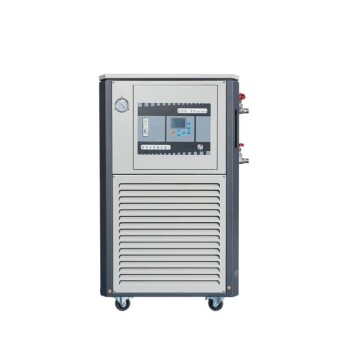
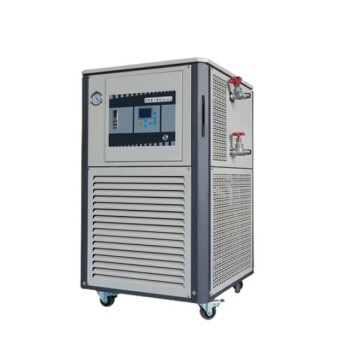
The laboratory constant temperature drying oven acts as a critical stabilization tool for silver phosphate (Ag3PO4) nanopowder. It creates a controlled thermal environment, usually maintained at 80 °C, to thoroughly eliminate residual moisture. This specific temperature range is vital because it dries the sample without triggering phase changes or inducing the excessive grain growth that would degrade the material's catalytic potential.
By providing a consistent, moderate heat source, the drying oven ensures the nanopowder is chemically stable and structurally sound. This step is essential for preserving the material's active surface area for future applications.
Preserving Structural Integrity
Preventing Phase Changes
Silver phosphate is sensitive to extreme thermal fluctuations. The drying oven allows you to maintain a temperature that is effective for solvent removal but safe for the crystal lattice (typically 80 °C).
This controlled environment prevents unwanted phase transitions. If the material were exposed to uncontrolled or higher heat sources, it could transform into a less active structural phase, rendering it useless for its intended application.
Inhibiting Grain Growth
Nanopowders rely heavily on a high surface-to-volume ratio for their reactivity. Excessive heat causes individual particles to merge and grow larger, a process known as grain growth.
The constant temperature oven minimizes this risk. By keeping the thermal energy moderate, it preserves the nanoscale dimensions necessary for the material to remain active, particularly in catalytic applications.
Ensuring Chemical Purity and Stability
Eliminating Residual Solvents
Freshly synthesized powders are typically saturated with physically adsorbed water and residual washing solvents. These impurities must be removed to stabilize the powder.
The oven ensures the thorough removal of these volatile components. This yields a dry, pure sample that is essential for obtaining accurate data during subsequent characterization (such as X-ray diffraction or microscopy).
Preventing Vaporization Defects
If moisture remains trapped within the powder structure, subsequent processing steps can be compromised.
Rapid vaporization of trapped water during later high-temperature phases can create internal pressure. This often results in the formation of internal pores or cracking, which destroys the mechanical integrity of the final material.
Understanding the Trade-offs
The Temperature Balance
Using a drying oven involves a strict trade-off between drying speed and material preservation. Increasing the temperature might dry the sample faster, but it risks sintering the particles together.
Conversely, temperatures that are too low may leave residual moisture, causing the powder to agglomerate. You must strictly adhere to the 80 °C guideline for Ag3PO4 to balance dryness with structural fidelity.
Optimizing Your Drying Protocol
To ensure your silver phosphate nanopowder performs as expected, align your drying strategy with your analytical goals:
- If your primary focus is Catalytic Performance: Maintain the temperature strictly at 80 °C to prevent grain growth, as larger grains reduce the active surface area available for reactions.
- If your primary focus is Material Characterization: Ensure the drying duration is sufficient to remove all physically adsorbed water, as residual moisture will distort weight measurements and spectral analysis.
Precise thermal control during drying is not just a cleaning step; it is the final safeguard for your material's performance.
Summary Table:
| Factor Affected | Impact of Constant Temperature Drying | Consequence of Improper Temperature |
|---|---|---|
| Phase Stability | Maintains crystal lattice integrity at 80°C | Unwanted phase transitions/loss of activity |
| Particle Size | Inhibits grain growth; preserves nanoscale | Sintering and reduced surface-to-volume ratio |
| Purity | Eliminates residual water and solvents | Inaccurate characterization and data errors |
| Structural Integrity | Prevents internal pores and cracking | Mechanical defects from rapid vaporization |
Elevate Your Nanomaterial Synthesis with KINTEK
Precise thermal control is the difference between high-performance catalysts and failed experiments. KINTEK specializes in advanced laboratory equipment designed to meet the rigorous demands of material science. Whether you are drying sensitive silver phosphate nanopowders or conducting complex chemical synthesis, our solutions provide the stability you need.
Our extensive portfolio includes:
- Precision Drying Ovens & ULT Freezers for sensitive sample preservation.
- High-Temperature Muffle & Vacuum Furnaces for sintering and phase studies.
- Crushing, Milling & Sieving Systems for perfect powder consistency.
- High-Pressure Reactors & Autoclaves for advanced material synthesis.
Ready to optimize your lab’s thermal processing? Contact KINTEK today to speak with our technical experts and find the perfect equipment for your research goals.
References
- Karim Dânoun, Mohamed Zahouily. A novel approach for the synthesis of nanostructured Ag3PO4 from phosphate rock: high catalytic and antibacterial activities. DOI: 10.1186/s13065-021-00767-w
This article is also based on technical information from Kintek Solution Knowledge Base .
Related Products
- 23L Laboratory Vacuum Drying Oven
- Laboratory Scientific Electric Heating Blast Drying Oven
- 56L Vertical Laboratory Vacuum Drying Oven
- 1700℃ Muffle Oven Furnace for Laboratory
- 1400℃ Muffle Oven Furnace for Laboratory
People Also Ask
- Why is a laboratory vacuum drying oven recommended for rice straw residues? Protect Your Biomass Integrity
- What role does a laboratory vacuum drying oven play in the preparation of modified multi-walled carbon nanotubes?
- What is the importance of using a laboratory vacuum drying oven? Preserving Slow-Release Microcapsule Integrity
- Why is a Laboratory Vacuum Drying Oven recommended for PBAT microspheres? Protect Sensitive Polymer Integrity
- What role does a laboratory vacuum drying oven play in processing nanoparticle powder samples? Protect Sample Integrity