A laboratory magnetic stirrer is the fundamental mechanism for establishing a homogeneous chemical baseline prior to reaction initiation. In the pre-mixing phase, specifically within a storage tank, the stirrer creates a vortex that continuously circulates the solution. This action prevents the formation of local concentration gradients and ensures that the solute—such as 1-naphthol—is evenly distributed throughout the volume before it is pumped into the reactor.
Core Takeaway The validity of kinetic data relies entirely on knowing the exact starting conditions of your experiment. Magnetic stirring during pre-mixing guarantees that the solution entering the reactor has a constant, verified concentration, creating an accurate "zero-time" baseline essential for measuring degradation rates later.
The Critical Role of Uniformity in Pre-Mixing
Preventing Solute Stratification
Without active mechanical agitation, solutions in storage tanks are prone to stratification. Heavier molecules may settle, or distinct layers may form due to temperature or density differences.
A magnetic stirrer mitigates this by applying constant rotational force. This ensures that every milliliter of solution drawn from the tank is chemically identical to the rest, maintaining the integrity of the feed.
Ensuring Accurate Kinetic Baselines
In photocatalytic studies, the calculation of reaction rates depends on comparing concentration changes against an initial value ($C_0$).
If the pre-mixing is inadequate, the concentration entering the reactor will fluctuate over time. By maintaining strict uniformity, the stirrer ensures that the UV-Vis spectrophotometry data collected at the "zero-time" mark is a true representation of the system's starting point.
Avoiding Precipitation in Storage
Certain solutes, particularly at higher concentrations or near their solubility limits, have a tendency to precipitate out of solution if left stagnant.
Continuous stirring provides the kinetic energy necessary to keep these solutes dissolved. This prevents solid particles from clogging pump lines or altering the effective concentration of the reactant reaching the photocatalytic column.
Operational Considerations and Trade-offs
While magnetic stirring is essential for uniformity, improper application can introduce experimental errors.
Thermal Transfer Issues
Magnetic stirrers generate heat from their internal motors. During prolonged pre-mixing, this heat can transfer to the storage tank, inadvertently raising the temperature of the reactant solution. Since reaction kinetics are temperature-dependent, this can skew results unless temperature is monitored or a water bath is used.
Aeration and Vortex Depth
Running a stirrer at excessive speeds creates a deep vortex that pulls air into the solution. Dissolved oxygen can act as an electron scavenger in photocatalytic reactions, potentially altering the reaction pathway. Furthermore, air bubbles can interfere with the volumetric accuracy of the pump moving the fluid to the reactor.
Making the Right Choice for Your Experiment
If your primary focus is Kinetic Accuracy: Prioritize moderate stirring speeds that ensure total volume turnover without creating a vortex, ensuring your $C_0$ (initial concentration) is stable and reliable.
If your primary focus is Handling Unstable Solutes: Use continuous, vigorous stirring to prevent precipitation, ensuring that the mass balance of the pollutant remains constant from the storage tank to the reactor.
Reliable data begins with a reliable feed; consistent pre-mixing is the only way to guarantee the input equals the expected variable.
Summary Table:
| Feature | Impact on Pre-Mixing | Experimental Benefit |
|---|---|---|
| Homogeneous Distribution | Prevents concentration gradients and stratification | Ensures a verified $C_0$ starting point |
| Kinetic Energy | Keeps solutes dissolved and prevents precipitation | Protects pump lines and maintains mass balance |
| Vortex Creation | Facilitates continuous volume turnover | Guarantees every mL of feed is chemically identical |
| Stability Control | Maintains a constant, verified concentration | Validates kinetic data for UV-Vis spectrophotometry |
Elevate Your Research Precision with KINTEK
Don't let inconsistent mixing compromise your kinetic data. KINTEK specializes in high-performance laboratory equipment designed for the most demanding research environments. Whether you need reliable magnetic stirrers, high-precision hydraulic presses, or advanced high-temperature reactors and autoclaves, we provide the tools necessary to ensure your experimental baselines are flawless.
From battery research consumables to cooling solutions like ULT freezers and freeze dryers, our comprehensive portfolio supports every stage of your workflow. Contact us today to optimize your laboratory setup!
References
- Farhad Mahmoodi, Mehraban Sadeghi. Removal of 1-naphthol from Water via Photocatalytic Degradation Over N,S-TiO2/ Silica Sulfuric Acid under visible Light. DOI: 10.32598/jaehr.10.1.1242
This article is also based on technical information from Kintek Solution Knowledge Base .
Related Products
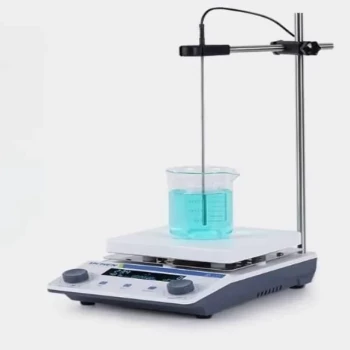
- Laboratory Small Constant Temperature Heated Magnetic Stirrer Heater and Stirrer
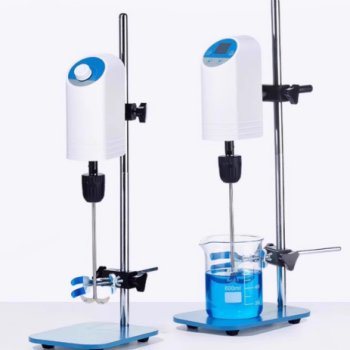
- High Performance Laboratory Stirrers for Diverse Applications
- Custom PTFE Teflon Parts Manufacturer for Magnetic Stirring Bar
- Laboratory Vibratory Sieve Shaker Machine for Dry and Wet Three-Dimensional Sieving
- Laboratory Vortex Mixer Orbital Shaker Multifunctional Rotation Oscillation Mixer
People Also Ask
- What role does a magnetic stirrer with heating play in ZnO nanoparticle synthesis? Precision Control for Quality Results
- What role does a constant temperature heating magnetic stirrer play in MFC-HAp synthesis? Achieve Material Homogeneity
- What is the function of a laboratory magnetic stirrer in Ni–Cr–P electrodeposition? Optimize Ion Transport & Coating
- Why is a laboratory magnetic stirrer required for benzoic acid esters? Boost Reaction Speed & Yield with High RPM
- What role does a laboratory magnetic stirrer play in TiO2 and TiO2-Ag sol preparation? Master Chemical Kinetics