Mechanical stirring serves as the primary regulator of hydrodynamic conditions within a Plasma Electrolytic Oxidation (PEO) cell, directly influencing how materials deposit onto the substrate. By creating constant fluid motion, the device ensures that critical chemical components—specifically diphosphates, citrates, and metal cations—are delivered evenly across the entire surface of the titanium alloy, preventing localized depletion of these coating precursors.
Core Takeaway: Mechanical stirring eliminates inconsistencies in the diffusion layer surrounding the workpiece. This hydrodynamic control is the prerequisite for achieving a homogeneous distribution of doped metals within the TiO2 matrix, which is essential for maximizing the final catalyst activity.
The Role of Hydrodynamics in Coating Quality
Maintaining Constant Conditions
In a static PEO cell, the concentration of chemicals near the workpiece can fluctuate. Mechanical stirring introduces constant hydrodynamic conditions.
This continuous motion prevents the formation of stagnant zones where the electrolyte composition might otherwise vary.
Eliminating Diffusion Gradients
The most critical function of the stirring device is the manipulation of the diffusion layer.
Without stirring, the thickness of this liquid layer—through which ions must travel to reach the surface—can vary across the geometry of the part.
Stirring minimizes and equalizes this thickness, ensuring that the resistance to ion transfer is uniform across the entire alloy surface.
Impact on Chemical Composition
Distribution of Key Ions
The uniformity of the coating depends on the simultaneous arrival of specific species at the reaction site.
The stirring device ensures the even transport of diphosphates and citrates, which are essential for the process chemistry.
Crucially, it also regulates the delivery of metal cations, specifically Fe2+, Co2+, and Ni2+.
Homogeneous Doping
When the diffusion layer is controlled, these metal cations are incorporated into the coating at a consistent rate.
This results in a uniform distribution of doped metals throughout the titanium dioxide (TiO2) matrix.
Instead of having clusters of high concentration and areas of low concentration, the dopants are spread evenly, improving the structural integrity of the oxide layer.
Common Pitfalls to Avoid
The Consequence of Stagnation
It is important to understand the trade-off of failing to implement adequate stirring.
Without mechanical agitation, diffusion layer thickness gradients will inevitably form.
This leads to uneven doping, where some areas of the coating may lack the necessary metal cations (Fe, Co, Ni) required for performance.
Compromised Catalytic Potential
If the electrolyte is not stirred, the resulting coating may physically cover the part but fail functionally.
The reference indicates that the overall activity of the catalyst is directly linked to the distribution of doped metals.
Poor hydrodynamics therefore leads to a coating that is chemically inefficient, wasting the potential of the expensive doping elements.
Making the Right Choice for Your Goal
To optimize your PEO process, align your equipment setup with your specific performance metrics:
- If your primary focus is Catalytic Performance: Ensure aggressive stirring to maximize the activity of the catalyst by forcing a dense, even distribution of metal cations.
- If your primary focus is Coating Consistency: Use the stirring device to normalize the diffusion layer, eliminating gradients that lead to patchy or irregular oxide growth.
Ultimately, mechanical stirring is not just a mixing step; it is the control mechanism that transforms a standard oxide layer into a highly active, uniformly doped catalytic surface.
Summary Table:
| Feature | Role in PEO Process | Impact on Coating Quality |
|---|---|---|
| Hydrodynamic Control | Maintains constant fluid motion | Prevents localized depletion of coating precursors |
| Diffusion Layer | Minimizes and equalizes layer thickness | Ensures uniform resistance to ion transfer across the alloy |
| Ion Transport | Delivers diphosphates, citrates, & metal cations | Enables homogeneous distribution of Fe2+, Co2+, and Ni2+ |
| Doping Consistency | Regulates metal cation incorporation | Prevents clustering and maximizes final catalyst activity |
Elevate Your Surface Engineering with KINTEK Precision
Achieving perfect chemical uniformity in Plasma Electrolytic Oxidation (PEO) requires more than just chemistry—it requires superior hydrodynamic control. KINTEK specializes in advanced laboratory equipment and consumables designed for high-performance research. From high-temperature furnaces and high-pressure reactors to specialized electrolytic cells and electrodes, we provide the tools necessary to eliminate diffusion gradients and optimize your catalytic surfaces.
Whether you are developing next-generation catalysts or refining battery research, our comprehensive portfolio—including cooling solutions, homogenizers, and high-purity ceramic crucibles—ensures your lab delivers consistent, repeatable results. Contact KINTEK today to discuss your equipment needs and see how our expertise can enhance your material deposition accuracy.
References
- N. Sakhnenko, Oleksii Matykin. Examining the formation and properties of TiO2 oxide coatings with metals of iron triad. DOI: 10.15587/1729-4061.2017.97550
This article is also based on technical information from Kintek Solution Knowledge Base .
Related Products
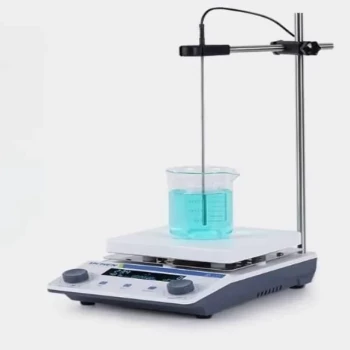
- Laboratory Small Constant Temperature Heated Magnetic Stirrer Heater and Stirrer
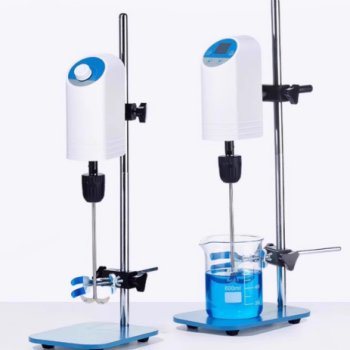
- High Performance Laboratory Stirrers for Diverse Applications
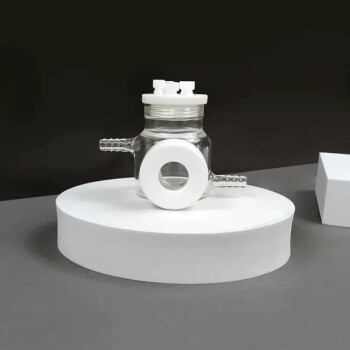
- Optical Water Bath Electrolytic Electrochemical Cell
- Custom PTFE Teflon Parts Manufacturer for Magnetic Stirring Bar
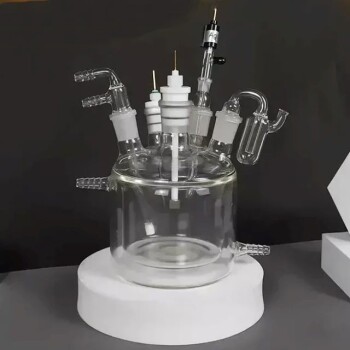
- Double Layer Five-Port Water Bath Electrolytic Electrochemical Cell
People Also Ask
- What role does a magnetic stirrer with heating play in ZnO nanoparticle synthesis? Precision Control for Quality Results
- What role does a constant temperature heating magnetic stirrer play in MFC-HAp synthesis? Achieve Material Homogeneity
- What is the function of a laboratory magnetic stirrer in Ni–Cr–P electrodeposition? Optimize Ion Transport & Coating
- Why is a laboratory magnetic stirrer required for benzoic acid esters? Boost Reaction Speed & Yield with High RPM
- What role does a laboratory magnetic stirrer play in TiO2 and TiO2-Ag sol preparation? Master Chemical Kinetics