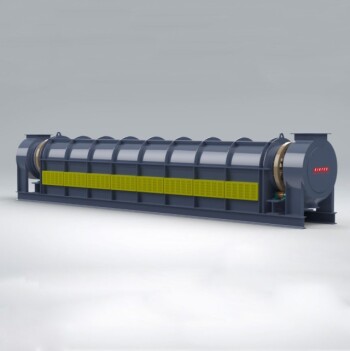
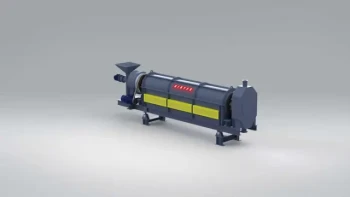
The influence of an electric heating furnace on waste tire hydrothermal liquefaction is fundamentally tied to thermal precision. An industrial-grade furnace does not merely supply heat; it orchestrates the reaction kinetics through a high-precision temperature control system. This control governs the stability of the heat source and the exact rate of temperature ramp-up.
Because temperature is the decisive factor in liquefaction, the furnace's ability to strictly regulate heat directly dictates the efficiency of molecular breakdown and product formation.
The Mechanics of Kinetic Control
The electric heating furnace acts as the primary driver for reaction kinetics by managing the thermal environment. The relationship between the equipment and the chemical process is defined by three specific kinetic mechanisms.
Accelerating Chain Scission
The primary function of the furnace is to facilitate rubber molecule chain scission.
By enabling a precise temperature ramp-up, the furnace ensures the system reaches the activation energy required to break the strong chemical bonds in waste tires. The stability of the heat source ensures this scission occurs at a consistent, predictable rate.
Controlling Particle Hydrolysis
The furnace directly influences the rate of particle hydrolysis.
Hydrolysis is the breakdown of compounds due to reaction with water. The furnace's high-precision control allows operators to maintain the exact thermal conditions necessary for water to effectively degrade the tire matrix into smaller compounds.
Formation of Carbon Nanospheres
The production of high-value byproducts, specifically carbon nanospheres, is temperature-dependent.
The kinetics of nucleation and growth for these nanospheres rely on the thermal profile established by the furnace. Precise regulation prevents thermal fluctuations that could disrupt the uniform formation of these structures.
Understanding the Trade-offs
While an industrial-grade furnace offers superior control, it is important to recognize the operational implications of relying on high-precision equipment.
The Dependency on Sensor Accuracy
The system's effectiveness is entirely reliant on the precision of the temperature control system.
If the control loop or sensors drift, the "decisive factor" (temperature) becomes unreliable. This can lead to incomplete hydrolysis or inconsistent chain scission, regardless of the furnace's power output.
Sensitivity to Ramp-Up Variations
The kinetics are highly sensitive to the temperature ramp-up rate.
A furnace that cannot maintain a linear or specific ramp-up profile may trigger reactions too early or too late. This desynchronization can result in a product mix that deviates from the desired composition.
Making the Right Choice for Your Goal
To maximize the efficiency of waste tire liquefaction, you must align the furnace's capabilities with your specific processing targets.
- If your primary focus is rapid waste degradation: Prioritize a furnace with high power density to maximize the rate of rubber molecule chain scission and hydrolysis.
- If your primary focus is high-value material recovery: Ensure your furnace has the highest possible temperature precision to stabilize the kinetics required for uniform carbon nanosphere formation.
The furnace is not just a heater; it is the rate-limiting device that determines the quality and speed of your chemical conversion.
Summary Table:
| Kinetic Mechanism | Furnace Influence | Primary Outcome |
|---|---|---|
| Chain Scission | Precise Ramp-up Rate | Efficient breakdown of rubber molecules |
| Hydrolysis | Thermal Stability | Consistent degradation of tire matrix |
| Nucleation | High-Precision Control | Formation of uniform carbon nanospheres |
| Product Yield | Heat Source Reliability | Optimized chemical conversion efficiency |
Maximize Your Liquefaction Efficiency with KINTEK
Precise thermal control is the difference between waste and high-value recovery. KINTEK specializes in advanced laboratory equipment designed to master complex reaction kinetics. Whether you are performing waste tire hydrothermal liquefaction or advanced material synthesis, our comprehensive range of high-temperature furnaces (muffle, tube, vacuum, and atmosphere), high-pressure reactors and autoclaves, and crushing and milling systems ensure your research meets the highest standards of precision.
From laboratory-scale battery research tools to industrial-grade thermal processing solutions, we provide the tools necessary for consistent, predictable results.
Ready to optimize your thermal processes? Contact our technical experts today to discover how KINTEK’s precision engineering can enhance your laboratory’s output.
References
- Rongjie Chen, Yanguo Zhang. Hydrothermal Liquefaction of Scrap Tires: Optimization of Reaction Conditions and Recovery of High Value-Added Products. DOI: 10.3389/fenrg.2022.841752
This article is also based on technical information from Kintek Solution Knowledge Base .
Related Products
- Electric Rotary Kiln Continuous Working Small Rotary Furnace Heating Pyrolysis Plant
- 600T Vacuum Induction Hot Press Furnace for Heat Treat and Sintering
- Electric Rotary Kiln Pyrolysis Furnace Plant Machine Calciner Small Rotary Kiln Rotating Furnace
- Vacuum Heat Treat and Pressure Sintering Furnace for High Temperature Applications
- Vacuum Heat Treat Furnace with Ceramic Fiber Liner
People Also Ask
- What are the characteristics of the slipping, slumping, and rolling modes of bed motion? Optimize Your Rotary Process
- What are the principles of a rotary kiln? Master the Mechanics of High-Temperature Processing
- What are the different types of calciners? A Guide to Selecting the Right Thermal Processing Equipment
- What is the temperature of a rotating kiln? It Depends on Your Material and Process Goal
- How are rotary kilns heated? Direct vs. Indirect Heating Methods Explained