Electrolytic etching equipment is the definitive tool for characterizing super duplex stainless steel because it uses a controlled electrical current to force selective corrosion between chemically similar phases. By applying a stable potential (such as 9V) within a specific electrolyte (like 30% KOH), the equipment exploits the slight differences in electrochemical stability between ferrite, austenite, and intermetallic phases to create the high-contrast visuals required for analysis.
The core value of electrolytic etching lies in its selectivity. Unlike simple chemical dips, this method allows you to tune the voltage to target specific phases, making it the only reliable way to quantify phase ratios and identify dangerous precipitates like the sigma phase.
The Mechanism of Selective Phase Revelation
Controlled Electrochemical Potential
The primary function of electrolytic etching equipment is to apply a precise, constant voltage across the sample surface.
According to the primary reference, applying a specific potential (e.g., 9V) allows the user to target the electrochemical breakdown of specific phases while leaving others intact. This control is impossible to achieve with standard chemical etching, which relies solely on the aggressiveness of the acid.
Differential Dissolution Rates
The equipment uses the electrolyte—often a 30% Potassium Hydroxide (KOH) or 10% oxalic acid solution—to facilitate ion transfer.
Because the ferrite and austenite phases in super duplex steel have different electrochemical activities, they dissolve at different rates under the applied voltage. This differential dissolution creates physical relief on the sample surface, which manifests as optical contrast under a microscope.
Creating High-Contrast Visuals
The result of this process is a clear visual distinction between phases.
For example, specific setups can render ferrite as dark gray and austenite as light gray. This sharp contrast is vital for image analysis software to automatically calculate phase fractions, ensuring the material meets the required 50:50 duplex balance.
Identifying Critical Microstructural Features
Detecting Detrimental Sigma Phases
Super duplex stainless steels are prone to forming complex intermetallic phases, such as sigma and chi phases, during heat treatment.
Electrolytic etching is uniquely capable of revealing these phases, which are often difficult to distinguish from the ferrite matrix using other methods. Identifying these precipitates is critical, as they act as crack initiation sites and significantly reduce corrosion resistance.
Revealing Grain Boundaries and Twins
Beyond phase separation, the equipment effectively reveals grain boundary networks.
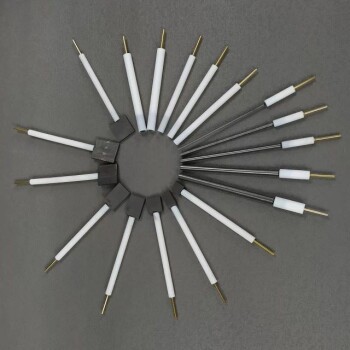
By using chemically stable electrodes (such as platinum), the equipment provides a stable current path that dissolves grain boundaries and reveals features like annealing twins and shear bands. This level of detail is necessary for evaluating the degree of structural refinement and understanding the material's mechanical history.
Understanding the Trade-offs and Pitfalls
Sensitivity to Voltage Settings
The success of electrolytic etching relies entirely on the precision of the applied voltage.
If the voltage is too low, the sample remains under-etched, and phases will not differentiate. Conversely, excessive voltage can cause pitting corrosion or "burning" of the surface, obscuring the true microstructure and rendering the sample useless for quantitative analysis.
Electrolyte Specificity
There is no "universal" electrolyte for all diagnostic goals.
While KOH is excellent for phase differentiation in super duplex steel, other electrolytes like nitric acid or oxalic acid may be better suited for revealing grain boundaries or specific defect structures. The operator must match the chemistry to the specific investigative goal (e.g., phase ratio vs. grain size).
Making the Right Choice for Your Goal
To maximize the utility of electrolytic etching for super duplex stainless steel, align your setup with your specific analytical objective:
- If your primary focus is Phase Ratio Analysis: Use an electrolyte like 30% KOH with a stable voltage (e.g., 9V) to generate maximum contrast between ferrite and austenite for automated counting.
- If your primary focus is Failure Analysis: Adjust your parameters to specifically target the rapid etching of sigma and chi phases, as these are likely the root cause of embrittlement or corrosion failures.
- If your primary focus is Grain Sizing: Utilize electrolytes like 10% oxalic acid at lower voltages (e.g., 5V) to highlight grain boundaries without over-darkening the ferrite matrix.
Precise control over voltage and electrolyte chemistry transforms a polished metal surface into a detailed map of material integrity.
Summary Table:
| Feature | Recommended Electrolyte | Typical Voltage | Analytical Focus |
|---|---|---|---|
| Phase Ratio Analysis | 30% KOH (Potassium Hydroxide) | 9V | High contrast for ferrite/austenite quantification |
| Intermetallic Detection | 30% KOH | 6V - 9V | Identifying embrittling sigma and chi phases |
| Grain Size Evaluation | 10% Oxalic Acid | 5V | Highlighting grain boundaries and annealing twins |
| Corrosion Assessment | Nitric Acid | 1V - 3V | Evaluating susceptibility to intergranular corrosion |
Optimize Your Material Analysis with KINTEK Precision
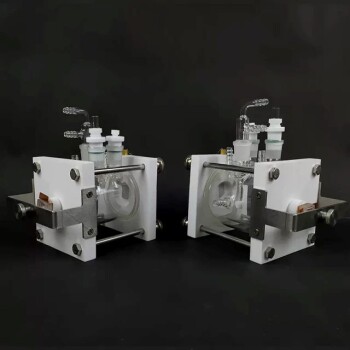
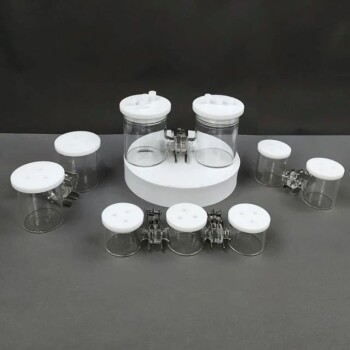
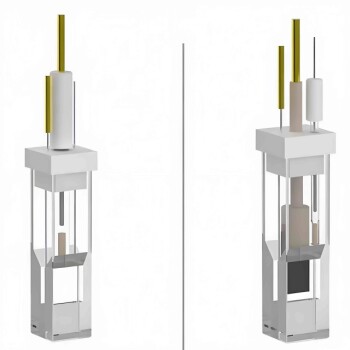
Achieving the perfect 50:50 phase balance in super duplex stainless steel requires equipment that offers absolute control. KINTEK provides high-performance laboratory solutions, including specialized electrolytic cells and electrodes, precisely engineered to deliver the stable electrochemical potential needed for selective phase revelation.
Whether you are performing failure analysis with our crushing and milling systems or preparing samples with our high-pressure reactors, our technical experts are ready to help you achieve high-contrast, repeatable results.
Ready to elevate your microstructural characterization?
Contact KINTEK Today for a Professional Consultation
References
- Ángelo Oñate, D. Rojas. Exploring the Impact of Cooling Rate on Microstructural Features, Mechanical Properties, and Corrosion Resistance of a Novel Nb-Stabilized Super Duplex Stainless Steel in Shielded Metal Arc Welding. DOI: 10.3390/cryst13081192
This article is also based on technical information from Kintek Solution Knowledge Base .
Related Products
- Three-dimensional electromagnetic sieving instrument
- Electrolytic Electrochemical Cell for Coating Evaluation
- Electrode Polishing Material for Electrochemical Experiments
- Side Window Optical Electrolytic Electrochemical Cell
- Quartz Electrolytic Electrochemical Cell for Electrochemical Experiments
People Also Ask
- Why is sieving equipment essential for the classification of processed bio-activated carbon? Optimize Performance
- What are the limitations of sieving? Understanding the Constraints of Particle Size Analysis
- What are advantages and disadvantages of sieving method? A Guide to Reliable & Cost-Effective Particle Sizing
- How is sieving important? The Critical Role of Particle Size Analysis in Quality Control
- What is sieving and how does it work? A Guide to Accurate Particle Size Analysis