The adjustment of Radio Frequency (RF) power serves as the primary control mechanism for determining whether film deposition is driven by chemical reactions or physical bombardment. By shifting the frequency above or below a critical 4 MHz threshold, you dictate the mobility of ions within the plasma, which directly alters the film's density, stress state, and chemical stoichiometry.
The core mechanism is ion response time. High frequencies prevent ions from following the oscillating field, resulting in softer, tensile films, whereas low frequencies enable energetic ion bombardment that yields dense, compressive, and nitrogen-rich microstructures.
The Physics of Frequency Interaction
High Frequency (HF) Mode
At frequencies above 4 MHz, the oscillating electric field changes direction too rapidly for heavy ions to follow. Only the much lighter electrons can track the field's oscillation.
Because the ions remain relatively stationary, the film growth is driven primarily by neutral particles (radicals) diffusing to the surface. This results in a deposition process dominated by chemical kinetics rather than physical impact.
Low Frequency (LF) Mode
At frequencies below 4 MHz, the oscillation is slow enough that ions can physically follow the changing electric field. This allows the ions to gain kinetic energy and strike the substrate surface.
This results in a strong ion bombardment effect. The ions act like microscopic hammers, physically packing the depositing material and altering the surface chemistry during growth.
Impact on Microstructure and Composition
Controlling Film Density
The ion bombardment present in low-frequency deposition significantly promotes densification. The physical impact of ions collapses voids and creates a tightly packed atomic structure.
Conversely, high-frequency deposition lacks this physical "peening" effect. Consequently, HF films tend to be more porous and less dense than their LF counterparts.
Defining Stress States
Frequency is the decisive factor in managing intrinsic stress. High-frequency processes typically produce films with tensile stress, caused by the specific bonding configurations of the neutral precursors.
Low-frequency processes induce compressive stress. The energetic ions force atoms into tighter configurations than they would naturally assume, creating an internal pressure within the film lattice.
Altering Chemical Stoichiometry
The energy source also shifts the chemical balance. The physical bombardment in LF mode enhances the incorporation of nitrogen, leading to nitrogen-rich films.
In the absence of this bombardment (HF mode), the films tend to be silicon-rich. This shift in silicon-to-nitrogen ratio fundamentally changes the chemical bonding state and potential optical properties of the material.
Understanding the Trade-offs
The Stress vs. Density Compromise
While low-frequency deposition offers superior density and barrier properties, the resulting compressive stress can be a liability. If the stress becomes too high, it may lead to film delamination or bowing of the underlying wafer.
Process Complexity
It is important to note that while frequency is the dominant factor for microstructure, it does not act in isolation.
As indicated by broader process data, parameters like gas flow and temperature also influence deposition rates and optical properties. However, frequency remains the unique "knob" for switching between ion-assisted (physical) and radical-driven (chemical) growth modes.
Making the Right Choice for Your Goal
To optimize your silicon nitride film, you must select the frequency that aligns with your specific structural requirements:
- If your primary focus is film density and durability: Utilize Low Frequency (< 4 MHz) to leverage ion bombardment for a denser, nitrogen-rich structure.
- If your primary focus is managing mechanical stress: Utilize High Frequency (> 4 MHz) to achieve tensile stress and avoid the high compressive forces associated with ion bombardment.
- If your primary focus is Silicon-rich composition: Operate at High Frequency to favor neutral particle deposition and reduce nitrogen incorporation.
By manipulating the RF frequency, you effectively tune the kinetic energy of the plasma to engineer the film's microstructure from the atomic level up.
Summary Table:
| Frequency Mode | Range | Dominant Mechanism | Film Density | Internal Stress | Chemical Composition |
|---|---|---|---|---|---|
| High Frequency (HF) | > 4 MHz | Chemical Kinetics (Radicals) | Lower / Porous | Tensile | Silicon-rich |
| Low Frequency (LF) | < 4 MHz | Physical Ion Bombardment | Higher / Dense | Compressive | Nitrogen-rich |
Elevate Your Thin Film Deposition with KINTEK Expertise
Precision in PECVD processes requires more than just the right settings—it requires industry-leading equipment designed for extreme accuracy. KINTEK specializes in advanced laboratory solutions, offering a comprehensive range of high-performance systems including PECVD, CVD, and MPCVD furnaces, as well as high-temperature high-pressure reactors and essential consumables like PTFE products and ceramics.
Whether you are engineering dense, nitrogen-rich coatings or managing delicate stress states in silicon nitride films, our technical experts are here to help you select the ideal tools for your research goals.
Ready to optimize your lab’s results? Contact us today to explore our full range of PECVD systems and consumables!
References
- Catheline Cazako, R. Cauro. Hypothetic impact of chemical bonding on the moisture resistance of amorphous Si<sub>x</sub>N<sub>y</sub>H<sub>z</sub> by plasma-enhanced chemical vapor deposition. DOI: 10.1051/metal/2018072
This article is also based on technical information from Kintek Solution Knowledge Base .
Related Products
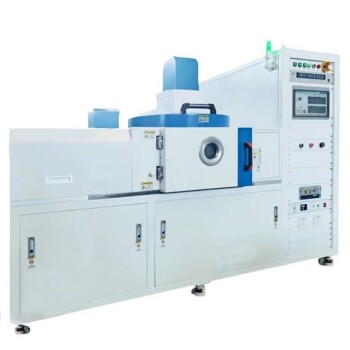
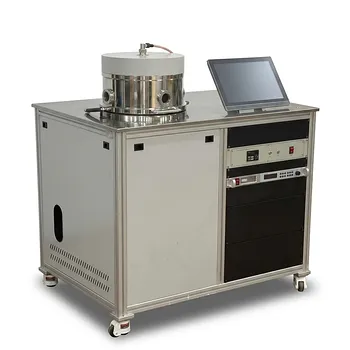
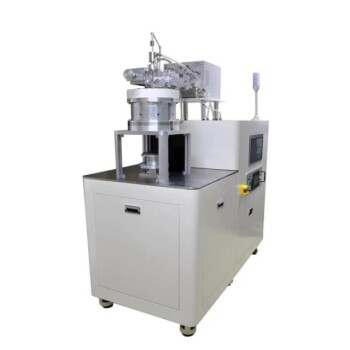
- RF PECVD System Radio Frequency Plasma-Enhanced Chemical Vapor Deposition RF PECVD
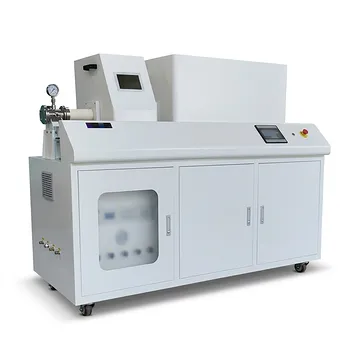
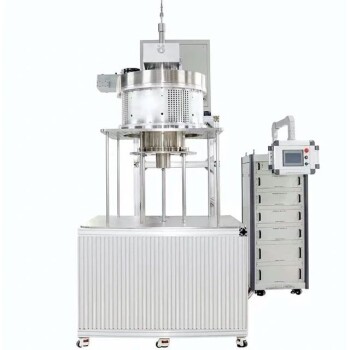
- Inclined Rotary Plasma Enhanced Chemical Vapor Deposition PECVD Equipment Tube Furnace Machine
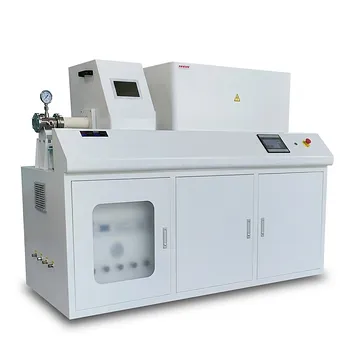
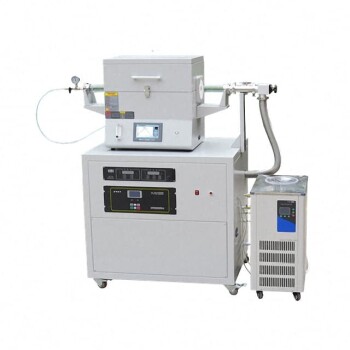
- Chemical Vapor Deposition CVD Equipment System Chamber Slide PECVD Tube Furnace with Liquid Gasifier PECVD Machine
- Inclined Rotary Plasma Enhanced Chemical Vapor Deposition PECVD Equipment Tube Furnace Machine
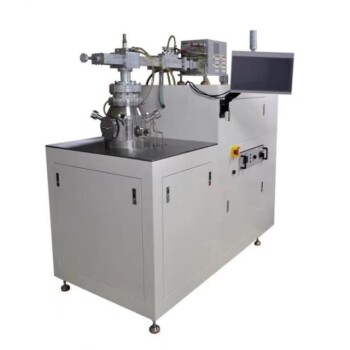
- Microwave Plasma Chemical Vapor Deposition MPCVD Machine System Reactor for Lab and Diamond Growth
People Also Ask
- What is plasma enhanced chemical vapour deposition PECVD used for? Enable Low-Temp Thin Films for Electronics & Solar
- What is the role of RF-PECVD in VFG preparation? Mastering Vertical Growth and Surface Functionality
- What is an example of PECVD? RF-PECVD for High-Quality Thin Film Deposition
- What is plasma enhanced chemical Vapour deposition process used for fabrication of? A Guide to Low-Temperature Thin Films
- What is plasma CVD? Unlock Low-Temperature Thin Film Deposition for Sensitive Materials