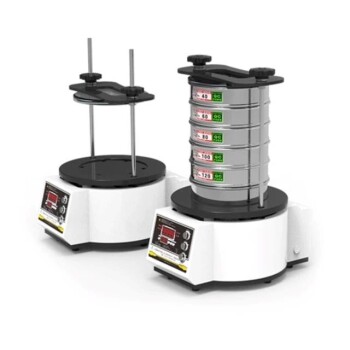
The fractional sieving step functions as a critical material recovery mechanism. It leverages the physical size difference between large-particle Silicon Carbide (SiC) and the resulting fine bio-char to separate the heat carrier from the product immediately after the reaction. This mechanical separation allows the system to reclaim the essential heating elements for immediate reuse.
By enabling the simple physical recovery of expensive microwave receptors, fractional sieving transforms the process from a linear consumption model into a closed-loop cycle, significantly lowering the operating costs required for industrial-scale viability.
The Mechanics of Separation
Exploiting Particle Size Disparity
The efficiency of this process hinges on a deliberate design choice: the size contrast between inputs and outputs. The Silicon Carbide (SiC) is introduced specifically as large particles.
In contrast, the bio-char produced during pyrolysis is a fine powder. This physical distinction allows for a straightforward sieving process to filter the mixture, isolating the two components without the need for complex chemical extraction.
Recovering Microwave Receptors
SiC plays a vital role as the microwave receptor, absorbing energy to generate the heat necessary for pyrolysis. It is not merely a byproduct; it is the engine of the thermal reaction.
Sieving ensures that this valuable functional material is not lost in the waste stream or mixed inextricably with the final product.
Economic and Operational Impact
Reducing Industrial Operating Costs
In a single-pass system where heat carriers are discarded, material costs would skyrocket. The sieving step directly addresses the economic feasibility of the operation.
By recovering the SiC, the process minimizes the need to constantly purchase new heat carriers. This reduction in consumable overhead is the primary driver for making microwave-assisted pyrolysis viable at an industrial scale.
enabling Continuous Processing
For a process to scale, it must be repeatable. The recovery of SiC allows for a cyclical workflow where the heat carrier is recirculated.
This turns the pyrolysis unit into a sustainable system rather than a batch process that requires a fresh "reset" of materials for every run.
Understanding the Trade-offs
Dependency on Particle Integrity
While sieving is efficient, it relies entirely on the structural durability of the SiC particles.
If the high heat or mechanical stress causes the SiC to fracture into smaller pieces (fines), the sieving method will fail to separate them from the bio-char. This would result in product contamination and the loss of the heat carrier, negating the cost benefits.
Evaluating Feasibility for Your Goals
To determine if this method aligns with your processing requirements, consider the following distinct objectives:
- If your primary focus is Cost Reduction: Prioritize high-quality SiC that resists fracturing, ensuring the sieving step yields the highest possible recovery rate for reuse.
- If your primary focus is Product Purity: Monitor the sieve mesh size strictly to ensure no degraded heat carrier fragments are contaminating your fine bio-char output.
Ultimately, the sieving step is the bridge that turns a chemical reaction into a sustainable, scalable industrial operation.
Summary Table:
| Feature | SiC Heat Carrier (Large Particle) | Bio-char (Fine Powder) |
|---|---|---|
| Function | Microwave receptor/heat engine | Pyrolysis byproduct/final product |
| Physical Form | Large, durable particles | Fine, powdery texture |
| Separation Role | Retained by sieve for reuse | Passes through sieve for collection |
| Economic Impact | Reduces consumable overhead | Ensures high product purity |
Maximize Your Pyrolysis Efficiency with KINTEK
Transitioning from laboratory experiments to industrial-scale production requires precision and cost-effective material management. KINTEK specializes in advanced laboratory equipment, providing high-quality crushing and milling systems, sieving equipment, and high-temperature furnaces designed to handle the rigorous demands of microwave-assisted pyrolysis.
Whether you need durable ceramics and crucibles to withstand thermal stress or precise sieving solutions to ensure your heat carriers remain pure, our experts are here to help. Boost your recovery rates and protect your product integrity today—Contact our technical team now to find the perfect equipment for your research and production goals!
References
- Kaiqi Shi, Tao Wu. Production of H2-Rich Syngas From Lignocellulosic Biomass Using Microwave-Assisted Pyrolysis Coupled With Activated Carbon Enabled Reforming. DOI: 10.3389/fchem.2020.00003
This article is also based on technical information from Kintek Solution Knowledge Base .
Related Products
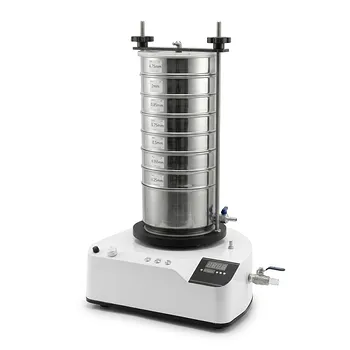
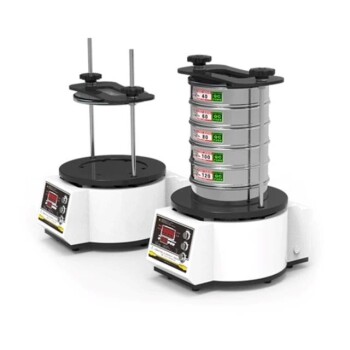
- Three-dimensional electromagnetic sieving instrument
- Laboratory Vibratory Sieve Shaker Machine for Dry and Wet Three-Dimensional Sieving
- Custom PTFE Teflon Parts Manufacturer for PTFE Mesh F4 Sieve
- Laboratory Wet Three-Dimensional Vibratory Sieve Shaker Machine
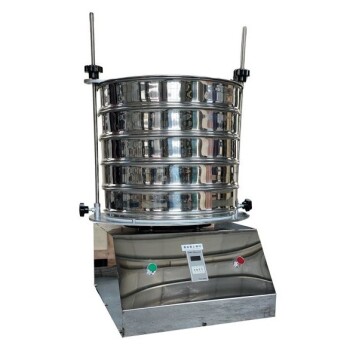
- Laboratory Test Sieves and Sieving Machines
People Also Ask
- Why is sieving equipment essential for the classification of processed bio-activated carbon? Optimize Performance
- What are the limitations of sieving? Understanding the Constraints of Particle Size Analysis
- What are advantages and disadvantages of sieving method? A Guide to Reliable & Cost-Effective Particle Sizing
- How is sieving important? The Critical Role of Particle Size Analysis in Quality Control
- What is sieving and how does it work? A Guide to Accurate Particle Size Analysis