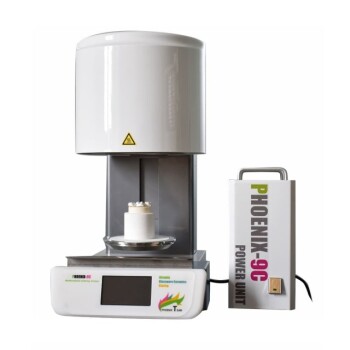
Repeated activation in an atmosphere sintering furnace is a precision-driven technique for optimizing carbon adsorbents. By subjecting nitrogen-doped materials to multiple thermal cycles, the process triggers continuous chemical exfoliation and the transformation of nitrogen species. This results in a significantly higher specific surface area and the development of stable, high-activity functional groups that drastically improve adsorption efficiency for ions like phosphate.
The core advantage of repeated activation lies in the strategic trade-off between total nitrogen volume and functional quality. While total nitrogen may decrease, the furnace environment converts unstable precursors into quaternary nitrogen (N–Q) and expands the pore network to maximize active site accessibility.
The Mechanism of Structural Transformation
Continuous Chemical Exfoliation
Repeated thermal cycles in the furnace facilitate a process of continuous chemical exfoliation. Each cycle further etches the carbon skeleton, which can increase the specific surface area to approximately 278 m²/g or higher depending on the activation agent used.
Nitrogen Species Redistribution
While repeated heating can reduce total nitrogen content, it encourages a vital chemical shift. Unstable nitrogen species are purged or transformed into quaternary nitrogen (N–Q) and protonated amine groups, which are more effective for capturing target contaminants.
Pore Network Development
The process enables the formation of extensive micropores and interconnected channels. Using agents like zinc chloride (ZnCl2) or KOH within the furnace allows for dehydrogenation and deoxygenation reactions that build a robust, high-capacity porous architecture.
The Role of the Atmosphere Furnace Environment
Precise Thermal Control
Maintaining a consistent temperature, often around 550°C to 900°C, is critical for the solid-liquid reactions required for activation. The atmosphere furnace provides the stability needed to ensure that the chemical etching of the carbon source is uniform across all cycles.
Prevention of Oxidative Loss
The use of a continuous flow of high-purity nitrogen creates an inert environment that protects the material. This prevents the oxidative loss of carbon, ensuring that the structural integrity of the adsorbent is maintained even during repeated high-temperature treatments.
Facilitating Lattice Expansion
In specific setups, the furnace environment allows activation agents to intercalate into the carbon layers. This causes lattice expansion, a physical stretching of the material at the atomic level that is essential for achieving ultra-high surface areas.
Understanding the Trade-offs
Nitrogen Content vs. Site Activity
A primary trade-off of repeated activation is the reduction in total nitrogen mass. However, the remaining nitrogen is typically more stable and located in more accessible "active sites," leading to better overall performance despite lower raw percentages.
Energy Consumption and Throughput
Implementing a three-cycle activation process increases the energy footprint and time required for production. Engineers must balance the performance gains in adsorption efficiency against the higher operational costs associated with multiple furnace runs.
Potential for Over-Oxidation
Without rigorous control of the inert gas flow, repeated exposure to high heat can lead to over-etching. If the atmosphere is compromised, the material can lose its structural density, resulting in a fragile adsorbent that may degrade during use.
How to Apply This to Your Project
Recommendations Based on Your Goals
- If your primary focus is Maximum Adsorption Capacity: Utilize a multi-cycle activation process (such as three cycles) to maximize the specific surface area and develop a dense micropore network.
- If your primary focus is Chemical Selectivity for Anions: Prioritize the transformation of nitrogen into quaternary nitrogen (N–Q) by controlling the cooling and reheating phases within the inert nitrogen atmosphere.
- If your primary focus is Production Efficiency: Evaluate if a single, longer activation cycle with higher concentrations of activation agents like KOH can mimic the results of repeated cycles to reduce furnace downtime.
By leveraging the controlled environment of an atmosphere sintering furnace, you can transform a standard carbon base into a high-performance, nitrogen-doped adsorbent tailored for complex filtration challenges.
Summary Table:
| Feature | Impact of Repeated Activation |
|---|---|
| Surface Area | Continuous chemical exfoliation increases SSA (e.g., 278+ m²/g) |
| Nitrogen Quality | Conversion of unstable precursors to stable Quaternary Nitrogen (N–Q) |
| Pore Structure | Strategic development of interconnected micropores via etching |
| Stability | Controlled atmosphere prevents oxidative loss during high-heat cycles |
Elevate Your Material Performance with KINTEK Precision
Maximize the efficiency of your nitrogen-doped materials with KINTEK’s high-performance atmosphere and sintering furnaces. Our equipment is engineered to provide the precise thermal control and inert environments necessary for complex multi-cycle activation, ensuring uniform chemical exfoliation and stable nitrogen redistribution.
Why Choose KINTEK for Your Lab?
- Comprehensive Furnace Range: From atmosphere and vacuum furnaces to advanced CVD, PECVD, and tube systems.
- Material Integrity: High-purity inert gas flow systems to prevent oxidative loss in carbon-based research.
- Full Lab Support: We provide everything from crushing and milling systems to essential consumables like ceramics and crucibles.
Ready to optimize your adsorbent production? Contact KINTEK today to discuss your project requirements and find the perfect high-temperature solution for your laboratory.
References
- Fumiya Matsuzawa, Motoi Machida. Characteristics of phosphate ion adsorption by nitrogen-doped carbon-based adsorbents prepared from sucrose, melamine, and urea. DOI: 10.7209/carbon.020204
This article is also based on technical information from Kintek Solution Knowledge Base .
Related Products
- Mesh belt controlled atmosphere furnace
- Controlled Nitrogen Inert Hydrogen Atmosphere Furnace
- 1200℃ Controlled Atmosphere Furnace Nitrogen Inert Atmosphere Furnace
- 1700℃ Controlled Atmosphere Furnace Nitrogen Inert Atmosphere Furnace
- 1400℃ Controlled Atmosphere Furnace with Nitrogen and Inert Atmosphere
People Also Ask
- What are some of the reasons why a controlled atmosphere furnace is desirable in sintering? Achieve Superior Sintering Results
- Why is a furnace equipped with a controlled atmosphere necessary for the preparation of active metal catalysts?
- What role does a controlled atmosphere furnace with argon gas flow play in the production of reduced graphene oxide (rGO)?
- How does a mesh belt furnace work? Achieve High-Volume, Repeatable Heat Treatment
- What is the process of a mesh belt furnace? Achieve Consistent, High-Volume Heat Treatment