The application of Alumina (Al2O3) ceramic coating dramatically enhances the tribocatalytic activity of Cadmium Sulfide (CdS) by serving as a highly effective friction pair. Compared to standard vessel materials like glass, this coating improves the tribological interaction with CdS particles, leading to significant increases in reaction efficiency. In specific applications, such as the degradation of Methyl Orange, this modification has been shown to boost the degradation rate by nearly six times.
The material of your reaction vessel is a decisive factor in catalytic efficiency, not just a passive container. Using an Alumina coating transforms the process from partial degradation to complete mineralization while offering superior chemical stability.
The Mechanism of Enhancement
Acting as an Active Friction Pair
In a tribocatalytic system, the reaction vessel wall is an active participant. The Alumina (Al2O3) ceramic coating acts as a friction pair that physically interacts with the Cadmium Sulfide (CdS) particles suspended in the solution.
Superior Tribological Properties
Unlike standard glass bottoms, the Alumina coating provides high chemical stability and optimized tribological properties. This interaction facilitates more effective energy transfer or surface activation during the friction process, directly influencing the catalytic output.
Quantifiable Performance Gains
A Surge in Degradation Rates
The shift from glass to Alumina yields measurable, high-impact results. Data indicates that during the degradation of pollutants like Methyl Orange (MO), the presence of the Alumina coating can increase the degradation rate by 5.87 times.
Achieving Complete Mineralization
The influence of the coating extends beyond speed to the quality of the reaction. While a glass substrate may only achieve partial degradation of a target molecule, the Alumina coating enables the transition to complete mineralization. This ensures the target pollutants are fully broken down into harmless byproducts rather than intermediate compounds.
Understanding the Trade-offs
The "Decisive Factor" Implication
The primary reference highlights that the contact material is a decisive factor. This implies that sticking to standard laboratory glassware (like borosilicate glass) for tribocatalysis may artificially cap your reaction potential.
Stability vs. Accessibility
While Alumina offers high chemical stability, implementing a ceramic coating adds a layer of complexity compared to using off-the-shelf glassware. However, the sheer magnitude of the efficiency gain (nearly 600%) suggests the performance benefits heavily outweigh the setup requirements for high-performance applications.
Making the Right Choice for Your Goal
When designing a tribocatalytic reactor involving Cadmium Sulfide, consider the following:
- If your primary focus is Reaction Speed: Incorporate an Al2O3 coating to leverage the 5.87-fold increase in catalytic rate compared to standard glass.
- If your primary focus is Environmental Safety: Use the Al2O3 friction pair to ensure complete mineralization of pollutants, avoiding the generation of potentially toxic intermediate byproducts.
The choice of vessel lining is the difference between a stalled reaction and a highly efficient, complete catalytic process.
Summary Table:
| Feature | Glass Reaction Vessel | Alumina (Al2O3) Ceramic Coating |
|---|---|---|
| Tribocatalytic Activity | Standard / Baseline | Highly Enhanced |
| Degradation Rate (MO) | 1.0x (Reference) | 5.87x Increase |
| Reaction Outcome | Partial Degradation | Complete Mineralization |
| Chemical Stability | Moderate | High |
| Role of Vessel Wall | Passive Container | Active Friction Pair |
Maximize Your Catalytic Efficiency with KINTEK
Is your research limited by standard laboratory glassware? At KINTEK, we understand that the right materials are decisive factors in catalytic success. Whether you are optimizing tribocatalysis, performing high-temperature battery research, or utilizing high-pressure reactors, our premium laboratory equipment is designed to meet the most rigorous scientific demands.
Why partner with KINTEK?
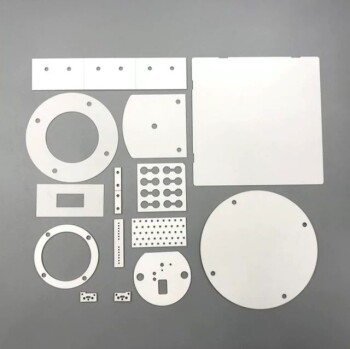
- Advanced Ceramics: Explore our range of Alumina and PTFE consumables for superior chemical stability.
- High-Performance Reactors: From CVD and vacuum furnaces to high-pressure autoclaves and electrolytic cells.
- Precision Milling: Optimize particle interaction with our advanced crushing, milling, and sieving systems.
Don't let your vessel material cap your reaction potential. Contact KINTEK today to discover how our high-temperature furnaces and specialized lab equipment can transform your research outcomes.
References
- Senhua Ke, Wanping Chen. Surprising Effects of Al2O3 Coating on Tribocatalytic Degradation of Organic Dyes by CdS Nanoparticles. DOI: 10.3390/coatings14081057
This article is also based on technical information from Kintek Solution Knowledge Base .
Related Products
- Aluminized Ceramic Evaporation Boat for Thin Film Deposition
- Engineering Advanced Fine Ceramics Alumina Crucibles (Al2O3) for Thermal Analysis TGA DTA
- Alumina Al2O3 Ceramic Crucible Semicircle Boat with Lid for Engineering Advanced Fine Ceramics
- Ceramic Evaporation Boat Set Alumina Crucible for Laboratory Use
- Engineering Advanced Fine Ceramics Alumina Al2O3 Crucible With Lid Cylindrical Laboratory Crucible
People Also Ask
- What is the source of evaporation for thin film? Choosing Between Thermal and E-Beam Methods
- Why are high-purity ceramic boats used for lignin activation? Ensure Purity & Thermal Stability
- Why is an alumina boat and Ti3AlC2 powder bed necessary for Ti2AlC sintering? Protect MAX Phase Purity
- Why use an alumina boat for high-temperature carbon activation? Ensure Maximum Material Purity & Thermal Stability
- Why is an alumina boat selected for catalyst precursors? Ensure Sample Purity at 1000 °C