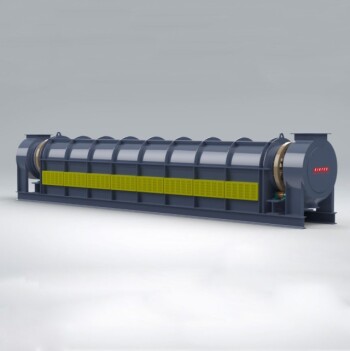
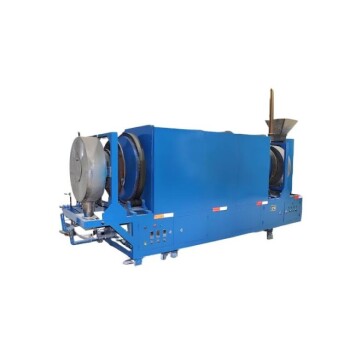
A muffle furnace serves as the primary instrument for establishing the baseline physicochemical properties of biomass. Specifically, it is utilized to conduct proximate analysis by subjecting raw materials to controlled heating or incineration within a specific air or inert atmosphere. This process allows researchers to isolate and quantify critical composition metrics, most notably ash content and volatile matter, which determine how a specific biomass will behave during pyrolysis.
The muffle furnace provides the foundational data necessary to evaluate a feedstock's pyrolysis potential. By isolating the material from direct flames and offering precise thermal control, it yields the accurate ash and volatile matter measurements required to calculate energy balances.
The Core Function: Proximate Analysis
The primary utility of a muffle furnace in this context is performing proximate analysis. This standard method deconstructs the biomass sample into its fundamental components using heat.
Quantifying Volatile Matter
To measure volatile matter, the furnace heats the biomass in a controlled environment. The high temperatures drive off gases and vapors released during thermal decomposition.
These volatiles are the components that eventually convert into bio-oil and syngas during pyrolysis. Knowing the exact volatile content is essential for predicting the yield of these valuable byproducts.
Determining Ash Content
The muffle furnace is also used for ashing, a process where the furnace incinerates the biomass sample completely. This burns off all organic and volatile materials.
The residue left behind is the non-volatile inorganic component, or ash. High ash content can be detrimental to pyrolysis systems, often leading to slagging or reduced energy density, making this measurement a critical quality filter.
Validating Pyrolysis Potential
Beyond simple measurement, the data derived from the muffle furnace serves a deeper analytical need: feasibility studies.
Calculating Energy Balances
The physicochemical parameters obtained—specifically the ratio of volatiles to fixed carbon and ash—are prerequisites for calculating the energy balance of the pyrolysis process.
Researchers use this data to determine if the energy input required to heat the biomass is justified by the potential energy output of the resulting pyrolysis products.
Evaluating Feedstock Suitability
Not all biomass is suitable for all pyrolysis methods. The muffle furnace data helps categorize feedstocks based on their thermal behavior.
For example, a feedstock with exceptionally high volatile matter might be flagged as ideal for fast pyrolysis (liquid fuel production), whereas high-ash feedstocks might be rejected for certain reactor types.
Operational Advantages
The muffle furnace offers specific technical advantages that ensure the reliability of this analysis.
Isolation from Direct Flame
Unlike open-fire testing, a muffle furnace heats the material via radiation and convection from the chamber walls, not by direct contact with a flame.
This eliminates the risk of the heat source itself initiating premature combustion or contaminating the sample. It is particularly useful for identifying the true combustion point of materials that would otherwise ignite instantly in an open flame.
Programmable Precision
Modern muffle furnaces allow for programmable temperature control and stable heating rates.
Maintaining a precise thermal energy field is critical for reproducibility. It ensures that the deep polycondensation or thermal degradation occurs uniformly, providing consistent data regarding the material's chemical composition changes.
Understanding the Limitations
While indispensable for characterization, relying solely on a muffle furnace has limitations regarding process simulation.
Static vs. Dynamic Analysis
The muffle furnace excels at static characterization. It tells you what the biomass is made of, but it does not perfectly simulate the rapid heating rates (flash pyrolysis) found in industrial reactors.
Atmosphere Sensitivity
Standard muffle furnaces may have limitations in strictly controlling the gas atmosphere compared to specialized tube furnaces. If the pyrolysis analysis requires a strictly anaerobic (oxygen-free) environment to prevent oxidation, the furnace must be capable of maintaining a pure inert atmosphere (such as Nitrogen) throughout the cycle.
Making the Right Choice for Your Goal
The muffle furnace is the starting point for any rigorous biomass study.
- If your primary focus is Feedstock Screening: Use the muffle furnace to perform proximate analysis, filtering out materials with excessive ash content that could damage reactor equipment.
- If your primary focus is Process Efficiency: Use the volatile matter data derived from the furnace to calculate theoretical energy balances and predict bio-oil yields.
Ultimately, the muffle furnace transforms raw biomass into actionable data, providing the physicochemical baseline required to engineer efficient pyrolysis systems.
Summary Table:
| Metric Analyzed | Furnace Process | Purpose in Pyrolysis | Key Insight Generated |
|---|---|---|---|
| Volatile Matter | Controlled Heating | Predict bio-oil and syngas production | Determines yield of valuable byproducts |
| Ash Content | Complete Incineration | Identify inorganic residue levels | Prevents reactor slagging and energy loss |
| Thermal Stability | Programmable Heating | Identify combustion points | Establishes safe processing temperatures |
| Energy Balance | Data Integration | Calculate input vs. output efficiency | Validates economic feasibility of feedstock |
Elevate Your Biomass Research with KINTEK Precision
Unlock accurate physicochemical data for your pyrolysis studies with KINTEK’s high-performance laboratory solutions. From industry-leading muffle and tube furnaces for precise proximate analysis to our robust crushing and milling systems for sample preparation, we provide the tools necessary to transform raw biomass into actionable energy insights.
Whether you require high-temperature high-pressure reactors, pellet presses, or specialized PTFE and ceramic consumables, KINTEK specializes in laboratory equipment designed for the most demanding thermal applications. Our equipment ensures uniform heating, programmable precision, and reliable reproducibility to help you optimize bio-oil yields and energy efficiency.
Ready to refine your feedstock screening? Contact our technical experts today to discover the perfect furnace or reactor configuration for your laboratory.
References
- Roksana Muzyka, Marcin Sajdak. Impact of Plastic Blends on the Gaseous Product Composition from the Co-Pyrolysis Process. DOI: 10.3390/en16020947
This article is also based on technical information from Kintek Solution Knowledge Base .
Related Products
- High Temperature Muffle Oven Furnace for Laboratory Debinding and Pre Sintering
- 1800℃ Muffle Oven Furnace for Laboratory
- 1200℃ Muffle Furnace Oven for Laboratory
- 1400℃ Muffle Oven Furnace for Laboratory
- 1700℃ Muffle Oven Furnace for Laboratory
People Also Ask
- Why is the annealing treatment in a high-temperature muffle furnace critical for the preparation of an Sb-SnO2 interlayer?
- Why is a high-temp muffle furnace essential for ZnO-WO3 & ZnO-BiOI? Optimize Heterojunction Catalyst Performance
- What are the main components of a high-temperature muffle furnace? A Guide to the Core Systems
- What is the role of a muffle furnace in magnetite pellet roasting? Optimize Mineral Phase & Compressive Strength
- What is the role of a high-temperature muffle furnace in preparing Cs-aluminosilicate waste? Key Simulation Insights