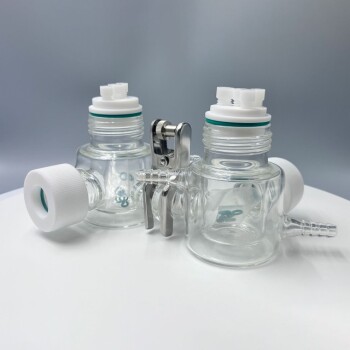
A three-electrode electrochemical workstation functions as a primary diagnostic tool to measure the transient photocurrent response of the Ga0.25Zn4.67S5.08 photocatalyst. By subjecting the material to light excitation within this setup, researchers can precisely quantify the separation and transfer efficiency of photogenerated electrons and holes.
The core value of this workstation lies in its ability to translate electronic behavior into biological potential. It provides the electrochemical evidence necessary to determine carrier lifetimes and confirm how specific charge carriers contribute to the material's bactericidal process.
Analyzing Photogenerated Charge Carriers
To understand the reaction mechanism of Ga0.25Zn4.67S5.08, one must look beyond the chemical composition and analyze the dynamic behavior of its electrons.
Measuring Transient Photocurrent Response
The workstation monitors the material's electrical response immediately after it is exposed to light.
This "transient" measurement captures the movement of charge carriers in real-time. It reveals how the semiconductor reacts the moment it absorbs photon energy.
Quantifying Separation Efficiency
The central metric derived from this equipment is the separation efficiency of electrons and holes.
For a photocatalyst to be effective, these positive and negative charges must separate rather than recombine immediately. The workstation provides hard data on how effectively the material achieves this separation.
Assessing Transfer Efficiency
Beyond separation, the equipment measures how well these charges move (transfer) to the surface of the catalyst.
High transfer efficiency is critical because the reaction happens at the interface between the material and the surrounding environment.
Connecting Data to Biological Function
The electrochemical data is not abstract; it is directly used to explain the material's practical performance as a bactericide.
Determining Carrier Lifetime
The workstation measurements allow researchers to estimate the lifetime of the charge carriers.
A longer carrier lifetime indicates that the electrons and holes survive long enough to participate in chemical reactions. This duration is a key indicator of the material's potential reactivity.
Identifying the Mechanism of Action
The ultimate goal of using this workstation is to link electronic properties to the bactericidal process.
By analyzing the photocurrent and carrier dynamics, researchers can pinpoint the specific contribution of these carriers to killing bacteria. It moves the analysis from simple observation to a mechanistic understanding of why the material works.
Critical Considerations and Context
While the electrochemical workstation provides vital performance data, it must be interpreted within the context of how the material was created.
The Influence of Material Synthesis
The electrochemical performance measured by the workstation is a direct result of the material's physical properties, such as specific surface area.
As noted in comparative studies, materials created via high-pressure hydrothermal synthesis differ significantly from those made by ultrasonic spray pyrolysis.
Correlating Surface Area to Activity
The workstation reveals the efficiency of the material, but this efficiency is often dictated by the specific surface area achieved during synthesis.
Therefore, when analyzing electrochemical data, one must remember it is a reflection of the material's structural integrity and synthesis history.
Making the Right Choice for Your Goal
When employing a three-electrode electrochemical workstation for Ga0.25Zn4.67S5.08, focus your analysis based on your specific research objectives:
- If your primary focus is Material Optimization: Analyze the transient photocurrent response to maximize the separation and transfer efficiency of electrons and holes.
- If your primary focus is Biological Application: Use the carrier lifetime data to correlate specific electronic behaviors with observed bactericidal activity.
In summary, the electrochemical workstation acts as the bridge between raw material synthesis and biological function, validating the efficiency of charge carriers in the photocatalytic process.
Summary Table:
| Key Measurement | Purpose in Study | Insight for Ga0.25Zn4.67S5.08 |
|---|---|---|
| Transient Photocurrent | Real-time electronic response | Captures semiconductor reaction to light excitation |
| Separation Efficiency | Quantify electron-hole pairs | Determines the ratio of active charge carriers |
| Transfer Efficiency | Measure charge movement | Evaluates surface-level reactivity at interfaces |
| Carrier Lifetime | Estimate survival duration | Validates potential for sustained bactericidal action |
Precision Analysis for Your Next Breakthrough
Unlock deep insights into material behavior with KINTEK’s premium research solutions. Whether you are optimizing photocatalysts like Ga0.25Zn4.67S5.08 or exploring battery innovations, our specialized electrolytic cells and electrodes provide the precision your lab demands.
KINTEK offers a comprehensive range of laboratory equipment tailored for high-performance research, including:
- Electrochemical & Battery Research Tools: High-quality electrolytic cells and specialized electrodes.
- High-Temperature Systems: Muffle, tube, and vacuum furnaces for synthesis.
- Reactor Solutions: High-temperature high-pressure reactors and autoclaves.
- Sample Preparation: Crushing, milling, and hydraulic pellet presses.
Ready to enhance your research efficiency and accuracy? Contact KINTEK today for expert consultation and customized equipment solutions.
References
- Tuo Yan, Huimin Huang. Preparation of Ga<sub>0.25</sub>Zn<sub>4.67</sub>S<sub>5.08</sub> Microsphere by Ultrasonic Spray Pyrolysis and Its Photocatalytic Disinfection Performance under Visible Light. DOI: 10.1155/2019/9151979
This article is also based on technical information from Kintek Solution Knowledge Base .
Related Products
- Lab Electrochemical Workstation Potentiostat for Laboratory Use
- Metal Disc Electrode Electrochemical Electrode
- Electrode Fixture for Electrochemical Experiments
- H Type Electrolytic Cell Triple Electrochemical Cell
- Graphite Disc Rod and Sheet Electrode Electrochemical Graphite Electrode
People Also Ask
- How does an electrochemical workstation assist in assessing corrosion resistance? Quantify Laser-Remelted Steel Performance
- How does an electrochemical testing system evaluate mesoporous oxide electrodes? Precision Analysis for Battery Research
- What are the primary functions of an electrochemical workstation (Potentiostat)? Expert Titanium Alloy Corrosion Analysis
- What is the primary function of a high-precision electrochemical workstation? Optimize Your Reactor Performance
- What role do electrochemical workstations play in researching the corrosion resistance of carbon coatings? Expert Guide