Knowledge thermal elements How long should a heating element last? Maximize your oven's lifespan with these key insights.
Author avatar

Tech Team · Kintek Solution

Updated 2 months ago

How long should a heating element last? Maximize your oven's lifespan with these key insights.


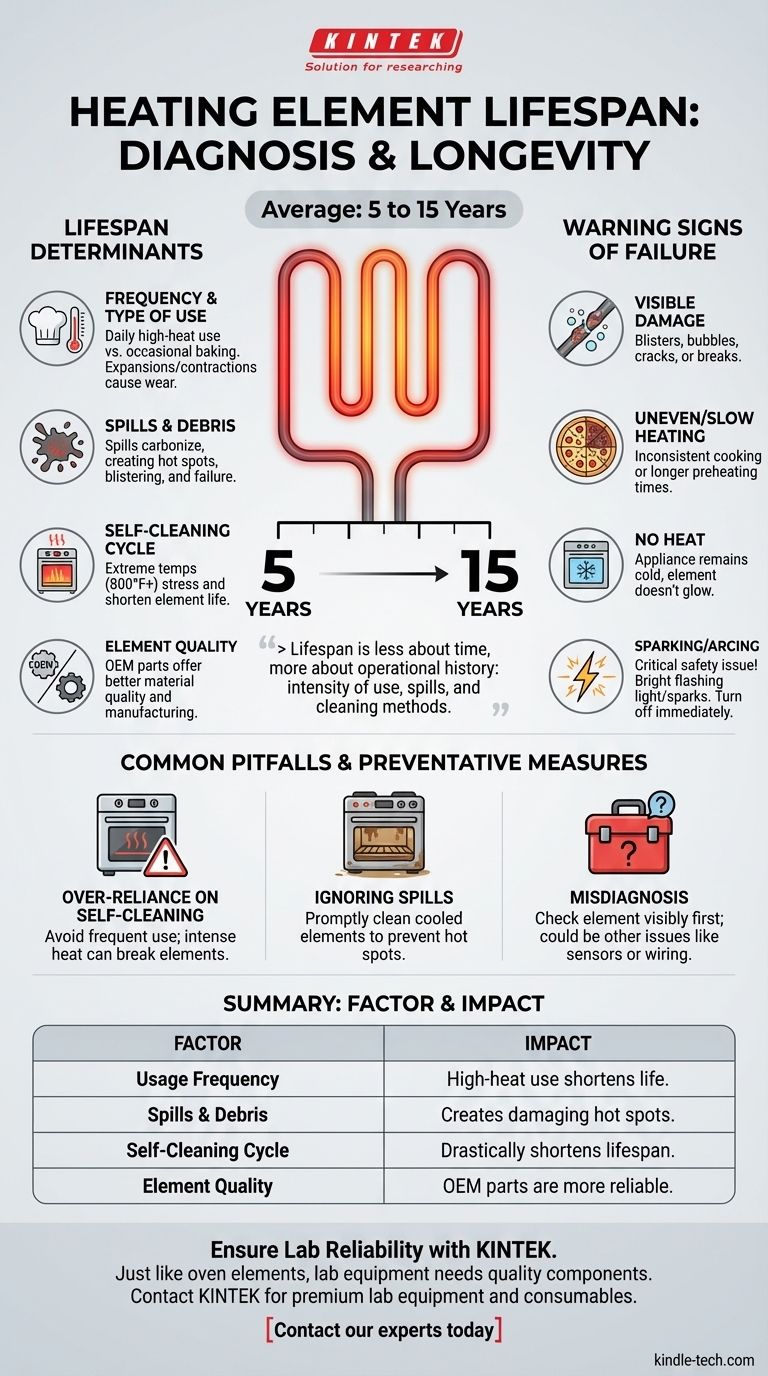
On average, an oven heating element is designed to last between 5 and 15 years. This wide range is not arbitrary; it is a direct result of factors like usage frequency, cleaning habits, and the initial quality of the component. Understanding these variables is the key to diagnosing a problem and extending the life of your appliance.

The lifespan of a heating element is less a matter of time and more a reflection of its operational history. The most significant factors are not years, but the intensity of use and the impact of physical damage from spills and high-heat cleaning cycles.

How long should a heating element last? Maximize your oven's lifespan with these key insights.

What Determines a HeatingElement's Lifespan?

The 5-to-15-year estimate is a general guideline. The actual service life of your element is determined by the specific conditions it endures.

Frequency and Type of Use

An oven used daily for high-temperature roasting will place significantly more stress on its heating element than one used a few times a week for baking at moderate temperatures. Each heating and cooling cycle causes the metal to expand and contract, which contributes to wear over time.

The Impact of Spills and Debris

Food and grease spilling directly onto a hot element is a primary cause of premature failure. The spill carbonizes, creating an insulating layer that traps heat in one spot. This "hot spot" can cause the element's metal sheath to blister, crack, or burn out.

The Self-Cleaning Cycle

The self-cleaning function is arguably the single most strenuous event for a heating element. This cycle operates at extremely high temperatures (over 800°F / 425°C), pushing the element to its absolute limit for an extended period, which can significantly shorten its lifespan.

Quality of the Element Itself

Original Equipment Manufacturer (OEM) parts are typically built to specific tolerances for a given appliance. While many aftermarket parts are reliable, variations in material quality and manufacturing can sometimes lead to a shorter operational life.

Recognizing the Signs of a Failing Element

Failure is rarely instantaneous. An element will almost always show signs of degradation before it stops working completely, giving you an opportunity to diagnose the issue.

Visible Damage

The most definitive evidence is physical damage. Look for any blisters, bubbles, cracks, or holes along the length of the element. A section that is visibly broken is a clear sign of failure.

Uneven Heating or Slow Preheating

If you notice that food is cooking unevenly or the oven is taking much longer than usual to reach the set temperature, the element may be losing its ability to heat consistently across its entire surface.

No Heat at All

This is the most obvious symptom. If the oven controls are on but the appliance remains cold, and the bake or broil element doesn't glow red, it has likely failed completely.

Sparking or Arcing

Seeing a bright, flashing light or sparks from the element during operation is a critical safety issue. This indicates a severe break in the element's sheath. You should immediately turn off the oven and disconnect it from power.

Common Pitfalls to Avoid

Understanding common mistakes can help you prevent premature failure and make informed decisions about maintenance and repair.

Over-Reliance on Self-Cleaning

Many homeowners experience heating element failure immediately following a self-clean cycle. The intense, prolonged heat is simply too much for an older or slightly damaged element to withstand.

Ignoring Spills

Letting spills sit and bake onto the element is a direct path to creating damaging hot spots. Cleaning them (once the oven is completely cool) is one of the most effective preventative measures.

Misdiagnosing the Problem

Sometimes, a lack of heat isn't the element's fault. It could be a faulty temperature sensor, a bad control board, or a wiring issue. A simple visual inspection of the element is the best first step to rule out the most common cause.

Making the Right Choice for Your Goal

By understanding these factors, you can tailor your usage and maintenance habits to match your priorities.

  • If your primary focus is maximizing lifespan: Manually clean your oven, promptly address any spills, and use the self-cleaning feature sparingly, if at all.
  • If your primary focus is convenience: Understand that frequent use of the self-clean cycle will likely shorten the element's life, and budget for a potential replacement sooner.
  • If you suspect a problem: Perform a careful visual inspection for breaks or blisters before assuming a more complex electrical issue is at play.

Ultimately, knowing what influences your heating element's health puts you in control of your appliance's performance and longevity.

Summary Table:

Factor Impact on Lifespan
Usage Frequency Daily, high-heat use shortens life significantly.
Spills & Debris Creates hot spots, leading to blistering and failure.
Self-Cleaning Cycle Extremely high temperatures can drastically shorten lifespan.
Element Quality OEM parts are typically more durable and reliable.

Is your lab equipment's performance inconsistent? Just like a reliable oven heating element, your lab instruments require durable, high-quality components for precise and consistent results. KINTEK specializes in premium lab equipment and consumables, ensuring your laboratory operates at peak efficiency and reliability. Contact our experts today to discuss how we can support your laboratory's specific needs.

Visual Guide
How long should a heating element last? Maximize your oven's lifespan with these key insights. Visual Guide

Related Products

People Also Ask

Related Products

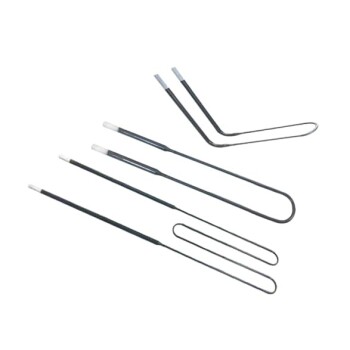
Molybdenum Disilicide (MoSi2) Thermal Elements Electric Furnace Heating Element

Molybdenum Disilicide (MoSi2) Thermal Elements Electric Furnace Heating Element

Discover the power of Molybdenum Disilicide (MoSi2) Heating Element for high-temperature resistance. Unique oxidation resistance with stable resistance value. Learn more about its benefits now!

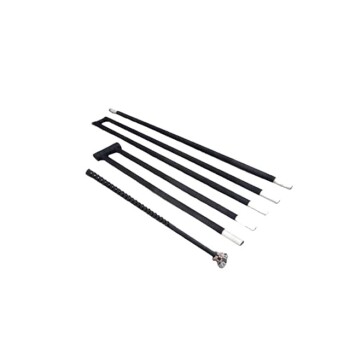
Silicon Carbide SiC Thermal Heating Elements for Electric Furnace

Silicon Carbide SiC Thermal Heating Elements for Electric Furnace

Experience the advantages of Silicon Carbide (SiC) Heating Element: Long service life, high corrosion and oxidation resistance, fast heating speed, and easy maintenance. Learn more now!

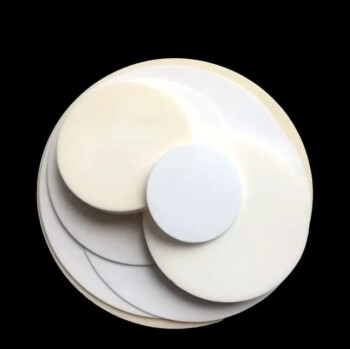
Engineering Advanced Fine Ceramics Aluminum Oxide Al2O3 Heat Sink for Insulation

Engineering Advanced Fine Ceramics Aluminum Oxide Al2O3 Heat Sink for Insulation

The hole structure of the ceramic heat sink increases the heat dissipation area in contact with the air, which greatly enhances the heat dissipation effect, and the heat dissipation effect is better than that of super copper and aluminum.

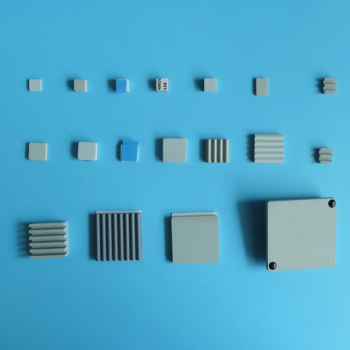
Silicon Carbide (SIC) Ceramic Sheet Flat Corrugated Heat Sink for Engineering Advanced Fine Ceramics

Silicon Carbide (SIC) Ceramic Sheet Flat Corrugated Heat Sink for Engineering Advanced Fine Ceramics

Silicon carbide (sic) ceramic heat sink not only does not generate electromagnetic waves, but also can isolate electromagnetic waves and absorb part of electromagnetic waves.

Double Plate Heating Press Mold for Lab

Double Plate Heating Press Mold for Lab

Discover precision in heating with our Double Plate Heating Mold, featuring high-quality steel and uniform temperature control for efficient lab processes. Ideal for various thermal applications.

10L Heating Chilling Circulator Cooling Water Bath Circulator for High and Low Temperature Constant Temperature Reaction

10L Heating Chilling Circulator Cooling Water Bath Circulator for High and Low Temperature Constant Temperature Reaction

Experience efficient lab performance with KinTek KCBH 10L Heating Chilling Circulator. Its all-in-one design offers reliable heating, chilling, and circulating functions for industrial and lab use.

50L Heating Chilling Circulator Cooling Water Bath Circulator for High and Low Temperature Constant Temperature Reaction

50L Heating Chilling Circulator Cooling Water Bath Circulator for High and Low Temperature Constant Temperature Reaction

Experience versatile heating, chilling, and circulating capabilities with our KinTek KCBH 50L Heating Chilling Circulator. Ideal for labs and industrial settings, with efficient and reliable performance.

High Temperature Constant Temperature Heating Circulator Water Bath Chiller Circulator for Reaction Bath

High Temperature Constant Temperature Heating Circulator Water Bath Chiller Circulator for Reaction Bath

Efficient and reliable, KinTek KHB Heating Circulator is perfect for your lab needs. With a max. heating temperature of up to 300℃, it features accurate temperature control and fast heating.

5L Heating Chilling Circulator Cooling Water Bath Circulator for High and Low Temperature Constant Temperature Reaction

5L Heating Chilling Circulator Cooling Water Bath Circulator for High and Low Temperature Constant Temperature Reaction

KinTek KCBH 5L Heating Chilling Circulator - Ideal for labs and industrial conditions with multi-functional design and reliable performance.

100L Heating Chilling Circulator Cooling Water Bath Circulator for High and Low Temperature Constant Temperature Reaction

100L Heating Chilling Circulator Cooling Water Bath Circulator for High and Low Temperature Constant Temperature Reaction

Get all-in-one heating, chilling, and circulating capabilities with our KinTek KCBH 80L Heating Chilling Circulator. High efficiency, reliable performance for labs and industrial applications.

30L Heating Chilling Circulator Cooling Water Bath Circulator for High and Low Temperature Constant Temperature Reaction

30L Heating Chilling Circulator Cooling Water Bath Circulator for High and Low Temperature Constant Temperature Reaction

Get versatile lab performance with KinTek KCBH 30L Heating Chilling Circulator. With max. heating temp of 200℃ and max. chilling temp of -80℃, it's perfect for industrial needs.

20L Heating Chilling Circulator Cooling Water Bath Circulator for High and Low Temperature Constant Temperature Reaction

20L Heating Chilling Circulator Cooling Water Bath Circulator for High and Low Temperature Constant Temperature Reaction

Maximize lab productivity with KinTek KCBH 20L Heating Chilling Circulator. Its all-in-one design offers reliable heating, chilling, and circulating functions for industrial and lab use.

Molybdenum Vacuum Heat Treat Furnace

Molybdenum Vacuum Heat Treat Furnace

Discover the benefits of a high-configuration molybdenum vacuum furnace with heat shield insulation. Ideal for high-purity, vacuum environments like sapphire crystal growth and heat treatment.

Automatic High Temperature Heated Hydraulic Press Machine with Heated Plates for Lab

Automatic High Temperature Heated Hydraulic Press Machine with Heated Plates for Lab

The High Temperature Hot Press is a machine specifically designed for pressing, sintering and processing materials in a high temperature environment. It is capable of operating in the range of hundreds of degrees Celsius to thousands of degrees Celsius for a variety of high temperature process requirements.

Manual High Temperature Heated Hydraulic Press Machine with Heated Plates for Lab

Manual High Temperature Heated Hydraulic Press Machine with Heated Plates for Lab

The High Temperature Hot Press is a machine specifically designed for pressing, sintering and processing materials in a high temperature environment. It is capable of operating in the range of hundreds of degrees Celsius to thousands of degrees Celsius for a variety of high temperature process requirements.

Laboratory Rapid Thermal Processing (RTP) Quartz Tube Furnace

Laboratory Rapid Thermal Processing (RTP) Quartz Tube Furnace

Get lightning-fast heating with our RTP Rapid Heating Tube Furnace. Designed for precise, high-speed heating and cooling with convenient sliding rail and TFT touch screen controller. Order now for ideal thermal processing!

Evaporation Boat for Organic Matter

Evaporation Boat for Organic Matter

The evaporation boat for organic matter is an important tool for precise and uniform heating during the deposition of organic materials.

Reference Electrode Calomel Silver Chloride Mercury Sulfate for Laboratory Use

Reference Electrode Calomel Silver Chloride Mercury Sulfate for Laboratory Use

Find high-quality reference electrodes for electrochemical experiments with complete specifications. Our models offer resistance to acid and alkali, durability, and safety, with customization options available to meet your specific needs.

Laboratory Scientific Electric Heating Blast Drying Oven

Laboratory Scientific Electric Heating Blast Drying Oven

The desktop fast autoclave sterilizer is a compact and reliable device used for rapid sterilization of medical, pharmaceutical, and research items.

Electric Rotary Kiln Continuous Working Small Rotary Furnace Heating Pyrolysis Plant

Electric Rotary Kiln Continuous Working Small Rotary Furnace Heating Pyrolysis Plant

Efficiently calcine and dry bulk powder and lump fluid materials with an electric heating rotary furnace. Ideal for processing lithium ion battery materials and more.


Leave Your Message