Knowledge muffle furnace How much does a sintering furnace cost? A Guide to Investing in the Right Equipment
Author avatar

Tech Team · Kintek Solution

Updated 3 months ago

How much does a sintering furnace cost? A Guide to Investing in the Right Equipment


In short, a vacuum sintering furnace can range from approximately $55,000 to over $200,000. This wide variation exists because a "sintering furnace" is not a single product but a category of highly specialized equipment. The final price is determined by its size, maximum temperature, and its ability to control the internal atmosphere.

The question isn't just "how much does a furnace cost," but rather "which furnace capabilities do I need to pay for?" The final price is a direct reflection of your specific material requirements and production scale.
How much does a sintering furnace cost? A Guide to Investing in the Right Equipment

What Drives the Cost of a Sintering Furnace?

The price of a sintering furnace is not arbitrary. It is a direct calculation based on the engineering challenges associated with achieving and maintaining specific conditions of temperature, atmosphere, and scale.

Scale: From Lab Bench to Factory Floor

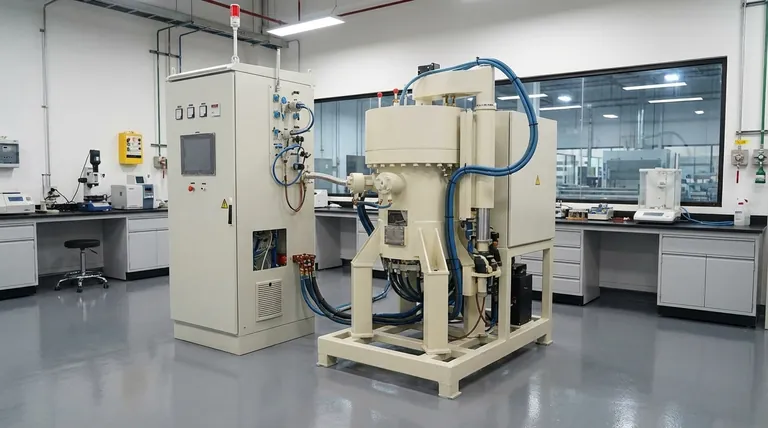
The most visible cost factor is the size of the furnace's usable hot zone. A larger chamber requires more raw materials, more powerful heating elements, and a more robust frame.

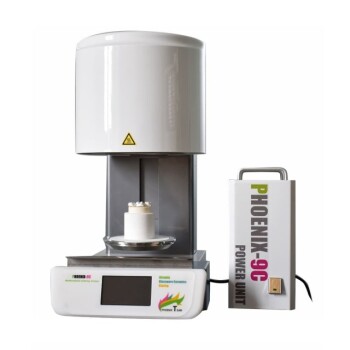
Small, benchtop furnaces used for dental labs or research and development have a much lower entry price. Large, industrial-scale furnaces designed for high-volume manufacturing command the highest prices due to the sheer scale of their construction and power requirements.

Temperature: The Energy Demand

Higher temperatures are exponentially harder and more expensive to achieve and contain. The materials required for heating elements and insulation change dramatically as you increase the target temperature.

A furnace rated for 1200°C is fundamentally simpler than one designed to reach 1700°C or higher. The latter requires more exotic (and expensive) heating elements, advanced refractory materials, and sophisticated cooling systems to protect the furnace shell.

Atmosphere: Controlling the Environment

This is often the most significant cost driver. The complexity of the system used to control the gas environment inside the furnace dictates the price.

  • Air Furnaces: The simplest and least expensive, these operate in ambient air.
  • Inert Gas Furnaces: These require systems to purge oxygen and backfill with gases like argon or nitrogen, adding cost for plumbing, sensors, and controls.
  • Vacuum Furnaces: Requiring vacuum pumps, robust seals, and a chamber capable of withstanding negative pressure, these are significantly more complex and costly. The level of vacuum (e.g., rough vs. high vacuum) also impacts the price.

Control and Automation: Precision and Repeatability

The sophistication of the control system is a key factor. A basic controller that simply follows a temperature profile is standard.

However, advanced systems with programmable logic controllers (PLCs), sophisticated data logging for quality control, remote operation, and automated safety interlocks add considerable cost. These features are critical for validated processes in industries like medical or aerospace.

Understanding the Trade-offs

Choosing a furnace involves balancing upfront investment against long-term operational success. A myopic focus on the initial sticker price can lead to significant downstream costs.

Upfront Cost vs. Operating Cost

A less expensive furnace may have poorer insulation or less efficient heating elements. This results in higher electricity consumption for every cycle, potentially costing far more than the initial savings over the furnace's lifetime.

Feature Creep: Paying for Unused Capability

It can be tempting to purchase a furnace with the highest possible temperature rating or the most complex atmospheric controls. However, if your process only requires 1500°C, paying a premium for a 1700°C furnace is a waste of capital.

Maintenance and Consumables

Every furnace has components with a finite life. Higher-performance furnaces often use more specialized—and expensive—consumables like heating elements, thermocouples, and vacuum seals. These long-term maintenance costs must be factored into the total cost of ownership.

Making the Right Choice for Your Application

To select the right furnace, you must first define your primary objective.

  • If your primary focus is research and development: Prioritize a furnace with a versatile temperature range and flexible atmospheric controls over sheer size.
  • If your primary focus is high-volume, repeatable production: Invest in automation, robust controls, and energy efficiency to minimize cost-per-part and ensure quality.
  • If your primary focus is processing advanced materials: The maximum temperature and purity of the atmosphere are non-negotiable, making them the primary drivers of your selection.

Ultimately, defining your process requirements with precision is the most effective way to manage the cost of your investment.

Summary Table:

Cost Factor Impact on Price Key Considerations
Size / Scale Higher Benchtop (R&D) vs. Industrial (Production)
Max Temperature Higher 1200°C (standard) vs. 1700°C+ (exotic materials)
Atmosphere Control Higher Air (lowest) < Inert Gas < Vacuum (highest)
Automation & Controls Higher Basic controllers vs. advanced PLCs with data logging

Ready to find the perfect sintering furnace for your lab's needs and budget?

At KINTEK, we specialize in providing lab equipment and consumables tailored to your specific material requirements and production scale. Whether you're in R&D or high-volume manufacturing, our experts will help you select a furnace that balances upfront cost with long-term efficiency and reliability.

Contact us today for a personalized consultation and quote!

Visual Guide

How much does a sintering furnace cost? A Guide to Investing in the Right Equipment Visual Guide

Related Products

People Also Ask

Related Products

Vacuum Heat Treat and Sintering Furnace with 9MPa Air Pressure

Vacuum Heat Treat and Sintering Furnace with 9MPa Air Pressure

The air pressure sintering furnace is a high-tech equipment commonly used for the sintering of advanced ceramic materials. It combines vacuum sintering and pressure sintering techniques to achieve high-density and high-strength ceramics.

Spark Plasma Sintering Furnace SPS Furnace

Spark Plasma Sintering Furnace SPS Furnace

Discover the benefits of Spark Plasma Sintering Furnaces for rapid, low-temperature material preparation. Uniform heating, low cost & eco-friendly.

Vacuum Heat Treat and Molybdenum Wire Sintering Furnace for Vacuum Sintering

Vacuum Heat Treat and Molybdenum Wire Sintering Furnace for Vacuum Sintering

A vacuum molybdenum wire sintering furnace is a vertical or bedroom structure, which is suitable for withdrawal, brazing, sintering and degassing of metal materials under high vacuum and high temperature conditions. It is also suitable for dehydroxylation treatment of quartz materials.

Small Vacuum Heat Treat and Tungsten Wire Sintering Furnace

Small Vacuum Heat Treat and Tungsten Wire Sintering Furnace

The small vacuum tungsten wire sintering furnace is a compact experimental vacuum furnace specially designed for universities and scientific research institutes. The furnace features a CNC welded shell and vacuum piping to ensure leak-free operation. Quick-connect electrical connections facilitate relocation and debugging, and the standard electrical control cabinet is safe and convenient to operate.

Dental Porcelain Zirconia Sintering Ceramic Vacuum Press Furnace

Dental Porcelain Zirconia Sintering Ceramic Vacuum Press Furnace

Get precise dental results with Dental Vacuum Press Furnace. Automatic temperature calibration, low noise tray, and touch screen operation. Order now!

Vacuum Heat Treat and Pressure Sintering Furnace for High Temperature Applications

Vacuum Heat Treat and Pressure Sintering Furnace for High Temperature Applications

Vacuum pressure sintering furnaces are designed for high temperature hot pressing applications in metal and ceramic sintering. Its advanced features ensure precise temperature control, reliable pressure maintenance, and a robust design for seamless operation.

Dental Porcelain Zirconia Sintering Ceramic Furnace Chairside with Transformer

Dental Porcelain Zirconia Sintering Ceramic Furnace Chairside with Transformer

Experience top-notch sintering with Chairside Sintering Furnace with Transformer. Easy to operate, noise-free pallet, and automatic temperature calibration. Order now!

Vacuum Dental Porcelain Sintering Furnace

Vacuum Dental Porcelain Sintering Furnace

Get precise and reliable results with KinTek's Vacuum Porcelain Furnace. Suitable for all porcelain powders, it features hyperbolic ceramic furnace function, voice prompt, and automatic temperature calibration.

High Temperature Muffle Oven Furnace for Laboratory Debinding and Pre Sintering

High Temperature Muffle Oven Furnace for Laboratory Debinding and Pre Sintering

KT-MD High temperature debinding and pre-sintering furnace for ceramic materials with various molding processes. Ideal for electronic components such as MLCC and NFC.

2200 ℃ Tungsten Vacuum Heat Treat and Sintering Furnace

2200 ℃ Tungsten Vacuum Heat Treat and Sintering Furnace

Experience the ultimate refractory metal furnace with our Tungsten vacuum furnace. Capable of reaching 2200℃, perfect for sintering advanced ceramics and refractory metals. Order now for high-quality results.

Vacuum Heat Treat Sintering Brazing Furnace

Vacuum Heat Treat Sintering Brazing Furnace

A vacuum brazing furnace is a type of industrial furnace used for brazing, a metalworking process that joins two pieces of metal using a filler metal that melts at a lower temperature than the base metals. Vacuum brazing furnaces are typically used for high-quality applications where a strong, clean joint is required.

600T Vacuum Induction Hot Press Furnace for Heat Treat and Sintering

600T Vacuum Induction Hot Press Furnace for Heat Treat and Sintering

Discover the 600T Vacuum Induction Hot Press Furnace, designed for high-temperature sintering experiments in vacuum or protected atmospheres. Its precise temperature and pressure control, adjustable working pressure, and advanced safety features make it ideal for nonmetal materials, carbon composites, ceramics, and metal powders.

Mesh belt controlled atmosphere furnace

Mesh belt controlled atmosphere furnace

Discover our KT-MB mesh belt sintering furnace - perfect for high-temperature sintering of electronic components & glass insulators. Available for open air or controlled atmosphere environments.

2200 ℃ Graphite Vacuum Heat Treat Furnace

2200 ℃ Graphite Vacuum Heat Treat Furnace

Discover the power of the KT-VG Graphite Vacuum Furnace - with a maximum working temperature of 2200℃, it's perfect for vacuum sintering of various materials. Learn more now.

Ultra-High Temperature Graphite Vacuum Graphitization Furnace

Ultra-High Temperature Graphite Vacuum Graphitization Furnace

The ultra-high temperature graphitization furnace utilizes medium frequency induction heating in a vacuum or inert gas environment. The induction coil generates an alternating magnetic field, inducing eddy currents in the graphite crucible, which heats up and radiates heat to the workpiece, bringing it to the desired temperature. This furnace is primarily used for graphitization and sintering of carbon materials, carbon fiber materials, and other composite materials.

Controlled Nitrogen Inert Hydrogen Atmosphere Furnace

Controlled Nitrogen Inert Hydrogen Atmosphere Furnace

KT-AH Hydrogen atmosphere furnace - induction gas furnace for sintering/annealing with built-in safety features, dual housing design, and energy-saving efficiency. Ideal for lab and industrial use.

Vacuum Heat Treat Furnace with Ceramic Fiber Liner

Vacuum Heat Treat Furnace with Ceramic Fiber Liner

Vacuum furnace with polycrystalline ceramic fiber insulation liner for excellent heat insulation and uniform temperature field. Choose from 1200℃ or 1700℃ max. working temperature with high vacuum performance and precise temperature control.

Graphite Vacuum Furnace High Thermal Conductivity Film Graphitization Furnace

Graphite Vacuum Furnace High Thermal Conductivity Film Graphitization Furnace

The high thermal conductivity film graphitization furnace has uniform temperature, low energy consumption and can operate continuously.

Non Consumable Vacuum Arc Induction Melting Furnace

Non Consumable Vacuum Arc Induction Melting Furnace

Explore the benefits of Non-Consumable Vacuum Arc Furnace with high melting point electrodes. Small, easy to operate & eco-friendly. Ideal for laboratory research on refractory metals & carbides.

Vacuum Arc Induction Melting Furnace

Vacuum Arc Induction Melting Furnace

Discover the power of Vacuum Arc Furnace for melting active & refractory metals. High-speed, remarkable degassing effect, and free of contamination. Learn more now!


Leave Your Message