Knowledge Is the sintering process hazardous? Identifying Key Risks and Safety Protocols
Author avatar

Tech Team · Kintek Solution

Updated 1 day ago

Is the sintering process hazardous? Identifying Key Risks and Safety Protocols


The hazardousness of the sintering process is not absolute but depends heavily on the specific materials and methods utilized. While the initial "green" forming stages are generally non-hazardous, the subsequent high-temperature fusion stage introduces distinct risks, particularly the release of toxic fumes as polymer or wax components burn off. Furthermore, handling metal and ceramic nano-particles requires strict protocols to prevent inhalation and specific health issues.

Sintering involves thermal and chemical risks that must be actively managed. The primary threats involve exposure to extreme heat, hazardous particulate matter, and toxic off-gassing during material fusion.

Analyzing the Specific Hazards

Thermal Risks and Toxic Fumes

The core of sintering involves heating compressed shapes to fuse materials without melting them completely. During this high-temperature stage, polymer or wax components used as binding agents are burned off.

This combustion process can release toxic and irritant fumes into the immediate environment. To mitigate this, the process must be conducted in a well-ventilated area to manage vapors that should be treated as harmful.

Particulate Matter and Raw Materials

The safety of the process begins before the heating stage, specifically during the handling of raw powders. Sintering often utilizes metal and ceramic nano-particles, which pose potential health risks if inhaled or mishandled.

Operators must wear suitable protective equipment to guard against these airborne hazards. The composition and compression steps, while mechanically simple, require diligence to ensure these fine powders remain contained.

Environmental Considerations

Beyond immediate worker safety, sintering can impact the broader environment. The high-temperature processing required to fuse materials can lead to the release of harmful emissions if not properly filtered or captured.

Understanding the Trade-offs

Balancing Material Capability with Safety

Sintering is often chosen because it allows for the fabrication of materials with extremely high melting points that are impossible to process with other technologies. However, working with these refractory materials requires higher energy inputs and more robust thermal safety protocols compared to standard manufacturing.

The "Green" Stage vs. The Firing Stage

A common pitfall is assuming the safety of the entire process based on the relative safety of the "green" forming stage. While pressing the slurry or dry powder is generally low-risk, complacency often sets in during the transition to the heating phase.

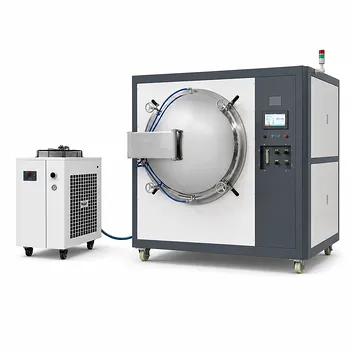
Safety protocols must escalate as the material moves from compression to fusion. Even though vacuum sintering offers high automation and containment of outgassing, reliance on automation should never replace standard hot-process safety measures like having fire extinguishers readily available.

Making the Right Choice for Your Goal

To ensure a safe and effective sintering operation, tailor your approach to your specific operational priorities:

  • If your primary focus is Personnel Safety: Prioritize high-capacity ventilation systems and strict PPE protocols to manage the toxic fumes released during the binder burnout phase.
  • If your primary focus is Material Quality: Consider vacuum sintering systems, which effectively manage significant outgassing and reduce human error through automation, ensuring high density and purity.

Successful sintering requires a disciplined approach where the control of hazardous emissions is treated with the same precision as the control of material porosity.

Summary Table:

Hazard Category Specific Risk Mitigation Strategy
Thermal/Chemical Toxic off-gassing from binders (wax/polymer) High-capacity ventilation and filtration systems
Particulate Inhalation of metal/ceramic nano-particles Strict PPE protocols and containment during handling
Environmental Harmful emissions during high-temp fusion Vacuum sintering or advanced exhaust treatment
Operational Fire and extreme heat exposure Fire safety equipment and automated furnace systems

Secure Your Lab’s Safety and Precision with KINTEK

Don't let operational hazards compromise your research or material integrity. KINTEK specializes in advanced laboratory solutions designed to mitigate risks in high-temperature processing. From vacuum, atmosphere, and muffle furnaces that safely manage outgassing to high-performance crushing, milling, and pellet presses for secure powder handling, we provide the tools you need for excellence.

Whether you are working with refractory materials, battery research, or advanced ceramics, our comprehensive portfolio—including PTFE consumables, high-pressure reactors, and cooling solutions—ensures a controlled and efficient environment.

Ready to upgrade your sintering setup? Contact our experts today to find the perfect equipment tailored to your safety and material requirements.

Related Products

People Also Ask

Related Products

1400℃ Muffle Oven Furnace for Laboratory

1400℃ Muffle Oven Furnace for Laboratory

Get precise high-temperature control up to 1500℃ with KT-14M Muffle furnace. Equipped with a smart touch screen controller and advanced insulation materials.

1800℃ Muffle Oven Furnace for Laboratory

1800℃ Muffle Oven Furnace for Laboratory

KT-18 muffle furnace with Japan Al2O3 polycrystalline fibe and Silicon Molybdenum heating element, up to 1900℃, PID temperature control and 7" smart touch screen. Compact design, low heat loss, and high energy efficiency. Safety interlock system and versatile functions.

1700℃ Muffle Oven Furnace for Laboratory

1700℃ Muffle Oven Furnace for Laboratory

Get superior heat control with our 1700℃ Muffle Furnace. Equipped with intelligent temperature microprocessor, TFT touch screen controller & advanced insulation materials for precise heating up to 1700C. Order now!

Laboratory Muffle Oven Furnace Bottom Lifting Muffle Furnace

Laboratory Muffle Oven Furnace Bottom Lifting Muffle Furnace

Efficiently produce batches with excellent temperature uniformity using our Bottom Lifting Furnace. Features two electric lifting stages and advanced temperature control up to 1600℃.

High Pressure Laboratory Vacuum Tube Furnace Quartz Tubular Furnace

High Pressure Laboratory Vacuum Tube Furnace Quartz Tubular Furnace

KT-PTF High Pressure Tube Furnace: Compact split tube furnace with strong positive pressure resistance. Working temp up to 1100°C and pressure up to 15Mpa. Also works under controller atmosphere or high vacuum.

1700℃ Laboratory High Temperature Tube Furnace with Alumina Tube

1700℃ Laboratory High Temperature Tube Furnace with Alumina Tube

Looking for a high-temperature tube furnace? Check out our 1700℃ Tube Furnace with Alumina Tube. Perfect for research and industrial applications up to 1700C.

1400℃ Laboratory High Temperature Tube Furnace with Alumina Tube

1400℃ Laboratory High Temperature Tube Furnace with Alumina Tube

Looking for a tube furnace for high-temperature applications? Our 1400℃ Tube Furnace with Alumina Tube is perfect for research and industrial use.

1200℃ Split Tube Furnace with Quartz Tube Laboratory Tubular Furnace

1200℃ Split Tube Furnace with Quartz Tube Laboratory Tubular Furnace

KT-TF12 split tube furnace: high-purity insulation, embedded heating wire coils, and max. 1200C. Widely used for new materials and chemical vapour deposition.

Laboratory Rapid Thermal Processing (RTP) Quartz Tube Furnace

Laboratory Rapid Thermal Processing (RTP) Quartz Tube Furnace

Get lightning-fast heating with our RTP Rapid Heating Tube Furnace. Designed for precise, high-speed heating and cooling with convenient sliding rail and TFT touch screen controller. Order now for ideal thermal processing!

1400℃ Controlled Atmosphere Furnace with Nitrogen and Inert Atmosphere

1400℃ Controlled Atmosphere Furnace with Nitrogen and Inert Atmosphere

Achieve precise heat treatment with KT-14A controlled atmosphere furnace. Vacuum sealed with a smart controller, it's ideal for lab and industrial use up to 1400℃.

Molybdenum Vacuum Heat Treat Furnace

Molybdenum Vacuum Heat Treat Furnace

Discover the benefits of a high-configuration molybdenum vacuum furnace with heat shield insulation. Ideal for high-purity, vacuum environments like sapphire crystal growth and heat treatment.

1700℃ Controlled Atmosphere Furnace Nitrogen Inert Atmosphere Furnace

1700℃ Controlled Atmosphere Furnace Nitrogen Inert Atmosphere Furnace

KT-17A Controlled atmosphere furnace: 1700℃ heating, vacuum sealing technology, PID temperature control, and versatile TFT smart touch screen controller for laboratory and industrial use.

Horizontal High Temperature Graphite Vacuum Graphitization Furnace

Horizontal High Temperature Graphite Vacuum Graphitization Furnace

Horizontal Graphitization Furnace: This type of furnace is designed with the heating elements placed horizontally, allowing for uniform heating of the sample. It's well-suited for graphitizing large or bulky samples that require precise temperature control and uniformity.

Vertical High Temperature Graphite Vacuum Graphitization Furnace

Vertical High Temperature Graphite Vacuum Graphitization Furnace

Vertical high temperature graphitization furnace for carbonization and graphitization of carbon materials up to 3100℃.Suitable for shaped graphitization of carbon fiber filaments and other materials sintered in a carbon environment.Applications in metallurgy, electronics, and aerospace for producing high-quality graphite products like electrodes and crucibles.

Ultra-High Temperature Graphite Vacuum Graphitization Furnace

Ultra-High Temperature Graphite Vacuum Graphitization Furnace

The ultra-high temperature graphitization furnace utilizes medium frequency induction heating in a vacuum or inert gas environment. The induction coil generates an alternating magnetic field, inducing eddy currents in the graphite crucible, which heats up and radiates heat to the workpiece, bringing it to the desired temperature. This furnace is primarily used for graphitization and sintering of carbon materials, carbon fiber materials, and other composite materials.

Multi-zone Laboratory Tube Furnace

Multi-zone Laboratory Tube Furnace

Experience precise, efficient thermal testing with our Multi Zone Tube Furnace. Independent heating zones and temperature sensors allow for controlled high-temperature gradient heating fields. Order now for advanced thermal analysis!

Graphite Vacuum Continuous Graphitization Furnace

Graphite Vacuum Continuous Graphitization Furnace

High-temperature graphitization furnace is a professional equipment for graphitization treatment of carbon materials. It is a key equipment for the production of high-quality graphite products. It has high temperature, high efficiency and uniform heating. It is suitable for various high-temperature treatments and graphitization treatments. It is widely used in metallurgy, electronics, aerospace, etc. industry.

2200 ℃ Tungsten Vacuum Heat Treat and Sintering Furnace

2200 ℃ Tungsten Vacuum Heat Treat and Sintering Furnace

Experience the ultimate refractory metal furnace with our Tungsten vacuum furnace. Capable of reaching 2200℃, perfect for sintering advanced ceramics and refractory metals. Order now for high-quality results.

Laboratory Vacuum Tilt Rotary Tube Furnace Rotating Tube Furnace

Laboratory Vacuum Tilt Rotary Tube Furnace Rotating Tube Furnace

Discover the versatility of Laboratory Rotary Furnace: Ideal for calcination, drying, sintering, and high-temperature reactions. Adjustable rotating and tilting functions for optimal heating. Suitable for vacuum and controlled atmosphere environments. Learn more now!

600T Vacuum Induction Hot Press Furnace for Heat Treat and Sintering

600T Vacuum Induction Hot Press Furnace for Heat Treat and Sintering

Discover the 600T Vacuum Induction Hot Press Furnace, designed for high-temperature sintering experiments in vacuum or protected atmospheres. Its precise temperature and pressure control, adjustable working pressure, and advanced safety features make it ideal for nonmetal materials, carbon composites, ceramics, and metal powders.


Leave Your Message